
- 45 million members of Albertsons' "Albertsons for U" loyalty program provide first-party data for content creation.
- $200 billion projected global retail media industry size in 2026.
- First episodic, scripted drama series (Rico's Tacos) co-created with P&G using shopper data.
Experts would likely conclude that Albertsons' data-driven approach to content creation represents a bold but calculated shift in retail media, potentially setting a new industry standard for blending consumer insights with branded storytelling.
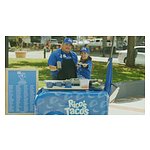
Albertsons & P&G Bet Big on Data-Driven TV to Transform Retail Ads
BOISE, ID – June 17, 2026 – In a move that blurs the lines between the supermarket and the soundstage, Albertsons Companies is making a bold play for a new kind of screen time. The grocery giant’s media arm, Albertsons Media Collective, has partnered with consumer goods behemoth Procter & Gamble to do something no retailer has done before: co-create, produce, and distribute an episodic, scripted drama series born directly from shopper data.
This isn't a one-off holiday commercial or a sponsored cooking show. The inaugural project, a “Minivela” drama titled Rico’s Tacos, is a fully-fledged narrative series set to launch next week across Albertsons’ digital and in-store platforms. The venture represents a calculated pivot in the rapidly evolving, multi-billion-dollar retail media landscape. Albertsons is betting that the key to winning the modern consumer’s wallet is not just to sell them products, but to create the very culture in which those products live.
Beyond the Shopping Cart: The Retailer as Content Creator
For decades, the model was simple: brands paid retailers for shelf space and circular ads. The rise of retail media networks (RMNs) like those from Amazon and Walmart digitized this process, allowing brands to target consumers with precision based on their shopping history. Now, Albertsons is proposing a radical evolution. Instead of just being a platform to run ads, it aims to be a content studio where the stories are inspired by the shoppers themselves.
Rico’s Tacos is the first proof point. The mobile-first series, with episodes running one to two minutes, follows a family building a taco business in Southern California. It was filmed in Albertsons stores and even features company associates. Critically, the partnership with P&G wasn't a simple sponsorship. It was a strategic co-development, merging P&G's deep consumer knowledge with Albertsons' granular, first-party shopper intelligence.
“The brands that will win are the ones that connect with shoppers in relevant, everyday moments,” said Lela Coffey, Vice President of User Growth Acceleration at P&G. The key distinction, she noted, is that “the creative was developed with Albertsons Cos. using shopper insights at the outset, rather than applying data only after the work is made.”
This is the core of the “industry-first” claim. While competitors have experimented with shoppable content and episodic ads, Albertsons’ model integrates data into the very DNA of the creative process. It’s a fundamental shift from using data to find an audience for an ad, to using data to build a story for an audience.
The Data is the Script: A New Blueprint for Brand Storytelling
The real innovation lies not in the fact that a retailer is creating content, but in how it’s being created. Albertsons is leveraging the immense power of its first-party data, gleaned from over 45 million members of its “Albertsons for U” loyalty program. This anonymized, aggregated data on buying patterns, category trends, and shopper missions becomes the raw material for storytelling.
“The idea for Rico's Tacos emerged directly from the shopper insights and cultural intelligence shared by Albertsons Companies and P&G,” explained Manny Ruiz, CEO of Minivela and the showrunner of the series. “Those insights became the creative spark.”
This approach aims to solve a perennial advertising challenge: relevance. By building a narrative around themes and situations that data suggests will resonate with its audience, Albertsons and P&G are attempting to create entertainment that feels less like an interruption and more like a reflection of the consumer’s world. The goal is to drive what Albertsons Media Collective’s SVP, Brian Monahan, calls brand love. “Branded storytelling stops feeling like advertising and starts feeling like culture,” he stated. “Our stores are the stage, our shoppers inspire the content, and our insights help guide effective storytelling.”
The Bottom Line: De-Risking Creativity and Measuring What Matters
For any business, innovation must ultimately serve the bottom line. This entertainment venture, while creatively ambitious, is grounded in a sound financial strategy. For Albertsons, it represents a new, high-margin revenue stream within its burgeoning media business—a critical area of growth, especially after the proposed merger with Kroger collapsed in late 2024, forcing the company to sharpen its competitive strategy.
For a brand partner like P&G, the investment is a calculated risk. By co-developing content based on shopper data, the company is effectively de-risking the creative process. The data provides a degree of pre-validation that the story and its themes will connect with the target demographic, increasing the odds of a positive return on investment. This moves marketing spend from speculative ad buys to investing in a tangible, engaging asset.
Furthermore, Albertsons has been aggressively building out its measurement capabilities. The company recently rolled out an onsite incrementality measurement tool to prove how its media drives new sales. This focus on analytics is crucial; it assures partners like P&G that the success of Rico’s Tacos won’t just be measured in views or likes, but in a demonstrable lift in sales and brand affinity, directly tying the entertainment to commerce.
A Crowded Field: Reshaping the $200 Billion Retail Media Arena
Albertsons' move doesn't happen in a vacuum. The retail media industry is projected to exceed $200 billion globally this year, and every major retailer is vying for a larger piece of the pie. The landscape is dominated by giants like Amazon and Walmart, who have built formidable advertising businesses on the back of their e-commerce and data infrastructure.
In this crowded field, differentiation is paramount. By pioneering a data-driven entertainment model, Albertsons is carving out a unique value proposition. It’s a strategic gambit to leapfrog the traditional display and search ad offerings that are becoming commoditized. The company is betting that in an era of content saturation, the most valuable currency is authentic engagement, and the best way to earn it is to stop just selling to customers and start telling their stories.
If Rico's Tacos proves successful—driving both cultural buzz and measurable sales—it could provide a new blueprint for the entire industry. We may be on the cusp of an era where grocery lists and production schedules go hand-in-hand, and the next hit series you binge-watch is brought to you not by a traditional Hollywood studio, but by the same place you buy your milk and eggs.