
- 500 kilotonnes of CO2 per annum (ktpa): Initial injection capacity of the Meadowbrook Carbon Storage Hub.
- 3 million tonnes per annum (Mtpa): Target sequestration capacity within 25 years.
- 25 carbon hub tenures: Competitively awarded in Alberta, with Meadowbrook being the first to enter commercial service.
Experts view the launch of Alberta's Meadowbrook Carbon Storage Hub as a critical proof-of-concept for scalable, multi-client carbon capture and storage, signaling a strategic shift in the province's decarbonization efforts.
Alberta's Carbon Hub Era Begins as Bison's Meadowbrook Goes Live
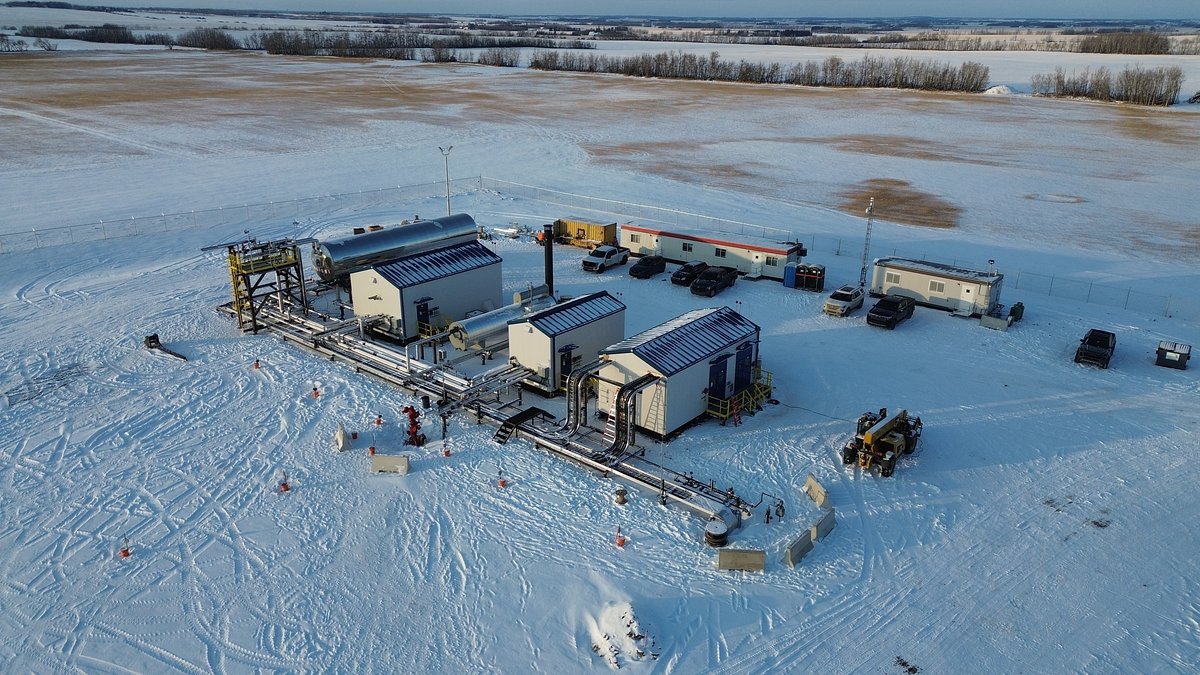
CALGARY, AB – December 09, 2025 – In a move that signals a significant acceleration of Alberta’s decarbonization strategy, private energy firm Bison Low Carbon Ventures Inc. has officially commenced operations at its Meadowbrook Carbon Storage Hub (MCSH). The announcement confirms that the facility, located near Legal, Alberta, has completed commissioning and begun injecting CO2, making it the first of the province's 25 competitively awarded carbon hub tenures to enter commercial service.
This milestone is more than a corporate achievement for Bison; it represents a critical proof-of-concept for Alberta’s ambitious plan to become a global leader in Carbon Capture and Storage (CCS). While the province has hosted large-scale, single-source CCS projects for years, Meadowbrook’s launch inaugurates the era of the multi-client carbon hub—a model designed to provide sequestration services to a broad array of industrial emitters and unlock decarbonization at scale.
A New Chapter for Alberta's Decarbonization
The journey for the Meadowbrook hub from concept to reality was a meticulous and rapid-paced process, navigating a stringent regulatory landscape. After securing a Carbon Sequestration Agreement from the province in August 2024, Bison obtained the crucial D065 scheme approval from the Alberta Energy Regulator (AER) in February 2025. This regulatory green light, subject to rigorous conditions, paved the way for the 15-month sprint of site preparation, construction, and installation of a comprehensive Measurement, Monitoring, and Verification (MMV) program.
Phase 1 of the facility is now licensed to inject up to 500 kilotonnes of CO2 per annum (ktpa). This initial capacity serves as the foundation for a much larger vision. The project is designed to scale in lockstep with customer demand, with a target of safely sequestering a minimum of 3 million tonnes per annum (Mtpa) for at least 25 years. This approach positions Meadowbrook to service both emerging, smaller-scale decarbonization projects and, eventually, major industrial players.
The hub model is a strategic evolution from earlier CCS projects in the province, such as Shell’s Quest facility and the Alberta Carbon Trunk Line (ACTL). Those projects were primarily built around one or two large emissions sources. In contrast, hubs like Meadowbrook are developed as open-access infrastructure, offering a 'fee-for-service' solution that allows companies to decarbonize without the prohibitive capital cost of building their own dedicated sequestration sites.
Navigating a Competitive and Evolving Landscape
Bison’s first-mover advantage among the new wave of hubs is a significant strategic victory. The company was one of 25 entities awarded evaluation tenures in 2022 in a competitive process designed to identify the most promising geological locations for permanent CO2 storage. While Shell Atlas received its commercial agreement first, Bison was the quickest to navigate the full AER approval process and begin injection operations, setting a benchmark for the dozens of other proposed projects.
The competition is formidable. The list of tenure holders includes industry giants like Enbridge, ARC Resources, and the Oil Sands Pathways to Net Zero alliance, all of whom are developing large-scale hub proposals across the province. In this crowded field, Bison is carving out a distinct niche. Its Meadowbrook project is strategically located within reach of Alberta's Industrial Heartland, a region with over 60 large facilities emitting a combined 35 Mtpa.
Furthermore, the company has highlighted a key geological advantage. The Meadowbrook hub injects CO2 into the Devonian Woodbend Group, a deep saline aquifer more than 700 meters above the crystalline basement rock layer where minor seismic activity has been a concern for other injection projects. This geological separation could mitigate risks of induced seismicity, a factor of growing importance for both regulators and community stakeholders.
The Economics of Carbon Storage: Scalability and Demand
The commercial viability of Meadowbrook and its peers hinges on a delicate interplay between technology, policy, and market demand. Bison's phased approach, starting with a manageable 500 ktpa, allows it to de-risk the project financially while building a customer base. The company has already secured agreements with two initial customers, including, notably, a direct air capture (DAC) facility. This early partnership with a carbon removal technology, not just an industrial emitter, signals a forward-looking strategy that taps into the high-value voluntary carbon market for engineered removals.
Looking ahead, the demand pipeline is robust. Heavy industries in the region, from petrochemical and fertilizer plants to cement producers, are facing mounting pressure to decarbonize under federal and provincial climate policies. The availability of a third-party sequestration service like Meadowbrook dramatically lowers the barrier to entry for these companies to adopt carbon capture technologies. The project's plan to scale to 3 Mtpa is a direct response to this anticipated demand.
Financial drivers are also aligning. Federal investment tax credits for CCS, combined with Alberta's established carbon pricing system for large emitters (TIER), create a compelling business case. For emitters, the cost of sequestration via a hub can be weighed against the cost of paying a carbon tax, making CCS an increasingly attractive compliance pathway.
The Bedrock of Success: Technology and Regulation
Underpinning the entire project is Alberta’s world-class regulatory framework and the sophisticated technology required for safe, permanent storage. The AER mandates a comprehensive Measurement, Monitoring, and Verification (MMV) plan, which acts as the project’s central nervous system. This program involves a suite of technologies to ensure the injected CO2 remains safely and permanently in the target geological formation. It includes continuous downhole pressure and temperature monitoring, groundwater and soil gas sampling, and seismic monitoring to provide an early warning system for any unforeseen issues.
Bison is leveraging decades of regional expertise in reservoir management, effectively repurposing the skills honed in the oil and gas sector for the energy transition. The chosen reservoir, a thick and porous dolomitized reef formation, is ideal for CO2 sequestration due to its high capacity and containment properties. This technical foundation, combined with stringent regulatory oversight, is crucial for building the long-term public and investor confidence needed for the industry to thrive.
The launch of the Meadowbrook Carbon Storage Hub is a tangible step forward in a long and complex journey. As the first of a new generation of CCS infrastructure, its operational performance and ability to attract a diverse customer base will be watched closely by investors, competitors, and policymakers. The project's success or failure will serve as a critical bellwether for the future of industrial decarbonization not only in Alberta but across Canada, demonstrating whether the province’s vast geological potential can be transformed into a cornerstone of a net-zero economy.