
- $100 million: SoftBank's initiative to fund Miami-based startups, reflecting the city's tech boom.
- 2025: The year enterprises move to large-scale AI deployment, per Forrester.
- Hundreds of billions: Capital managed by summit attendees, underscoring the scale of influence.
Experts agree that AI is driving an unprecedented, rapid transformation across industries, necessitating urgent adaptation to avoid obsolescence, while also requiring careful navigation of regulatory and ethical challenges.
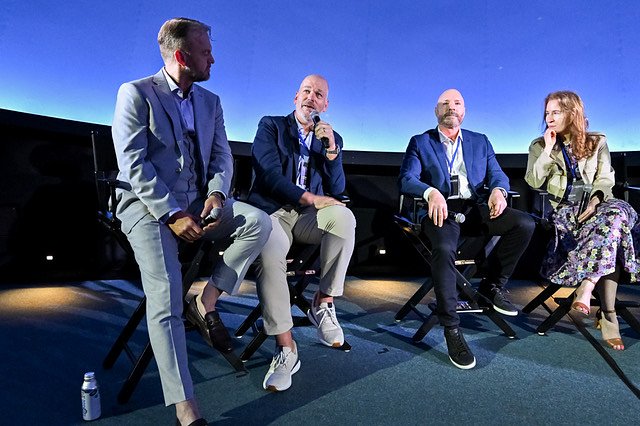
AI's Tipping Point: Global Leaders Meet in Miami to Chart the Future
MIAMI, FL – December 16, 2025 – Under the domed canopy of the Frost Science Museum and Planetarium, a select group of the world’s most powerful investors, CEOs, and policymakers are convening today for a starkly titled, invitation-only event: “The Coming Disruption: AI-First Summit.” Hosted by veteran tech entrepreneur and author Fred Voccola, the summit gathers decision-makers who collectively manage hundreds of billions in capital to confront a future being rapidly rewritten by artificial intelligence.
The event's premise, articulated forcefully by its host, is not one of gentle evolution but of radical, existential change. “AI touches every fabric of society – there’s no escaping it,” Voccola stated in the announcement. “Organizations who do not embrace and adapt to the change, will get left behind.”
The AI Imperative: Adapt or Perish
Voccola, who recently transitioned from his role as CEO of the multi-billion-dollar software giant Kaseya to Chairman and CEO of Simpro Group, frames the AI revolution as an urgent, do-or-die imperative. His best-selling book, The Coming Disruption: How AI First Will Force Organizations to Change Everything or Face Destruction, serves as the summit’s foundational text. The core argument is that the current technological shift is unlike any before it.
“It is the most disruptive and powerful force in human history – it will transform the way we think, live, govern, invest and work,” Voccola emphasized. He argues that while transformations like electricity and the internet took decades to fully manifest, “the full impact of the disruption of AI will be felt over several years.”
This message resonates with broader industry trends. After years of experimentation, major analyst firms like Forrester predict 2025 is the year enterprises move to strategic, large-scale AI deployment out of competitive necessity. The summit’s agenda reflects this urgency, with panels dedicated to AI’s impact on software, internal business transformation, and a session ominously titled, “The moat killer: Investor’s viewpoint on AI.” The discussions are geared not toward if companies should adopt AI, but how they can survive its tidal wave.
Voccola’s own career mirrors the pivot he advocates. After scaling Kaseya into a dominant force in IT management, partly through a strategy of aggressive acquisition and AI integration, his new venture with Simpro Group is explicitly building an “AI-first operating platform for the trades.” This move from a broader tech platform to a vertically-focused, AI-native solution demonstrates a commitment to the principles he espouses, applying them directly to disrupt a specific industry.
Miami's Ascent as a Global Tech Nexus
The choice of Miami as the summit's backdrop is no coincidence. The city has undergone a rapid transformation into a legitimate technology hub, a evolution actively cultivated by its leadership. Miami Mayor Francis Suarez, a featured panelist at the summit, has been a key architect of this change, famously responding to a Silicon Valley entrepreneur’s query in 2020 with a simple tweet: “How can I help?”
That open invitation sparked a significant migration of talent and capital. Major venture firms like Founders Fund, Andreessen Horowitz, and Khosla Ventures have established a significant presence, while SoftBank launched a $100 million initiative dedicated to funding Miami-based startups. This influx has created a vibrant ecosystem that Voccola, a long-time Miami resident and tech ecosystem supporter, is leveraging.
“Fred Voccola’s vision aligns perfectly with the spirit of Miami – fast, fearless and entrepreneurial,” Mayor Suarez noted, endorsing the summit's placement in the city. The event itself, which bills Miami as “The World’s AI-First City,” serves as both a celebration and a solidification of this new identity. The physical presence of Kaseya, Voccola’s former company, is literally cemented into the city's skyline with the naming rights to the Kaseya Center, home of the Miami Heat, serving as a constant reminder of the tech industry's deep integration into the city's fabric.
Behind Closed Doors: Shaping Tomorrow's AI Framework
While the summit’s theme is public, the conversations shaping the future of AI are happening behind closed doors. The exclusive, invitation-only nature of the event underscores its significance. The attendees are not just observers; they are the architects of the next economic era. The panels on “Energy, infrastructure & public policy” and “Higher education & AI” indicate that the discussions extend far beyond corporate profits, touching on the foundational pillars of society.
These closed-door sessions are occurring against a complex global backdrop. The European Union’s landmark AI Act is set to take effect in early 2025, creating a stringent regulatory framework that will have global ripple effects. As the leaders in Miami discuss disruption and opportunity, they are also implicitly navigating a minefield of emerging compliance demands, ethical dilemmas, and security vulnerabilities that AI introduces.
Issues such as algorithmic bias, data privacy, and the potential for mass job displacement are the unspoken counterweights to the narrative of limitless progress. The frameworks being built today must account for these challenges. The concentration of capital and influence in one room at the Frost Science Museum represents a unique moment to steer the technology's development toward responsible and equitable outcomes, or alternatively, to accelerate a future with unforeseen consequences.
The decisions and alliances forged here will likely influence investment strategies, corporate roadmaps, and public policy for years to come. As the day's panels unfold, the central question remains whether the assembled leaders can build a framework that not only harnesses AI's immense power but also mitigates its profound risks, ensuring the coming disruption leads to a more prosperous, rather than a more fractured, world.