
- 1,500+ attendees: The AI Council conference will convene over 1,500 engineers, founders, and technical leaders. - 90% of new data: Video data is expected to account for 90% of all new data generated, posing significant infrastructure challenges. - $2 billion acquisition: Tabular, creators of Apache Iceberg, was acquired by Databricks for a reported $2 billion.
Experts agree that the AI industry is undergoing transformative shifts, including a migration of European founders to Silicon Valley, the evolution of engineering roles through AI augmentation, and an impending infrastructure crisis driven by the rise of video AI.
AI's Next Wave: Founder Migrations, Coder Evolution, and a Video Data Crisis
SAN FRANCISCO, CA – April 28, 2026 – As the artificial intelligence boom continues to reshape every industry, the conversation is shifting from speculative hype to the hard-won lessons of implementation. At the center of this pivot is AI Council, a conference that has rebranded from its data-centric roots to tackle the new frontier of AI systems. The upcoming 2026 gathering, announced for May 12-14, is poised to be more than just a meeting of minds; it's a bellwether for the seismic shifts redefining the technology landscape, from global talent migration to the very nature of software engineering.
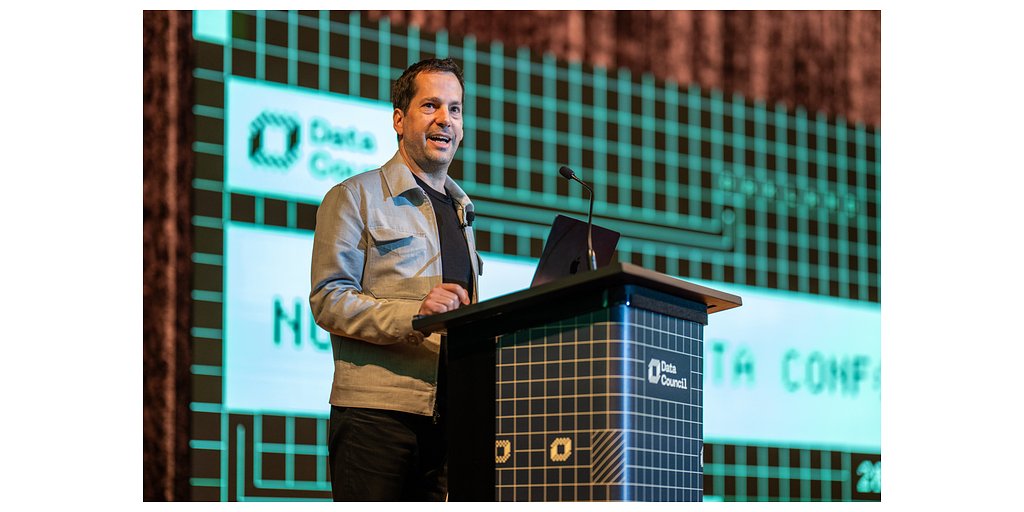
Formerly known as Data Council, the event has a decade-long history of being a crucible for the ideas and technologies that later become industry standards. Now, as AI Council, it convenes over 1,500 engineers, founders, and technical leaders to get real about what it takes to build and ship AI at scale. The conference agenda reveals three undercurrents already reshaping the industry: a quiet exodus of European founders to Silicon Valley, the evolution of engineering in an age of AI assistants, and an impending infrastructure crisis driven by video AI.
The Bay Area's New Gold Rush: Europe's AI Founders Arrive
A significant, accelerating trend identified by the conference organizers is a migration of elite technical talent from Europe directly to the Bay Area. Young, ambitious founders from hubs like Germany, Switzerland, and France are bypassing traditional European tech centers such as London and Berlin, setting their sights on San Francisco as the only place to build foundational AI infrastructure companies.
According to AI Council Founder and Zero Prime Ventures General Partner Pete Soderling, this isn't just about seeking venture capital; it's about proximity to the core of the ecosystem. “If you want to build at the tooling layer—closer to the chips, deeper in the stack—the Bay Area is the only place to do it,” said Soderling. This migration is characterized by a deep commitment. “These European founders know that. They’ve burned the boats. They gave up everything to be here, which means they have nothing to lose and everything to prove. American founders who are coasting on a Stanford pedigree should be watching their backs.”
This movement highlights a critical advantage Silicon Valley retains: a dense concentration of expertise, risk appetite, and a market uniquely receptive to deep-tech innovation. While Europe continues to foster its own AI ecosystems, the pull of the Bay Area for those working on the fundamental building blocks of AI appears stronger than ever, creating a new competitive dynamic at the heart of the industry.
Reinventing the Coder: How AI Augments, Not Automates, Engineering
Contrary to the prevailing narrative that AI will render software engineers obsolete, practitioners on the front lines see a different future unfolding. The rise of AI agents and concepts like “vibe coding”—where developers guide AI to handle rote implementation—is not hollowing out the profession but rather elevating it. The conference aims to dissect this evolution, moving beyond the 'death of the engineer' trope.
“Vibe coding is going to democratize engineering superpowers in ways that make STEM bootcamps and offshoring look quaint,” Soderling noted. The key insight is that while AI lowers the barrier to entry for producing code, it simultaneously raises the value of uniquely human skills. “But you still can't automate taste. The engineers who know how systems truly work, who can catch a model making a mistake, who can decompose a problem before handing it to the model, those people are more valuable than ever.”
This creates a bifurcation in the field. The floor for what constitutes an engineer is getting lower, but the ceiling for what a top-tier engineer can accomplish is rising dramatically. The new premium is on architectural thinking, critical evaluation of AI-generated output, and a deep, intuitive understanding of system design. The most valuable engineers of tomorrow will be those who can effectively orchestrate AI tools to solve complex problems, not just write lines of code.
The Coming Data Tsunami: Why Video AI Demands a Full-Stack Rebuild
While Large Language Models (LLMs) transformed the world's relationship with text, the next disruptive wave is poised to be video. The AI Council program signals an urgent, if not yet widely discussed, reality: the entire data stack is unprepared for the scale and complexity of video AI, necessitating a complete architectural rebuild.
Engineers in the community anticipate that video will soon account for the vast majority of all new data generated. The challenge lies in storing, processing, and analyzing this data efficiently. “Engineers in our community know that we’re about to see video data being 90% of all new data generated. Video LLMs are going to do to the data stack what text LLMs did three years ago—blow the whole thing up,” Soderling added. “We're investing in the tooling and infra rebuild before most people have even asked the question."
This impending shift presents immense technical hurdles, from creating new databases optimized for massive, unstructured video files to developing networking protocols that can handle petabyte-scale transfers without bottlenecks. It also represents a massive opportunity for a new generation of infrastructure startups focused on building the foundational tools for video search, analysis, and generation. Companies that solve these problems will become the backbone of the next era of AI applications.
Charting the Future: A Conference with a History of Hits
AI Council's ability to spotlight these trends stems from its established reputation as an industry bellwether. The conference has a proven track record of giving a platform to the people and projects that go on to define the industry. Greg Brockman spoke at a Soderling-organized event before co-founding OpenAI, and the creators of Apache Iceberg took the stage before their company, Tabular, was acquired by Databricks for a reported $2 billion. The AI Launchpad event has also become a kingmaker, with past participants like Mooncake Labs (acquired by Databricks) and TopK (raised a $5.5M seed) finding swift success.
This year's lineup reinforces that legacy. Headlining the conference is Diogo Almeida, a co-inventor of the technologies behind ChatGPT and now co-founder of TypeSafe AI, a company rethinking LLMs for reliable, no-human-in-the-loop automation. Also taking the stage is Hannes Mühleisen, the co-creator of the widely used DuckDB database, who will preview a “super-secret next big thing.” These speakers represent the conference’s core ethos: a vendor-neutral, peer-reviewed forum where the builders themselves, from established leaders to rising stars, chart the course for the future of artificial intelligence.