
- 98% accuracy: ProMap® Smart achieves 98% accuracy in prostate contouring on MRI scans.
- Under 5 seconds: The AI tool completes the contouring process in under five seconds, drastically reducing diagnosis time.
- $13 billion market: The global prostate cancer diagnostics market is projected to reach over $13 billion by 2036.
Experts view ProMap® Smart as a significant advancement in prostate cancer diagnosis, enhancing efficiency and accuracy while addressing critical healthcare challenges such as rising patient volumes and limited clinical resources.
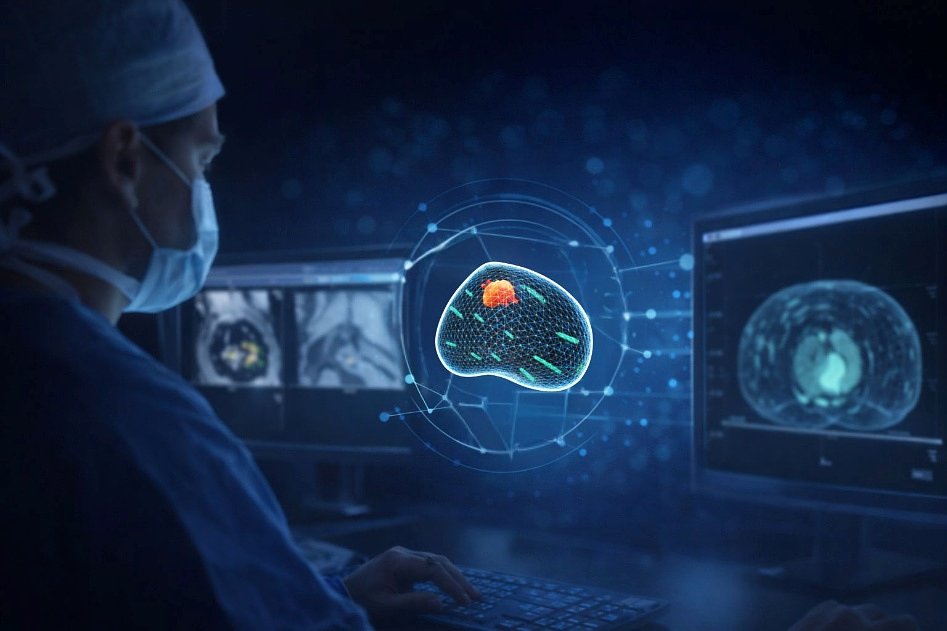
AI Tool Slashes Prostate Cancer Diagnosis Time to Seconds
PRINCETON, NJ – May 14, 2026 – Medical technology firm Koelis today announced the launch of its new AI-powered software, ProMap® Smart, at the American Urological Association (AUA) Annual Meeting. The software promises to automate a critical step in prostate cancer diagnosis—prostate contouring on MRI scans—delivering 98% accuracy in under five seconds, a significant leap in efficiency for a field grappling with rising patient numbers and limited clinical resources.
The new tool integrates with the company's existing Koelis Trinity® fusion biopsy system, aiming to streamline the diagnostic workflow, enhance precision, and help healthcare providers align with evolving U.S. reimbursement standards.
The AI Revolution in Prostate Imaging
ProMap® Smart enters a competitive and rapidly advancing field where artificial intelligence is fundamentally reshaping medical imaging. Koelis's solution leverages a patented hybrid engine combining machine learning with a 3D Elastic Model. Trained on thousands of diverse patient MRI scans, the algorithm learns to identify and outline the prostate gland automatically, a task traditionally performed manually by radiologists or urologists, which can be time-consuming and prone to variability.
This automation is a critical component of the MRI-ultrasound fusion biopsy procedure. In this process, a pre-biopsy MRI showing suspicious lesions is fused with a live ultrasound image during the procedure, allowing the urologist to guide the biopsy needle with high precision. The accuracy of this fusion heavily depends on the initial, precise delineation—or contouring—of the prostate on the MRI. By automating this step with high speed and accuracy, ProMap® Smart aims to standardize the process and free up valuable clinician time.
The software is designed to work seamlessly with the Koelis Trinity® system, which is known for its proprietary Organ-Based Tracking (OBT Fusion®) technology. This technology actively compensates for prostate motion during a biopsy, ensuring the needle reaches its intended target. The combination of OBT Fusion® for real-time tracking and ProMap® Smart for initial AI-powered planning represents a comprehensive approach to improving diagnostic accuracy.
Koelis is not alone in this pursuit. Other major players in medical technology, such as GE HealthCare, Philips, and Siemens Healthineers, have also introduced AI-driven tools to assist with prostate imaging. Solutions like GE's "Prostate Volume Assist," Philips' collaboration with Quibim for automated segmentation, and Siemens' "AI-Rad Companion" all aim to reduce radiologist workload and improve diagnostic consistency. The key differentiator often lies in the underlying algorithms, integration with specific hardware, and demonstrated real-world performance, a landscape where Koelis now positions ProMap® Smart as a leading contender.
Streamlining Care and Costs
The push for innovations like ProMap® Smart is driven by pressing healthcare realities. Urology practices and hospitals face growing caseloads for prostate cancer screening and diagnosis, creating a bottleneck that can delay care. Efficiency is no longer just a convenience; it's a clinical and economic necessity.
"With growing volumes of patients and limited clinical resources, precision and efficiency in fusion biopsy is what allows me to provide the best care to my patients," said Dr. Evan Kovac of Rutgers New Jersey Medical School and University Hospital, commenting on the launch. "With the launch of ProMap Smart, Koelis is releasing a very meaningful innovation."
The software's ability to complete a complex task in seconds directly addresses this workflow challenge. By reducing the time spent on MRI preparation, clinics can potentially increase patient throughput, reduce wait times, and optimize the use of their high-value imaging and biopsy equipment.
Furthermore, the technology's alignment with U.S. healthcare guidelines and reimbursement standards is a crucial factor for adoption. While specific reimbursement codes for AI-assisted contouring are still evolving, the financial benefits are often indirect but substantial. By improving efficiency and procedural accuracy, healthcare providers can strengthen their case for reimbursement under existing codes for fusion biopsy. More importantly, by potentially reducing the number of unnecessary biopsies through more accurate targeting, AI tools contribute to significant cost savings for the broader healthcare system and reduce patient risk. The global prostate cancer diagnostics market is projected to expand significantly, reaching over $13 billion by 2036, and platforms that deliver measurable performance and regulatory compliance are best positioned to capture this growth.
From Precision Diagnosis to Personalized Treatment
The impact of enhanced diagnostic tools like ProMap® Smart extends far beyond the biopsy suite. The precision it enables is a cornerstone of the modern shift towards personalized prostate cancer management, moving away from a one-size-fits-all approach to treatments tailored to the individual patient's specific disease.
Accurate 3D mapping of the prostate and any cancerous lesions within it is critical for stratifying risk. It helps clinicians and patients make more informed decisions about the best course of action, which could range from active surveillance for low-risk disease to more aggressive interventions for advanced cancers.
Crucially, this level of detail is enabling the rise of focal therapy—a less invasive treatment paradigm that targets only the cancerous parts of the prostate, sparing the surrounding healthy tissue. Unlike traditional radical treatments like surgery (prostatectomy) or whole-gland radiation, which can have significant side effects including incontinence and erectile dysfunction, focal therapies aim to preserve quality of life. The success of these targeted treatments, which can use technologies like high-intensity focused ultrasound (HIFU) or microwave ablation, is entirely dependent on knowing exactly where the cancer is.
The Koelis Trinity® system, which ProMap® Smart now enhances, was designed with this future in mind. Its ability to create a detailed 3D map, track the prostate's movement, and recall the exact location of a previous biopsy makes it an ideal platform for both diagnosing cancer and planning and delivering focal therapy. Clinical trials, such as the VIOLETTE trial investigating Koelis's microwave ablation technique, have already shown positive outcomes, lending credibility to this less invasive approach. By making the foundational step of contouring faster and more reliable, ProMap® Smart further accelerates the adoption of these patient-friendly treatment options.
The Road Ahead for AI in Urology
The introduction of ProMap® Smart is a prominent example of AI's burgeoning role in urology, but it is part of a much larger trend. Across medicine, AI algorithms are being developed to not just automate tasks but to augment the capabilities of human experts. Studies have shown that in some cases, AI can detect significant prostate cancers more effectively than human radiologists and drastically reduce false positives.
However, the path to widespread clinical adoption is not without its challenges. Experts in the field caution that while promising, many AI tools require extensive validation across diverse patient populations to ensure they are robust and free of bias. Integrating these complex software solutions into established clinical workflows can also present technical and financial hurdles. Perhaps most importantly, building clinical trust requires transparency, with a growing demand for "Explainable AI" (XAI) that allows clinicians to understand how an algorithm arrived at its conclusion.
Despite these hurdles, the momentum is undeniable. The potential for AI to enhance diagnostic accuracy, streamline workflows, reduce healthcare costs, and ultimately enable more personalized and less invasive cancer care is immense. Innovations like ProMap® Smart are not replacing clinicians but are becoming powerful tools in their hands, allowing them to work more efficiently and focus their expertise where it matters most. As this technology continues to mature and prove its value in real-world clinical settings, it is set to become an indispensable part of modern prostate cancer management.