
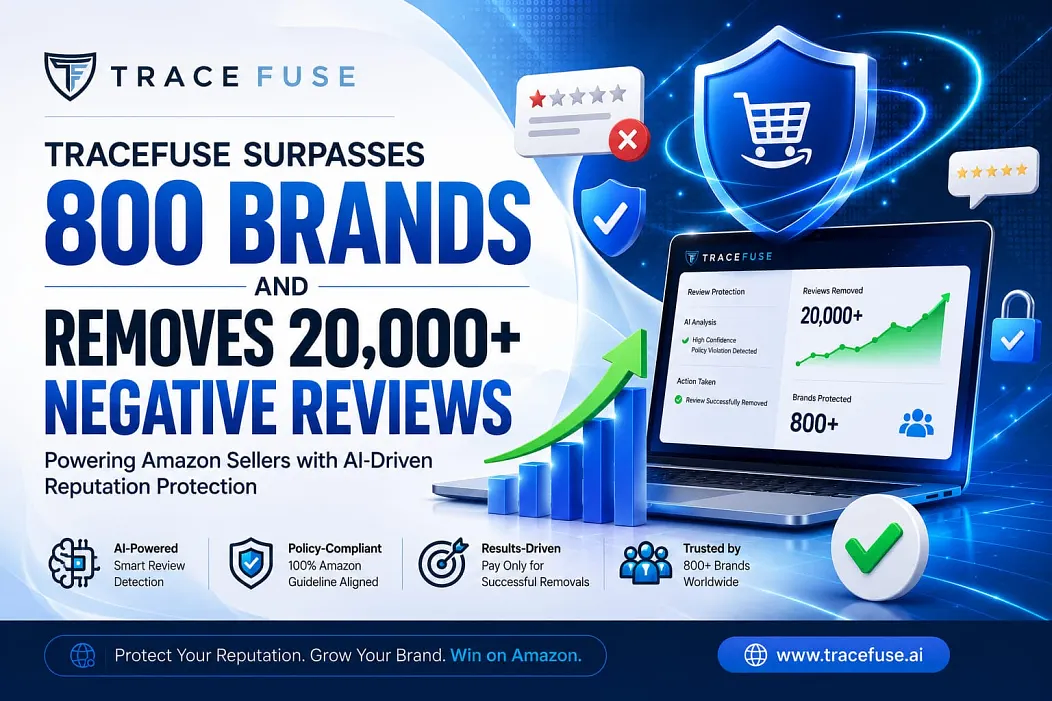
- 800+ brands helped by TraceFuse to remove over 20,000 policy-violating reviews.
- 25% success rate on review removal cases, claimed as the highest in the industry.
- One client saw a 25% sales increase after removing 15% of non-compliant reviews.
Experts would likely conclude that AI-powered tools like TraceFuse are becoming essential for Amazon sellers to maintain credibility and compliance in an increasingly complex review ecosystem.
AI Sentinels: The Fight for Credibility in Amazon's Review Ecosystem
RENO, NV – June 15, 2026 – In the sprawling digital aisles of Amazon, customer reviews are the lifeblood of commerce. They are the currency of trust, the engine of visibility, and often the deciding factor between a click and a purchase. But for the millions of sellers navigating this ecosystem, the review system is also a minefield, where a handful of fraudulent or policy-violating comments can cripple a product's reputation and sink a business. Now, a growing number of brands are turning to a new kind of guardian: AI-powered services that act as digital janitors, cleaning up the marketplace one illegitimate review at a time.
Leading this charge is TraceFuse, a Reno-based software company that recently announced it has helped over 800 brands remove more than 20,000 reviews that violate Amazon's own community guidelines. This milestone is more than just a corporate achievement; it’s a signal flare indicating a significant shift in how sellers are protecting their digital storefronts. It points to a deeper story about the fight for integrity in an arena where credibility is everything.
The High Cost of a Broken Star
For any Amazon seller, the star rating is a sacred metric. It dictates placement in search results, influences advertising costs, and directly impacts consumer confidence. The problem arises when this metric is manipulated. Illegitimate reviews can range from malicious attacks by competitors and defamatory comments to feedback left by customers who were offered illicit incentives for their post. Amazon’s Community Guidelines explicitly forbid these practices, maintaining a “zero-tolerance policy” for any attempt at review manipulation.
Yet, these reviews persist, creating an uneven playing field. A small business that has spent years building a quality product can see its sales plummet overnight due to a coordinated burst of fake one-star reviews. The damage is not just financial; it’s a direct assault on the trust they have worked to build with customers. One e-commerce analyst noted that for many small brands, their Amazon presence is their entire business, making them acutely vulnerable to such attacks. The challenge for sellers has always been how to fight back without running afoul of Amazon's notoriously strict Terms of Service (TOS), where a misstep can lead to account suspension—a death sentence in the world of e-commerce.
This is the precise pain point that has created a fertile ground for solutions like TraceFuse. “Amazon sellers work hard to earn customer trust, but a small number of policy-violating reviews can still damage visibility, conversion rates, and brand reputation,” said Shane Barker, the founder of TraceFuse, in a recent statement. His comments underscore a critical need in the market: not a tool to silence legitimate criticism, but a compliant mechanism to enforce the platform's own rules.
A 'White Hat' Approach in a Grey Market
What makes TraceFuse’s model compelling is its strict adherence to a “white hat” philosophy. The company, founded in 2022, doesn't promise to remove every negative review. Instead, it focuses exclusively on identifying and flagging content that genuinely violates Amazon's policies. The process is a blend of machine intelligence and human expertise, a strategy that appears to be the key to its success.
First, the company’s AI scours a client's reviews, analyzing patterns and language to detect potential violations that a human might miss. Once a review is flagged, it isn't automatically challenged. Instead, a team of compliance experts takes over, using a proprietary “TraceLogic™ methodology” to build a case file. They compile evidence, structure the appeal according to Amazon’s preferred format, and then manually submit it through the appropriate channels. This meticulous, human-driven final step is crucial for avoiding the automated-activity triggers that can alert Amazon’s enforcement systems and put an account at risk.
This approach yields a claimed success rate of 25% on all cases filed—a figure the company asserts is the highest in the industry. The impact can be significant. One client, a health supplement brand, reportedly saw a 25% increase in sales within a quarter after the service helped remove over 15% of its flagged, non-compliant reviews. By operating on a performance-based model—clients only pay for successful removals—the company directly aligns its interests with those of the sellers it serves. It’s a strategy built on delivering tangible results, not just software access.
Navigating the Amazon Tightrope
The relationship between Amazon and third-party service providers is famously fraught. The e-commerce giant is fiercely protective of its platform and has been known to bring the hammer down on services and sellers who attempt to game its systems. This makes the claim of being “100% compliant with Amazon Community Guidelines” not just a marketing slogan, but a core pillar of survival.
TraceFuse’s methodology appears to be a masterclass in navigating this complex environment. By focusing on enforcing Amazon's existing rules rather than trying to bend them, the service positions itself as an ally in maintaining marketplace health, not an adversary. Barker, an e-commerce veteran with decades of experience, refined the company's processes over six years, developing a deep institutional knowledge of how Amazon's internal review systems operate. This expertise allows the firm to differentiate legitimate grievances from actionable policy violations, a distinction that is critical for maintaining compliance.
This focus on legitimacy is what separates such services from the shadowy “black hat” operators who promise to remove negative reviews through illicit means, often putting seller accounts in jeopardy. The success of a compliant service like TraceFuse suggests a maturation in the seller community, with more businesses recognizing that sustainable growth on Amazon depends on playing by the rules, even when it means seeking expert help to enforce them.
The Rise of the E-commerce Specialist
The emergence of highly specialized tools like TraceFuse is indicative of a broader trend within the digital economy. As platforms like Amazon become more complex and competitive, a new ecosystem of niche software providers is rising to meet the specific challenges sellers face. From inventory management and advertising optimization to reputation protection, these tools provide small and medium-sized businesses with the capabilities to compete in a landscape once dominated by major corporations with vast internal resources.
This is where innovation is meeting human need in a tangible way. Entrepreneurs are no longer just selling products; they are managing complex digital operations on a global scale. The success of TraceFuse, which now monitors brands across multiple international markets, demonstrates that there is a powerful demand for solutions that deconstruct these complexities. By offering a targeted, effective, and compliant strategy for one of the most critical aspects of selling online, they are empowering businesses to protect their hard-won reputations and focus on what they do best: creating great products.