
- 90% of attending physicians already had experience using next-generation sequencing (NGS).
- 20,000 patients annually expected to benefit from Taiwan's NHI coverage of NGS testing.
- Multi-omics AI platform integrates genomic, epigenomic, fragmentomic, and transcriptomic data for enhanced cancer detection.
Experts agree that AI-powered multi-omics liquid biopsy technologies represent a significant advancement in precision oncology, offering earlier detection and more personalized treatment strategies, but emphasize the need for robust clinical validation to ensure effective integration into routine clinical practice.
AI-Powered Cancer Tests Debut in Taiwan, Sparking Clinical Interest
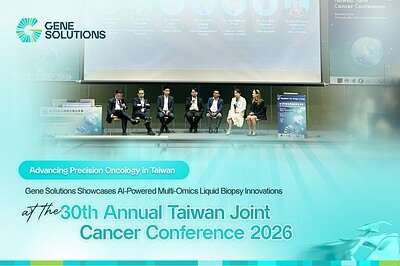
TAIPEI, Taiwan – May 22, 2026 – A major oncology conference in Taipei became the stage for the formal introduction of next-generation cancer diagnostics to Taiwan's medical community, signaling a potential shift in how the disease is detected and managed. Gene Solutions, a global biotechnology firm, made its inaugural appearance at the 30th Taiwan Joint Cancer Conference (TJCC 2026), showcasing a suite of AI-powered liquid biopsy technologies that drew significant interest from the nation's top oncologists.
The company's platform, which uses a simple blood draw to analyze multiple biological signals of cancer, was a focal point of discussion. Physicians showed keen interest in its applications for multi-cancer early detection (MCED) and for monitoring molecular residual disease (MRD)—the tiny traces of cancer that can remain after treatment and lead to recurrence. The enthusiastic reception highlights Taiwan's readiness to adopt cutting-edge tools in the fight against cancer.
A Market Primed for Innovation
Gene Solutions' entry into Taiwan comes at a particularly opportune moment. The Asia-Pacific region is currently the fastest-growing market for precision oncology, and Taiwan is a key player, boasting a highly advanced healthcare system and a medical community eager to embrace clinically validated innovation. A survey conducted by Gene Solutions at the conference revealed that over 90% of attending physicians already had experience using next-generation sequencing (NGS), the foundational technology behind modern genomic tests.
This high level of familiarity creates a fertile ground for more advanced applications like multi-omics and AI-driven diagnostics. More importantly, this clinical readiness is now backed by significant government support. As of May 1, 2024, Taiwan's National Health Insurance (NHI) began covering the cost of NGS testing for 19 different types of solid and hematological tumors. This landmark policy is expected to benefit over 20,000 patients annually and removes a major financial barrier that has historically limited access to personalized medicine.
With reimbursement structures in place and a clinically sophisticated user base, Taiwan represents a near-perfect environment for the evidence-based adoption of technologies that promise to make cancer care more precise, personalized, and proactive. The focus now shifts from if these technologies will be used to how they can be integrated most effectively into routine clinical practice.
Beyond Genes: The Power of Multi-Omics and AI
The technologies presented at TJCC 2026 represent a significant leap beyond traditional genetic testing. Instead of looking at just one type of data, Gene Solutions' platform integrates "multi-omics" information—analyzing genomic (DNA mutations), epigenomic (methylation patterns), fragmentomic (DNA fragment sizes), and transcriptomic (RNA) data simultaneously. This wealth of information is then processed by artificial intelligence algorithms to identify subtle cancer signals with greater sensitivity and accuracy.
During a satellite symposium, a panel of regional experts detailed how this approach is changing patient care. Assistant Professor Aaron Tan Chia-Ken of the National Cancer Centre Singapore explained that integrated multi-omics better captures the complexity and evolution of tumors compared to older, single-driver gene tests. He presented a real-world case of a patient with multiple lung cancers to illustrate how this comprehensive view can guide more effective treatment strategies.
Dr. Le Son Tran, a research lead at Gene Solutions, explained the science behind SPOT-MAS, the company's AI-powered test for multi-cancer early detection. He noted that many deadly cancers are not covered by current screening programs, and early-stage tumors often release minuscule amounts of circulating tumor DNA (ctDNA). By combining multiple "omic" signals, the AI model can detect these faint traces, opening the door to finding cancers earlier when they are most treatable.
Taiwanese experts also weighed in. Dr. Nai-Jung Chiang from Taipei Veterans General Hospital shared her experience using liquid biopsy for gastrointestinal cancers, emphasizing its value as a minimally invasive tool for monitoring treatment response and detecting recurrence without the need for repeated, impractical tissue biopsies.
From Lab to Clinic: The Critical Role of Evidence
Despite the excitement around the new technology, Taiwanese physicians remain grounded by a crucial principle: the need for robust clinical evidence. The conference survey confirmed that clinical validation was the single most important factor influencing their decision to adopt a new diagnostic test, ranking higher than cost, turnaround time, or the number of genes on a panel.
Recognizing this, Gene Solutions is actively working to build that local evidence base. The company highlighted its collaboration with Dr. Tom Wei-Wu Chen and the National Taiwan University Hospital (NTUH) on the MELODY study. This multinational, randomized Phase II trial is evaluating a tumor-informed MRD approach in sarcoma patients, a cancer type where sensitive monitoring can be transformative.
Dr. Chen, a speaker at the symposium, presented compelling data showing that the persistence of ctDNA after treatment is a powerful predictor of cancer recurrence, often appearing long before any signs are visible on imaging scans. He stressed the superior sensitivity of tumor-informed MRD assays, which are personalized to a patient's specific tumor mutations, making them particularly effective in low-disease-burden settings.
"The integration of multi-omics liquid biopsy with ctDNA-based MRD monitoring represents a significant advancement in precision oncology," said Dr. Tom Wei-Wu Chen. "Our collaboration with Gene Solutions on the MELODY study allows us to rigorously evaluate tumor-informed MRD approaches in sarcoma patients, where sensitive longitudinal monitoring can truly make a difference in guiding treatment decisions and improving outcomes."
This collaboration exemplifies the path forward: a partnership between innovators and clinicians to rigorously validate new tools and translate them into tangible benefits for patients.
Navigating a Dynamic Landscape
Gene Solutions enters a competitive but rapidly expanding Asia-Pacific liquid biopsy market, where it will vie with established global players like Guardant Health and Natera, as well as strong regional companies. However, its strategic focus on an AI-powered, multi-omics platform that covers the entire cancer journey—from early detection (SPOT-MAS) to comprehensive profiling and monitoring (K-4CARE)—provides a key differentiator. The high interest from Taiwanese physicians in the K-4CARE assay, which combines DNA and RNA analysis, suggests the market is ready for more comprehensive profiling tools.
The company's commitment to the region is further underscored by its partnership with NEWCL Biomedical Laboratory to establish an advanced NGS facility in Taiwan in 2025, ensuring local infrastructure to support faster turnaround times and broader access.
"Taiwan has a highly advanced oncology community with strong experience in genomic testing and an openness to clinically validated innovation," said Ida Deleskog Lindstroem, Global Medical Affairs Director at Gene Solutions. "Our participation at TJCC 2026 demonstrated that physicians are actively exploring how AI-powered multi-omics liquid biopsy can support earlier detection, better-informed treatment decisions, and precise longitudinal ctDNA monitoring. Gene Solutions is committed to collaborating with clinicians, hospitals, medical societies and industry partners in Taiwan to deliver robust, accessible, and evidence-based genomic solutions to more patients."
This combination of advanced technology, strong local partnerships, and a healthcare system actively supporting innovation suggests that the landscape of cancer care in Taiwan is on the cusp of a significant transformation.