
- $77M contract: Amentum secures a 60-month firm-fixed price deal for AI-driven logistics modernization in the Indo-Pacific.
- 50,000 employees: Amentum's global workforce supports large-scale logistics programs.
- $1.04B contract: Previous U.S. Army logistics deal demonstrates Amentum's track record.
Experts would likely conclude that this contract represents a strategic leap in military logistics, leveraging AI to address critical supply chain challenges in a contested region, reinforcing U.S. operational readiness and alliance commitments in the Indo-Pacific.
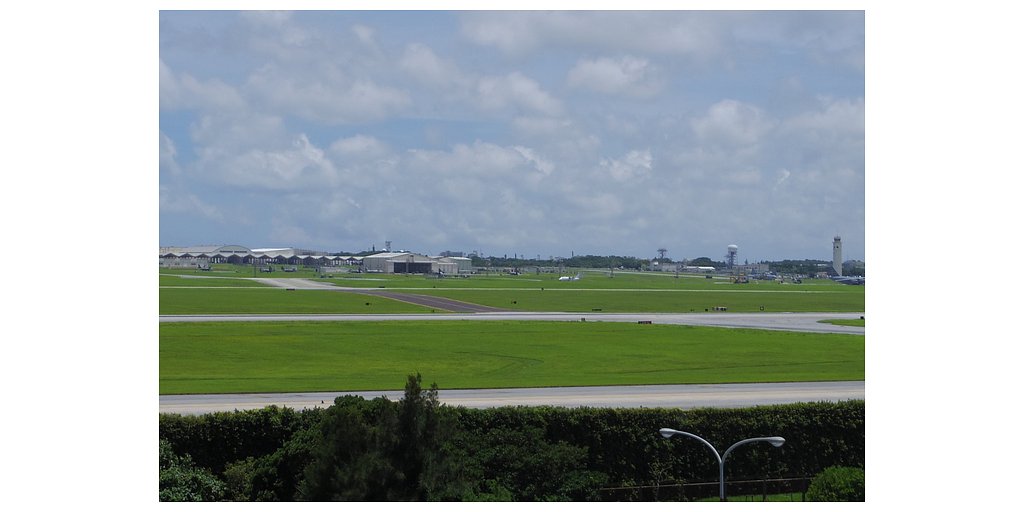
AI on the Frontline: Amentum's $77M Deal to Overhaul Pacific Defense Logistics
CHANTILLY, VA – June 17, 2026
Amentum, a prominent player in the global engineering and technology sector, has secured a significant $77 million, 60-month firm-fixed price contract from the General Services Administration (GSA). The contract is set to deliver modernized, end-to-end supply chain solutions for the Pentagon and other federal customers operating in Japan. This initiative is a critical component of the U.S. Indo-Pacific Command (INDOPACOM) and will leverage Artificial Intelligence to fundamentally reshape how logistics are managed in one of the world's most strategically complex regions.
The program aims to enhance operational readiness by ensuring a seamless and intelligent supply chain for U.S. military installations. By integrating AI tools for demand planning, forecasting, and catalog management, the Virginia-based contractor will tackle deep-seated logistical challenges, marking a pivotal step in the Pentagon's strategy to maintain its edge through technological superiority.
The Tyranny of Distance: INDOPACOM's Logistical Gauntlet
To grasp the significance of this contract, one must first understand the immense challenge of logistics in the Indo-Pacific. The region, which covers more than half the Earth's surface, is defined by what military planners call the "tyranny of distance." Vast expanses of ocean separate friendly ports and potential hotspots, turning supply chain management into a monumental test of endurance and precision. These supply lines are not merely long; they are increasingly contested.
The U.S. Department of Defense has identified the Indo-Pacific as its priority theater, a landscape where near-peer competitors possess advanced anti-access/area-denial (A2/AD) capabilities. This means that logistics operations across land, sea, air, and cyberspace are constantly at risk of disruption. In this environment, the traditionally efficient "just-in-time" supply model, which minimizes inventory to cut costs, becomes a critical vulnerability. A single disruption can ripple through the system, grounding aircraft, sidelining ships, and undermining the readiness of forward-deployed forces.
In response, the Pentagon is actively shifting toward a more resilient "just-in-case" posture. This model requires pre-positioning vast amounts of materiel and developing a distributed sustainment network, but it creates its own complexities. It demands an almost clairvoyant ability to anticipate needs. Without accurate forecasting, a "just-in-case" system can lead to mountains of the wrong supplies in the wrong places. This is precisely the problem Amentum's AI-driven approach is designed to solve.
AI as the New Quartermaster
The core of this modernization effort is the application of Artificial Intelligence to transform raw data into actionable logistical intelligence. This is not just about automating existing processes; it is about creating a predictive, self-correcting system that can anticipate the needs of a modern military operating in a fluid environment. The AI tools will be incorporated to enhance several key functions.
Demand planning and forecasting will move beyond simple historical analysis. Machine learning algorithms will process immense datasets—factoring in operational tempo, geopolitical shifts, partner nation exercises, and even environmental conditions—to predict the demand for parts and supplies with far greater accuracy. This provides the data-driven foundation for a truly effective "just-in-case" strategy.
Furthermore, AI will revolutionize catalog management. The military's inventory consists of millions of unique items, and a simple cataloging error can have significant consequences. AI can automate the classification, tracking, and management of this vast inventory, ensuring that the right part is identified and dispatched with speed and accuracy. This digital backbone is crucial for improving customer order fulfillment and on-time delivery, directly impacting mission readiness.
"Amentum’s new relationship with the GSA is a natural fit given our unique global supply chain reach, forward-positioned operational capability and expeditionary sustainment,” said Dr. Karl Spinnenweber, president of Amentum’s Mission Solutions business. "Our extensive experience in delivering turnkey supply chain solutions worldwide ensures we can support the GSA and INDOPACOM with predictability, reliability, and efficiency.” This a single, agile framework is designed to ensure seamless operations in contested, austere and politically sensitive environments.
The Business of Readiness: A Strategic Partnership
The contract's administration by the General Services Administration (GSA) is itself a strategic choice. As the federal government's central procurement agency, the GSA acts as a bridge, allowing the Department of Defense to access cutting-edge commercial solutions and innovation without the lengthy process of bespoke contracting. By using a GSA vehicle, the Pentagon can more rapidly deploy technologies from vetted, high-performing partners like Amentum.
The firm-fixed price structure of the $77 million award is also telling. It places the maximum risk on the contractor to perform on time and on budget, incentivizing efficiency and cost control. This reflects the government's confidence in Amentum's ability to deliver, a confidence built on a strong track record. The company, which employs approximately 50,000 people globally, has managed massive logistics programs before, including a $1.04 billion contract to support the U.S. Army's prepositioned stocks in Europe. This new contract represents an evolution of those capabilities, integrating advanced digital tools into its core logistics offerings.
This partnership model highlights a broader trend in national security: the increasing reliance on the private sector to solve complex defense challenges. As technology accelerates, the DoD is looking to agile, innovative companies to maintain its technological overmatch, particularly in fields like AI, cyber, and data analytics.
Fortifying an Alliance in a Contested Theater
Ultimately, this logistics contract is about more than just parts and pallets; it is about projecting power and reinforcing alliances. Its implementation in Japan is no coincidence. The U.S.-Japan alliance is the cornerstone of American strategy in the Indo-Pacific, providing a critical hub for forward-deployed forces and serving as a primary deterrent to regional instability.
A credible deterrent rests on a demonstrable ability to sustain military operations. By modernizing the logistical backbone of U.S. forces in Japan, this contract directly strengthens that credibility. It ensures that the forces stationed there, and those operating throughout the theater, can remain equipped and ready to respond to any contingency. This enhanced logistical resilience sends a powerful message to allies and adversaries alike about the U.S. commitment to the region.
Moreover, this initiative deepens the U.S.-Japan defense partnership. It creates opportunities for collaboration, technology transfer, and greater interoperability between the two nations' forces. As the U.S. seeks to leverage Japan's advanced industrial base for maintenance, repair, and overhaul (MRO) activities, a modernized and transparent supply chain becomes an essential enabler. By embedding intelligent, predictive capabilities into the very lifeline of its forces, the Pentagon is not just stocking shelves in Japan; it is underwriting the stability of the entire Indo-Pacific region.