
- 50% cost reduction: Trooly.AI claims its platform can slash research costs by 50%.
- 3-5x efficiency: The system promises to improve efficiency by a factor of three to five.
- 180 million respondents: The platform has access to a global network of approximately 180 million potential respondents across 25 countries.
Experts suggest that while Trooly.AI's technology could democratize access to deep user insights, ethical concerns around bias and data privacy in emotional AI require careful oversight and transparency.
AI Interviewer Promises Empathy and Scale in Market Research
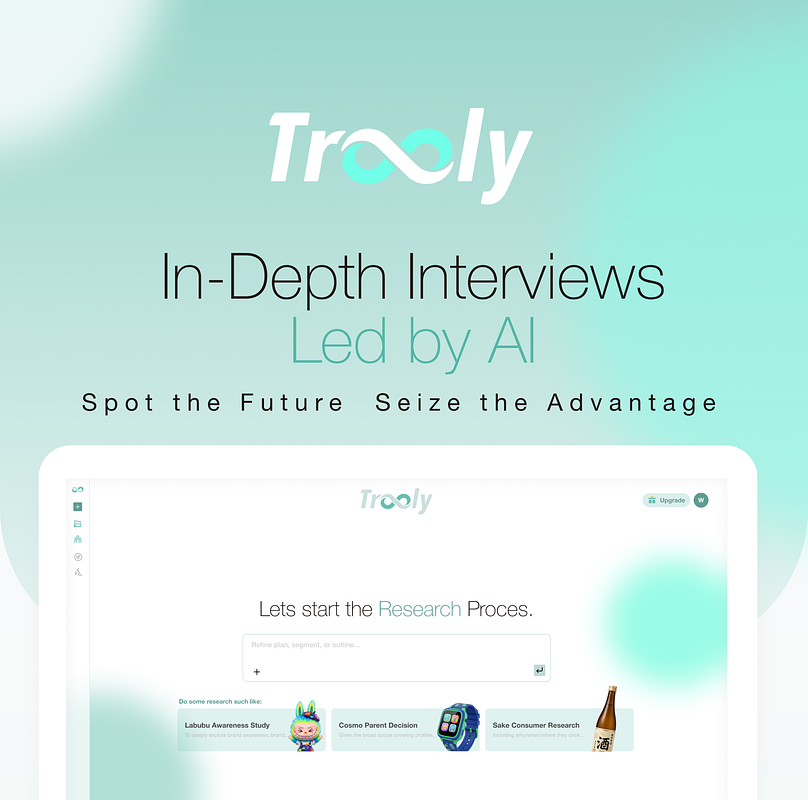
PALO ALTO, CA – March 27, 2026 – A Palo Alto-based startup is aiming to overhaul the multi-billion dollar market research industry with the launch of an AI-native platform designed to conduct in-depth, qualitative interviews at an unprecedented scale. Trooly.AI announced today its new agent-based system, which it claims can perform 45-minute user interviews and deliver professional-grade insights within 24 hours, a process that traditionally takes weeks.
The company's platform promises to slash research costs by 50% and improve efficiency by a factor of three to five. At the heart of its technology is an AI agent equipped with what Trooly calls an "Empathy Engine," designed to detect and respond to human emotional cues. By automating one of the most time-intensive aspects of product development and marketing, Trooly is betting that it can democratize access to the deep user understanding that was once the preserve of large corporations with deep pockets.
The Technology Behind the Talk
Trooly's platform is built on what the company describes as a "state-of-the-art" (SOTA) agent-based architecture. In the world of AI, this represents a shift away from rigid, pre-programmed software toward autonomous systems that can perceive, reason, and act to achieve complex goals. These agents are fueled by a continuous data stream, creating a self-reinforcing learning loop that, according to the company, forms a "durable and defensible advantage."
The system's novelty lies in its integration of multiple advanced AI capabilities. It combines long and short-term reasoning with multi-modal awareness, allowing it to process not just what users say, but how they say it—analyzing text, tone, and visual cues simultaneously.
The most distinctive feature is the "Empathy Engine." This component draws from the field of affective computing, or emotional AI, which focuses on developing algorithms that can recognize, interpret, and simulate human emotions. Trooly claims its AI interviewer doesn't just ask questions; it creates a "safe space" by detecting subtle emotional signals in an interviewee's voice and expression, responding with real-time validation. The goal is to encourage more authentic and deeper conversations, leading to higher-quality insights than a standard survey or a less sophisticated chatbot could provide.
A New Competitive Landscape
While Trooly’s claims are bold, it enters a market already buzzing with AI-driven innovation. A growing number of companies are leveraging artificial intelligence to disrupt traditional research methods. Competitors like Conveo AI and BoltChatAI offer similar promises of turning conversations into instant insights, drastically cutting down project timelines. Others, such as Delve AI, use AI to generate synthetic user personas for rapid testing.
Against this backdrop, Trooly aims to differentiate itself with its end-to-end automation and unique technological blend. The company asserts its platform can autonomously handle the entire research lifecycle, from designing the study to conducting the 45-minute interviews and delivering a full report with actionable advice.
Furthermore, its massive global reach—a network of approximately 180 million potential respondents across 25 countries—provides a powerful tool for businesses looking to understand diverse, international markets. To bolster trust, the company provides clients with full video recordings, transcripts, and access to all raw data, ensuring the AI's findings are transparent and verifiable.
"Trooly's role goes beyond delivering user research reports," said Zephyr Sun, CTO at Trooly, in a statement. "We aim to provide entrepreneurs with more direct, actionable insights and frontline decision-making advice, enabling end-to-end delivery for our clients."
The Promise of Speed and Savings
The core value proposition for many businesses is the platform's dramatic potential for efficiency and cost reduction. Traditional qualitative research, involving recruiting, scheduling, interviewing, transcribing, and analysis, is notoriously slow and expensive. Trooly’s claim of delivering insights from in-depth interviews in 24 hours represents a seismic acceleration.
While independent validation of Trooly's specific 3-5x efficiency and 50% cost reduction claims is pending, the figures align with broader industry trends. A recent Greenbook study, for instance, found that AI-powered qualitative research could deliver insights at a quarter of the cost of traditional methods. Other platforms in the space have reported similar cost savings of 50-75% for their clients. By automating the most labor-intensive parts of the process, these technologies are fundamentally changing the economics of market research.
This shift could make deep qualitative insights accessible to startups and small businesses that were previously priced out of the market, leveling the playing field for product innovation and marketing strategy.
The Empathy Algorithm: Innovation vs. Ethics
The "Empathy Engine" is both Trooly's most compelling feature and the one that raises the most significant ethical questions. The ability of an AI to detect and react to human emotion ventures into a complex and sensitive domain.
Experts in AI ethics caution that emotion recognition technologies are notoriously prone to bias. Training datasets often lack diversity in race, gender, and culture, which can lead to significant inaccuracies. For example, studies have shown that some systems have higher error rates when interpreting the facial expressions of women and people of color, risking the perpetuation of harmful stereotypes.
Data privacy is another major concern. Under regulations like Europe’s GDPR, data related to a person's emotional state can be classified as highly sensitive. Collecting and processing this information requires explicit consent and strict data handling protocols. The EU’s AI Act has gone so far as to propose bans on emotion recognition in certain contexts, such as the workplace, due to its intrusive nature. For users of Trooly's platform, ensuring genuine informed consent is paramount, as participants may not fully grasp how their nuanced emotional expressions are being algorithmically analyzed and interpreted.
While Trooly emphasizes transparency by providing raw data, the challenge lies in the "black box" nature of the AI's decision-making. The algorithms that infer emotional states are complex, making it difficult to scrutinize how a conclusion about a user's feelings was reached, creating a new frontier for ethical oversight in research.
Reshaping the Researcher's Role
The rise of platforms like Trooly is sending ripples through the market research profession, forcing a re-evaluation of the human researcher's role in an age of automation. Rather than signaling the end of the profession, this technological shift is more likely to trigger an evolution.
Repetitive and time-consuming tasks—scheduling, transcribing, and initial data sorting—are prime candidates for AI takeover. This frees up human researchers to focus on higher-value activities that machines cannot yet replicate. The future role of the qualitative researcher will likely be more strategic, creative, and ethical.
Industry analysts suggest that human experts will become curators of AI-generated insights, responsible for contextualizing the data, questioning the outputs, and weaving the findings into a compelling strategic narrative. Their deep industry knowledge and nuanced understanding of human behavior will be critical for validating and enriching the information provided by the AI. New roles, such as "AI ethics moderator" or "human insight governor," may emerge to ensure that research is conducted responsibly and that AI biases are identified and mitigated.
Ultimately, the most effective model may be one of human-AI collaboration. AI can provide the breadth and speed, conducting hundreds of interviews overnight, while human researchers provide the depth, applying critical thinking and strategic wisdom to transform raw data into breakthrough business decisions. This hybrid approach promises to enhance, not replace, the quest for genuine human understanding.