
- $300,000 awarded to three AI health innovators for early disease detection technologies.
- 393 applicants from 68 countries competed in the Future Health Challenge.
- ThinkMD’s platform detected a cholera outbreak in Zambia using early symptom patterns.
Experts agree that AI-driven early disease detection technologies represent a critical shift toward proactive, population-level healthcare, offering scalable solutions to reduce costs and improve outcomes globally.
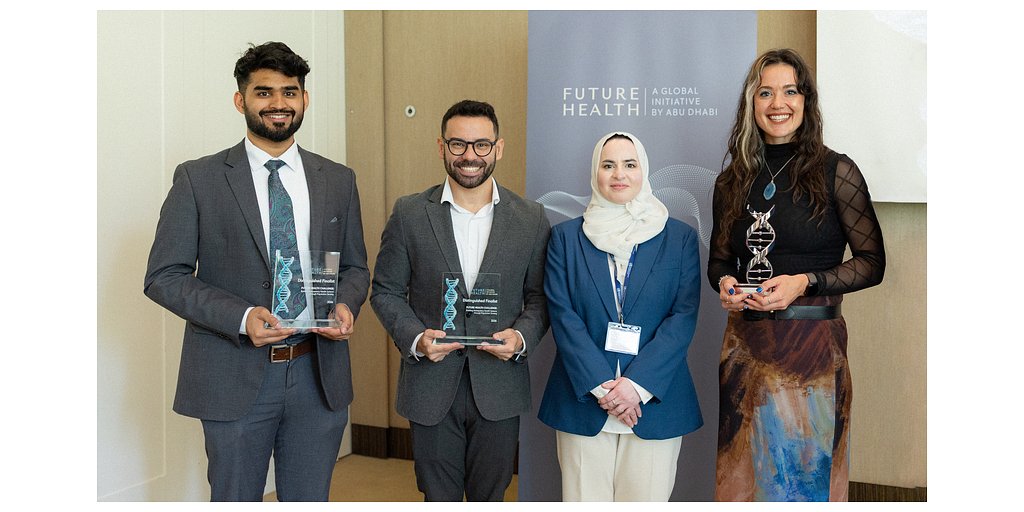
AI Health Innovators Awarded $300k for Early Disease Detection Tech
GENEVA, Switzerland – May 22, 2026 – As global health leaders convened for the 79th World Health Assembly, a parallel event highlighted a pivotal shift in healthcare, awarding USD 300,000 to three companies developing technologies designed to predict and prevent illness rather than merely treat it. The inaugural Future Health Challenge, a collaboration between Abu Dhabi's Future Health initiative and MIT Solve, recognized innovations that transform health systems from reactive to anticipatory, a theme resonating deeply with the Assembly's own agenda.
From a competitive field of 393 applicants across 68 countries, the winning solutions from Australia, the United States, and Brazil exemplify the power of artificial intelligence and real-time data in detecting health risks far earlier. The awards signal a growing consensus that the future of sustainable healthcare lies in population-level sensing and early intervention, tackling the dual burdens of rising costs and delayed diagnoses that plague systems worldwide.
The Dawn of Anticipatory Health Systems
The core principle behind the challenge is to move away from a model where intervention often begins only after symptoms become severe. The winning teams showcase practical, scalable applications of this forward-thinking approach.
ThinkMD, an Australian team, secured the top prize of USD 200,000. Their platform equips frontline health workers, particularly in low-resource settings, with mobile clinical decision-support tools. This technology not only improves the accuracy of triage and treatment for individuals but also aggregates anonymized data from these encounters, turning routine care into a powerful early warning system for public health. With over 9,000 workers already using the system, its potential has been demonstrated in the real world; the platform detected unique symptom patterns that preceded a major cholera outbreak in Zambia, showcasing its ability to provide actionable intelligence before a crisis escalates.
“We are thrilled to be the recipients of this award, and we are excited to be able to use it to scale our impact,” said Dr. Jackie Rabec, Co-Founder of ThinkMD. “Our next stage of growth will be expanding in priority markets across Nigeria, Rwanda, Uganda and Somalia, validating our next generation multimodal conversational interface and furthering our self-care product to deliver health intelligence into the hands of citizens.”
Distinguished Finalist prizes of USD 50,000 each were awarded to two other innovators. Vector Control Innovations from the United States presented VectorCam, an AI-enabled surveillance system for mosquitoes. By automatically identifying mosquito species and population densities, VectorCam helps health authorities detect changing risks for vector-borne diseases like malaria and dengue fever, allowing for targeted, efficient interventions before outbreaks become widespread. Field evaluations have shown the system dramatically improves data completeness from roughly 60% to over 90%, providing a much clearer picture of on-the-ground risk.
From Brazil, Huna was recognized for its novel use of AI to analyze routine blood test data. The technology identifies subtle patterns that indicate an elevated risk for various cancers, flagging individuals who could benefit from earlier screening and diagnostic pathways. During pilots in Brazil that screened more than 500,000 patients, Huna’s technology helped detect hundreds of cancer cases, many of which would likely have been found at a later, more complex, and costly stage.
A Global Mandate for Proactive Care
The timing and location of the awards were no coincidence. The 79th World Health Assembly is grappling with monumental tasks, including strengthening health systems, establishing governance for AI in health, and bolstering pandemic preparedness. The solutions championed by the Future Health Challenge provide tangible examples of how technology can address these global priorities.
“Too often, health systems only detect risk once it has become illness, when treatment is more complex and outcomes are worse,” noted Dr. Asma Al Mannaei, Executive Director of the Health and Life Sciences Sector at the Department of Health – Abu Dhabi. “Solutions from the Future Health Challenge are designed to identify risk earlier and support more timely decisions at a population level. The priority now is testing and scaling what works in real-world settings.”
The sentiment was echoed by the challenge's co-organizer, MIT Solve, which has a decade of experience mobilizing funding and support for social impact innovators.
“The solutions emerging from this Challenge reflect both the urgency and the opportunity facing health systems globally,” said Hala Hanna, Executive Director of MIT Solve. “By bringing innovators together with policymakers, funders and implementers through platforms such as Future Health, we can help accelerate solutions that are locally grounded and capable of delivering impact at scale.”
Abu Dhabi's Vision for Global Health Innovation
The Future Health Challenge is a key component of a broader, ambitious strategy by Abu Dhabi to establish itself as a global hub for life sciences and health technology. Through its Future Health initiative, the emirate is investing in a global ecosystem that connects innovators with the funding, partnerships, and pathways needed to scale their solutions.
This strategy moves beyond simple financial backing. It represents a long-term vision for economic diversification into knowledge-based industries while contributing to solving critical global challenges. The collaboration with a prestigious institution like MIT Solve lends significant credibility and provides access to a vetted, worldwide network of innovators.
For the winning teams, the support extends far beyond the prize money. They will be connected with partners, investors, and health authorities to navigate the complex journey from prototype to widespread adoption. Furthermore, representatives from all finalist and semi-finalist teams will be invited to showcase their work at the Abu Dhabi Future Health Summit in October 2026, offering a major platform for visibility and collaboration.
The Path from Innovation to Impact
While the promise of these technologies is immense, their journey to widespread impact is fraught with challenges. The global market for early disease detection and population health management is booming, with projections showing it will be worth hundreds of billions of dollars by 2030. However, this also means a crowded and competitive landscape.
More importantly, implementing advanced health technology in diverse global settings, particularly in the underserved communities that stand to benefit most, requires overcoming significant barriers. These include gaps in digital infrastructure and internet connectivity, the need for extensive training and capacity building for healthcare workers, and navigating a complex web of data privacy and regulatory hurdles.
AI-driven solutions also face scrutiny regarding algorithmic bias, demanding that models are trained on diverse and representative data to avoid perpetuating existing health inequities. The success of platforms like ThinkMD, VectorCam, and Huna will depend not only on their technological sophistication but also on their ability to integrate seamlessly into local workflows, earn the trust of communities, and demonstrate a sustainable, long-term value proposition for health systems.
Initiatives like Future Health are designed to address precisely these hurdles by fostering a supportive ecosystem. By continuing its year-round program to discover and nurture impactful solutions, the platform aims to systematically dismantle these barriers, empowering innovators to build a future where healthcare is truly proactive, personalized, and accessible to all.