
- 70 languages: The AI version of Dr. Ben-Shahar will be available in nearly 70 languages.
- High-trust domains: Marga.ai's technology is designed for sectors like mental health, leadership, and education where accuracy is critical.
- Zero hallucinations: The AI claims to prevent fabricated information by using only verified expert content.
Experts view this technology as a groundbreaking way to democratize access to specialized knowledge, though concerns remain about preserving the authenticity and empathy of human mentorship.
AI Gurus: Startup Clones Expert Wisdom for the Masses
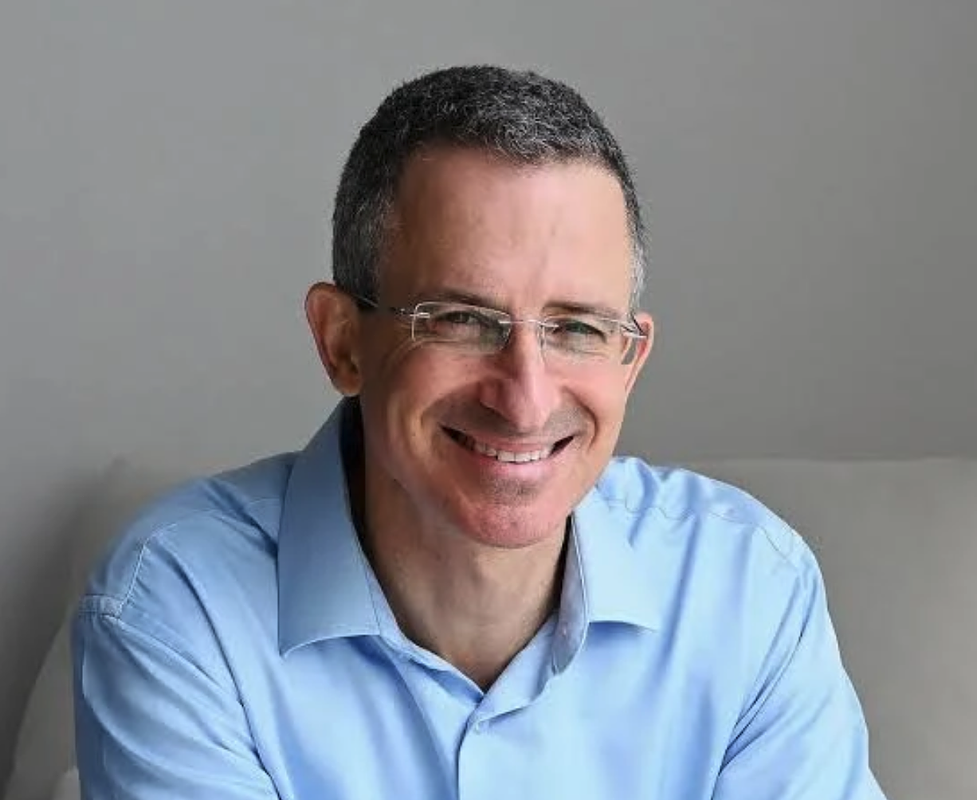
MIAMI, FL – April 09, 2026 – In a move that could redefine personal development and the very nature of expertise, AI startup Marga.ai has announced a partnership with Dr. Tal Ben-Shahar, the celebrated pioneer of Happiness Studies. The collaboration will create a verified AI version of Dr. Ben-Shahar, designed to deliver his life's work as a personal, 24/7 mentor available to millions worldwide.
The announcement positions Marga.ai not as another generative AI creating content, but as the architect of a new digital asset class: scalable human wisdom. The company's core thesis is that human wisdom is the world's most valuable, yet least scalable, resource—a problem it aims to solve by capturing the judgment, methodology, and voice of leading thinkers with what it claims is perfect fidelity.
Beyond Chatbots: A New Model for AI Mentorship
Marga.ai is making a bold distinction between its technology and the large language models (LLMs) that have dominated the AI conversation. The company asserts it is not an LLM wrapper or a simple chatbot, but a proprietary infrastructure built for "high-trust domains" like mental health, leadership, and education, where accuracy is non-negotiable.
The platform's central promise is its "zero hallucinations" mechanism. While many AI models can generate convincing but false information, Marga.ai claims its system is engineered to prevent such fabrication. This is reportedly achieved by building each AI mentor exclusively from the expert's own proprietary IP—their books, lectures, and frameworks—and then having the master themselves verify the AI's output. This creates what the company calls a "legally exclusive, master-verified AI mentor."
"Dr. Tal Ben-Shahar has spent his life bringing the science of happiness to tens of millions of people," said Mark Gazit, CEO and Co-Founder of Marga.ai, in a statement. "At Marga, our mission is to ensure that the wisdom of the world's most trusted thinkers does not remain limited by time, geography, or scale. This is the future of AI - not replacing human wisdom but scaling it."
The company's leadership, which has a background in developing high-stakes AI for detecting financial crime, emphasizes a focus on preserving an expert's "judgment" rather than simply generating intelligence. The goal is to replicate not just what a person knows, but how they think.
The Science of Happiness, On Demand
The first major test of this model is the digital replication of Dr. Tal Ben-Shahar. After teaching two of the most popular courses in Harvard University's history, he co-founded the Happiness Studies Academy (HSA) to formalize the study of well-being. Now, his insights are set to become globally accessible.
The "Dr. Ben-Shahar AI Version" is built upon his entire body of work, from decades of academic research to his bestselling books and countless lectures. Available 24/7 in nearly 70 languages, the AI mentor aims to offer continuous, personalized support.
Dr. Ben-Shahar sees the technology as a vital tool for democratizing access to psychological science. "By embracing this AI platform, I am building a bridge between the 'Ivory Tower' and 'Main Street,' allowing me to be available to you 24/7 with constant support and guidance," he stated. "My vision is to use this technology as a powerful resource for growth, amplifying our ability to share both rigorous science and our most vulnerable moments."
For users, this translates into the promise of an authentic, empathetic guide that can help navigate life's challenges using the proven methodologies of a world-renowned expert, a significant leap from the generalized advice offered by many wellness apps.
A New Asset Class or a Diluted Experience?
Marga.ai is framing its work as the creation of an entirely new market. By making an expert's wisdom scalable, it becomes a monetizable asset that transcends the physical limitations of its originator. The company operates across two verticals: "The World of Living Masters," which focuses on scaling the impact of current experts like Dr. Ben-Shahar, and "The World of Legacy," a service that enables individuals and families to preserve their own values and judgment as an interactive digital legacy for future generations.
This ambition, however, raises profound questions about authenticity. Can an algorithm truly replicate the empathy, nuance, and intuition of a human mentor? While platforms like MasterClass scale knowledge through high-production video courses, Marga.ai aims to scale interactive judgment. Critics of AI-driven mentorship worry that such systems, no matter how sophisticated, may offer a diluted form of human connection, providing the illusion of personalized care without genuine understanding.
The success of Marga.ai will hinge on its ability to prove that its AI mentors feel more like a trusted guide than a sophisticated search engine, offering a level of interaction that is fundamentally different from existing AI coaching apps or chatbots.
The Legal and Ethical Frontier of Digital Minds
Creating "legally exclusive" digital versions of human beings opens a complex legal and ethical frontier. The model relies on robust intellectual property agreements that define ownership of the AI's output and its underlying knowledge base. Accountability is another critical issue: if an AI mentor provides flawed or harmful guidance, who is liable—the company, the original expert, or the user who misinterprets the advice?
Marga.ai addresses these concerns by emphasizing its privacy-first design, which includes end-to-end encryption and isolated data environments. The "master-verified" process is its primary defense against misrepresentation, placing the human expert as the ultimate arbiter of the AI's authenticity. The "World of Legacy" service ventures even further, into the realm of digital inheritance and the rights associated with a person's digital persona after their death, an area of law that is still in its infancy.
As this technology evolves, it will force society to grapple with new definitions of identity, ownership, and the responsibilities that come with creating a digital echo of a human mind. The frameworks being built today will likely set the precedent for how we manage digital consciousness and legacy in the decades to come.
Redefining the Future of Expertise
The potential impact of scalable wisdom extends far beyond personal development. In education, it could provide every student with a personalized tutor modeled after the world's greatest teachers. In corporate training, companies could clone the expertise of their top performers to coach entire teams. For mental health, it offers a way to provide continuous, accessible support that complements traditional therapy.
This paradigm shift redefines the role of the expert. Rather than spending their time on repetitive, one-to-many instruction, they can focus on a new, highly leveraged activity: creating, curating, and verifying a scalable AI version of themselves. This allows their impact to grow exponentially, untethered from their own time and physical presence.
Ultimately, the partnership between Dr. Tal Ben-Shahar and Marga.ai serves as a powerful signal of a future where access to deep, specialized knowledge is no longer a privilege. The challenge ahead will be to ensure that in the quest to scale human wisdom, we do not lose the very human qualities that make it worth sharing in the first place.