
- $20,000–$35,000: Annual savings reported by U.S. dairy farms using the AI Bird Repeller.
- 7–12 months: Payback period for the technology in typical operations.
- 20+ countries: Where iCHASE’s technology has already been deployed.
Experts agree that AI-powered bird deterrents represent a significant advancement in biosecurity, offering a proactive, data-driven approach to managing avian flu risks while delivering measurable financial benefits to farmers.
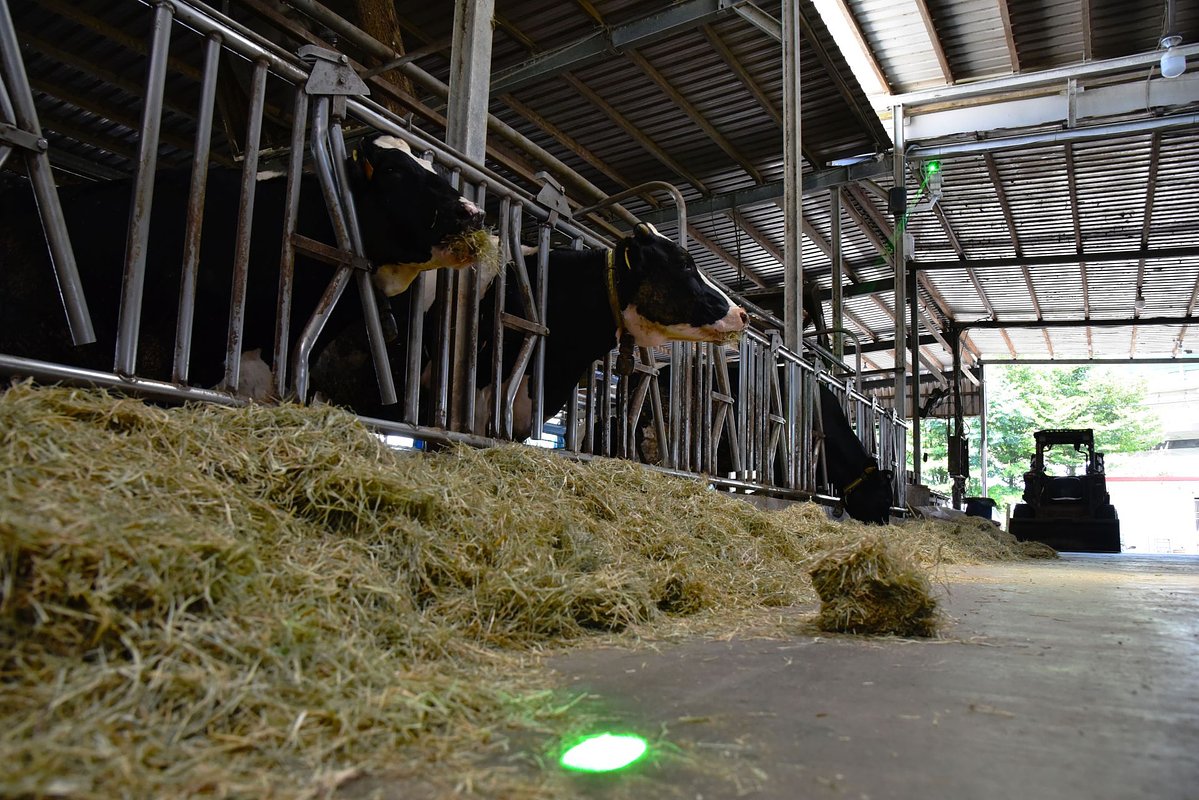
AI Guards the Farm: How Smart Tech Fights Avian Flu and Boosts ROI
ATLANTA, GA – December 15, 2025 – As the agricultural world converges on Atlanta for the 2026 International Production & Processing Expo (IPPE), the conversation is increasingly focused on resilience. Against a backdrop of persistent supply chain disruptions and zoonotic disease threats, a Taiwanese innovator, iCHASE, is set to introduce a technology that speaks directly to this challenge: an AI-powered bird deterrent that does more than just scare birds away—it gathers intelligence.
While bird deterrents are not new, the announcement of the world's first such system with full data tracking capabilities marks a significant evolution in the fight against one of agriculture's most costly adversaries: avian influenza. This isn't just about a new gadget; it's about a fundamental shift in how producers can manage biosecurity, moving from a reactive, defensive posture to a proactive, data-driven strategy.
The High Cost of an Invisible Threat
The specter of Highly Pathogenic Avian Influenza (HPAI), particularly the H5N1 strain, looms large over global food production. The Food and Agriculture Organization of the United Nations (FAO) has described its recent global spread as "unprecedented," leading to the culling of hundreds of millions of poultry and costing the global economy billions. Wild birds, the primary transmission vector, contaminate feed and water sources, creating a constant biosecurity breach that traditional methods struggle to contain.
The impact extends beyond poultry. The recent wave of H5N1 saw dairy farms reporting milk yield reductions of up to 20% in affected cattle. This cross-species jump has not only economic but also significant public health implications, as the virus's spillover into mammals raises concerns about its potential for wider transmission. For producers, the threat translates into direct financial loss, operational disruption, and the constant risk of a catastrophic outbreak that could wipe out an entire herd or flock. The economic stability of rural communities and the security of the food supply chain hang in the balance.
From Scarecrows to Smart Sentinels
For generations, farmers have waged a low-tech war against pest birds using everything from scarecrows and reflective tape to loud gas cannons. More recently, technology has offered more sophisticated tools. Bioacoustic systems broadcast species-specific distress calls, while automated laser systems sweep across fields, exploiting birds' natural aversion to the moving light. Drones have even been deployed to patrol large areas with pre-programmed flight paths.
However, a common weakness plagues many of these solutions: habituation. Birds are intelligent and adaptable, and over time they can learn that a repeating sound or a predictable laser pattern poses no real threat. This is the challenge iCHASE aims to solve with artificial intelligence. The AI Bird Repeller uses a 4K camera and computer vision to detect and identify wild birds in real time. Instead of running on a simple timer, it deploys its deterrent—a high-power green laser—only when a threat is present. Crucially, its AI algorithm deploys adaptive strategies, changing its patterns to prevent birds from growing accustomed to the intervention.
This approach mirrors emerging research from institutions like the Center for Produce Safety, which is also exploring AI-driven systems that deploy varied deterrents only when high-risk birds are detected. The key is moving from a constant, predictable deterrent to an intelligent, responsive one. iCHASE also incorporates critical safety features, with its AI trained to recognize people, vehicles, and livestock, immediately shutting down the laser to prevent accidental exposure.
Data as the New Biosecurity Shield
The most significant leap forward offered by this technology may not be the laser itself, but the data it generates. The system's integrated platform provides what the company calls "comprehensive data logging," accessible remotely by laptop or phone. This transforms biosecurity from an abstract concept into a quantifiable metric.
Producers can now visualize bird activity patterns throughout the day, identifying peak hours and high-traffic zones around feed bunks or barns. By tracking the number of birds deterred, they can quantify their risk exposure and measure the system's performance over time. This data-driven approach allows operators to move beyond simply hoping their deterrents are working. They can now prove it, adjust settings remotely to optimize performance, and make informed management decisions based on empirical evidence.
This shift is emblematic of the broader trend in precision agriculture, where data is becoming the most valuable crop on the farm. By turning biosecurity into a stream of actionable intelligence, the system empowers farmers to manage risk with a level of precision previously unattainable.
The Economics of Innovation Adoption
For any new technology to gain traction in the pragmatic world of agriculture, it must offer a clear return on investment. iCHASE is directly addressing this by framing its AI Bird Repeller not as a cost, but as a profit center. The company reports that U.S. farms using the system are seeing annual savings between $20,000 and $35,000 in typical dairy operations, with a payback period of just 7 to 12 months.
These savings are derived from multiple sources: reduced feed loss from contamination, lower veterinary bills from a healthier herd, and improved operational resilience by mitigating the risk of a production-halting disease outbreak. By repelling thousands of birds daily, the system directly protects the bottom line. This strong economic case is central to iCHASE's strategy for North American expansion, where it is actively seeking regional distributors and integrators.
Having already deployed its technology in over 20 countries and partnered with industry giants like Cargill and CP, the company is betting that producers are ready to invest in solutions that deliver measurable financial outcomes. In an industry with tight margins, a technology that pays for itself in under a year while simultaneously safeguarding the entire operation represents a powerful value proposition.
As this technology and others like it are adopted, they raise important questions for the evolving ecosystem. The vast amounts of data collected from farms are incredibly valuable, bringing issues of data privacy and security to the forefront. Industry groups like the American Farm Bureau Federation are already working on transparency principles to ensure farmers retain control over their data. As farms become smarter and more connected, establishing clear rules around data governance will be as critical as the innovations themselves, ensuring that the technology serves the producer, protects the food supply, and maintains trust across the entire value chain.