
- World-first AI system: Automatically scans children’s phone calls for risks like grooming and bullying.
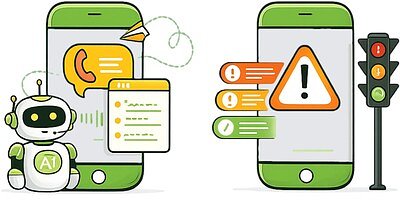
- Traffic-light risk scoring: Provides parents with a Low, Medium, or High risk assessment within minutes.
- Privacy measures: Fully automated, no human listeners, and optional opt-in for parents.
Experts acknowledge the potential of AI in child protection but caution about ethical concerns, including erosion of trust, privacy violations, and the risk of false positives or algorithmic bias.
AI Guardian: UK Firm Scans Kids' Calls, Sparking Safety vs. Privacy Debate
DERBY, England – May 01, 2026 – A UK mobile network has ignited a fierce debate on the future of digital parenting by launching a “world-first” artificial intelligence system that analyzes children’s phone calls for potential risks. ParentShield, a network specializing in child safety, announced that its new feature automatically scans conversations for signs of grooming, bullying, and other harms, providing parents with a risk score and summary—all without a human ever listening in.
The move marks a significant leap in automated safeguarding, promising to give parents and care organizations an unprecedented tool to protect vulnerable young people. However, it also thrusts the complex and often uncomfortable relationship between child protection, digital surveillance, and personal privacy into the spotlight, forcing a societal reckoning with how much autonomy children should have in their private lives.
Beyond Keywords: A New Era of Safeguarding
ParentShield’s system represents a major evolution from older monitoring tools that rely on basic keyword flagging. The company’s proprietary AI is designed to understand the subtleties of human conversation, moving beyond simply what is said to analyze how it is said.
"This isn’t just analysing words — it’s understanding conversations," said Graham Tyers, CEO at ParentShield, in the company’s announcement. "Our AI looks at how interactions unfold, not just what is said, allowing it to identify potential risk far more effectively."
Technically, the process is sophisticated. After a call ends, a recording is automatically transcribed and subjected to analysis by a Large Language Model (LLM). The system employs speaker diarisation to distinguish between the child and the other party, assessing conversational dynamics like turn-taking and response patterns. It evaluates content, language, and tone against models trained on known domains of harm, including coercion, exploitation, and self-harm indicators.
The result, delivered to a parent’s secure online portal within minutes, is a plain-English summary of the call and a simple traffic-light risk score: Low, Medium, or High. This allows a guardian to quickly assess a situation without having to manually listen to hours of recordings, focusing their attention only where a potential threat has been flagged.
Privacy by Design or Pervasive Surveillance?
Anticipating the inevitable privacy concerns, ParentShield has built its system on a framework it calls “privacy by design.” The company emphatically states that the entire process is fully automated, with no human employee ever listening to calls or reading transcripts. Furthermore, all AI processing is handled on dedicated, company-owned hardware within a UK data center, meaning sensitive call data is never sent to third-party cloud services for analysis.
The feature is also optional, requiring parents to opt-in to call recording for the analysis to take place. This puts control squarely in the hands of the account holder, who is the only person with access to the risk reports.
Despite these measures, the technology operates in a complex legal and ethical landscape. While the company's approach appears to align with the principles of UK data protection laws like GDPR and the Children's Code, which stress data minimization and user control, the very act of recording and analyzing a child's private conversations constitutes a form of surveillance. Digital rights advocates have long cautioned that even automated monitoring can have a chilling effect on freedom of expression and the right to privacy, principles that extend to children.
The system’s introduction raises fundamental questions: Does eliminating the human listener make surveillance more palatable, or does it simply normalize a new, more efficient form of monitoring? For many, the answer remains deeply personal and contentious.
The Human Element: Trust, Autonomy, and the ‘Chilling Effect’
Beyond the technical and legal frameworks, the most profound impact of such technology may be on the delicate dynamics of the family itself. Child psychologists and sociologists have raised concerns that constant monitoring, even with the best intentions, can erode the foundation of trust between a parent and child.
Knowing that an AI is perpetually “listening” could create a “chilling effect,” causing children to self-censor their conversations with friends and family. This could inadvertently stifle the open communication necessary for them to develop social skills, build trusting relationships, and learn to navigate challenges independently. It also risks hindering their development of autonomy, a critical phase where young people learn to make their own judgments and mistakes in a relatively safe context.
There is also the risk of children anthropomorphizing the AI, treating the disembodied monitoring system as a judgmental entity. Research into children’s interactions with AI chatbots has already highlighted this tendency, along with a potential “empathy gap” where algorithms fail to respond appropriately to nuanced emotional needs, potentially putting children at further risk if they turn to the AI for support it cannot genuinely provide.
AI in Practice: Efficacy, Bias, and Scalability
For proponents, including social care providers and local authorities, the system’s true power lies in its scalability. For organizations responsible for hundreds of vulnerable children, manually monitoring communications is an impossible task. ParentShield’s AI promises to triage an overwhelming volume of data, allowing over-stretched safeguarding teams to focus their limited human resources on the most urgent, high-risk cases.
However, the efficacy of any AI is dependent on its programming and training data. ParentShield states its system is designed to “err on the side of caution,” flagging potential issues even when in doubt. While this approach minimizes the risk of a catastrophic false negative—failing to detect a real threat—it raises the probability of false positives. A conversation about a video game or a movie plot could be misinterpreted, leading to unnecessary parental anxiety and potential conflict.
Moreover, the specter of algorithmic bias looms large. If an AI’s training data contains hidden societal biases, it could disproportionately flag the speech patterns of certain demographic or cultural groups, leading to unfair scrutiny. While ParentShield asserts its LLMs are incredibly sophisticated, the lack of independent, public data on the system’s accuracy rates makes it difficult to externally validate its fairness and effectiveness.
As ParentShield rolls out this powerful new tool, it presents a compelling vision of a safer digital world for children. Yet, it also serves as a crucial test case for society, forcing parents, regulators, and technologists to confront the difficult trade-offs between protection and privacy. The balance they ultimately strike will define the landscape of digital childhood for a generation to come.