
- 11 grams: Weight of each Lightwear earbud, making it significantly lighter than most smart glasses.
- 2000mAh: High-capacity charging case with its own microphone and speaker.
- First proactive AI wearable: Lightwear integrates visual perception into an earbud, a first in the industry.
Experts view Guangfan's Lightwear as a groundbreaking yet controversial innovation, offering unprecedented proactive AI assistance through visual perception but raising significant privacy and ethical concerns that must be addressed.
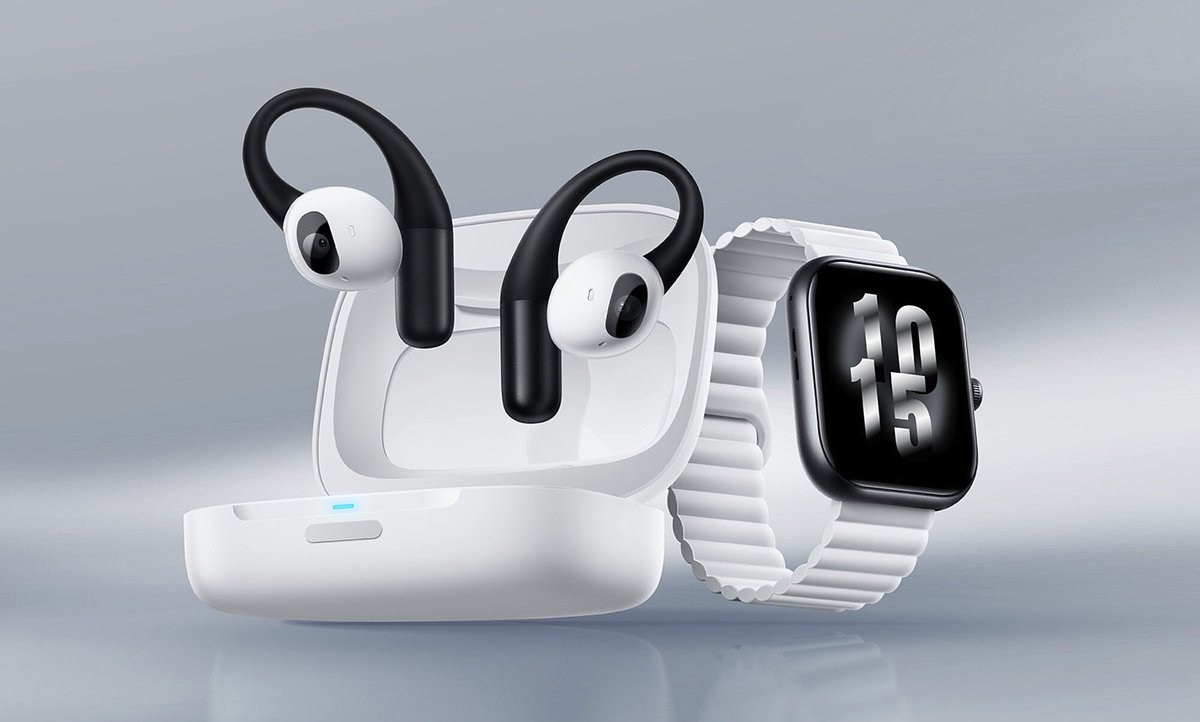
AI Earbuds Get Eyes: Guangfan's Lightwear Stuns CES, Raises Alarms
LAS VEGAS, NV – January 07, 2026 – Amid the dazzling displays and futuristic concepts at CES 2026, a startup named Guangfan Technology has captured the industry's attention with a device that is deceptively simple in form but revolutionary in function. On January 6, the company unveiled Lightwear, a device it bills as the world's first proactive AI wearable that integrates visual perception into an earbud. The announcement signals a potential leap beyond voice commands and screen taps, introducing an era where AI assistants can see, hear, and understand our world with unprecedented context.
Unlike the AI assistants we currently summon with a “Hey, Google” or “Siri,” Lightwear is designed to be proactive, not just reactive. By embedding a camera directly into an earbud, Guangfan aims to give its AI a first-person view of the user’s environment. This shift from merely understanding instructions to understanding situations is at the core of the company’s vision. The AI can theoretically interpret visual cues, recognize objects, and fuse what it sees with what it hears to offer assistance without waiting for a direct command.
A New Vision for Human-AI Interaction
“The arrival of AI is reaching a moment where science fiction is beginning to materialize,” said Dong Hongguang, founder of Guangfan Technology, in the company's official announcement. He stressed that the ideal AI hardware shouldn't be a mere accessory to a smartphone but a standalone intelligent companion. Lightwear is built on this premise, adhering to three core principles: full perception, all-day availability, and proactive intelligence.
The system pairs the vision-enabled earphones with a companion smartwatch. This combination is designed for constant wearability, providing a continuous stream of sensory data that handheld devices cannot match. According to Dong, locating the primary interaction points near the head is a logical step, as it naturally converges microphones, speakers, and now, cameras. The smartwatch contributes rich sensor data about the user's activity and biometrics, while the earphones provide the crucial audio and visual context of the surrounding environment.
To power this constant awareness, Lightwear runs on Lightware OS, a proprietary operating system developed by Guangfan to unify the hardware, AI models, and applications. This integrated architecture is the backbone of the device's ability to perform real-time data fusion and enable the proactive services that set it apart. The system also boasts independent connectivity, freeing it from constant reliance on a paired smartphone, and a high-capacity charging case of over 2000mAh that includes its own microphone and speaker, allowing users to interact with the AI even when the earbuds are charging.
The Engineering Feat of a Seeing Earbud
The idea of putting a camera in an earbud is not entirely new in research labs, but bringing it to a consumer-ready product presents immense engineering hurdles. Issues of size, weight, heat dissipation, and battery life have historically made it impractical. This is where Guangfan claims its breakthrough. Each Lightwear earbud weighs a mere 11 grams, significantly lighter than most smart glasses, despite packing in a camera, advanced processors, and a battery.
According to the company, this was achieved through meticulous design, including a balanced front-and-back weight distribution and a titanium ear-hook to ensure stability and comfort for long-term wear. While independent verification of battery life and thermal performance under heavy use is still pending from CES attendees, the initial design has addressed the primary physical barriers that have kept vision-enabled audio wearables in the realm of concept. The challenge of processing vast amounts of visual data without instantly draining the battery or overheating remains a critical test for the device's real-world viability. Much of this heavy lifting is likely managed by the native Lightware OS, which is optimized to balance on-device processing with efficient data handling.
A Crowded Field of AI Companions
Guangfan Technology enters a market buzzing with excitement and competition around the next generation of AI hardware. Devices like the Humane AI Pin and Rabbit R1 have already paved the way for screen-less, AI-first companions that aim to reduce our dependency on smartphones. However, Lightwear’s focus on visual perception places it in a different, and potentially more powerful, category.
Its claim as the “world’s first” is a bold marketing statement in a race where the world’s largest tech companies are major players. Reports have circulated for years that Apple, Samsung, and Meta are all actively developing their own camera-equipped earbuds. While some speculation suggests Apple's focus may be on infrared cameras for gesture recognition and spatial computing inputs for its Vision Pro headset, others like Samsung and Meta are thought to be exploring object analysis capabilities similar to Meta's Ray-Ban smart glasses. At this very same CES, Razer also showed off “Project Motoko,” a concept for over-ear headphones with 4K cameras and on-device AI, proving the industry is converging on the idea of vision-enabled audio wearables. Lightwear's debut places it as a tangible, early entrant in what is shaping up to be the next major battleground for personal technology.
The Unblinking Eye and the Privacy Predicament
While the technological prowess of Lightwear is impressive, its introduction forces a critical and uncomfortable conversation about privacy. The prospect of a discreet, always-on camera capturing a first-person view of the world is a significant ethical leap. Unlike smart glasses, which are relatively conspicuous, earbuds are ubiquitous and socially accepted, making a hidden camera within one far more surreptitious.
The societal backlash against Google Glass a decade ago was largely fueled by fears of being recorded without consent. Meta’s Ray-Ban glasses attempted to mitigate this with an indicator light, but concerns persist. Lightwear amplifies these concerns exponentially due to its inconspicuous form factor. Questions of data security, user consent, and the potential for misuse are paramount. How will Guangfan ensure that the vast troves of personal and environmental data are protected? What safeguards will be in place to prevent the device from being used for covert surveillance, either by the user or by malicious actors?
The concept of “proactive intelligence” itself raises questions of user agency. An AI that anticipates needs based on what it sees could be incredibly helpful, but it could also make decisions or interpretations that are unwanted or incorrect. As this technology emerges, it does so in a world where the legal and ethical frameworks for governing such pervasive data collection are still struggling to catch up. Guangfan's success may depend as much on its ability to build public trust and implement transparent, robust privacy controls as it does on its innovative engineering.