
- 80 hours: AI-designed VerTQ chip developed in just 80 hours by Verkor's Conductor 2.0 platform.
- 4.3x reduction: VerTQ reduces LLM KV cache memory usage by a factor of 4.3.
- 2 months: Hardware implementation delivered less than two months after Google's TurboQuant algorithm announcement.
Experts would likely conclude that Verkor's AI-designed VerTQ chip represents a significant breakthrough in both semiconductor manufacturing and AI efficiency, demonstrating the potential for AI to autonomously design complex hardware solutions at unprecedented speed.
AI Designs AI Chip in 80 Hours, Slashing LLM Memory Usage
LOS ALTOS, CA – May 19, 2026 – In a move that signals a potential paradigm shift for both artificial intelligence and semiconductor manufacturing, one-year-old startup Verkor Inc. today unveiled VerTQ, a silicon IP designed to dramatically shrink the memory footprint of large language models (LLMs). The announcement carries a dual significance: the chip itself promises to unleash powerful AI on everyday devices, and, in a stunning display of meta-innovation, it was designed almost entirely by another AI in just 80 hours.
VerTQ is the industry's first hardware implementation of Google's recently announced TurboQuant algorithm. By hard-wiring the complex mathematics of TurboQuant into silicon, Verkor claims its accelerator can reduce the memory required for an LLM's KV cache by a factor of 4.3, a breakthrough that directly addresses one of the biggest bottlenecks holding back sophisticated AI on resource-constrained devices.
The AI That Designs AI
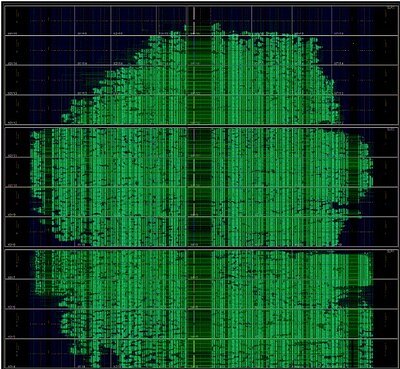
Perhaps more revolutionary than the chip's function is its origin story. VerTQ was not the product of years of manual effort by human engineers. Instead, it was built autonomously by Conductor 2.0, Verkor's proprietary agentic AI platform. The system took Google's mathematical paper on the TurboQuant algorithm as a starting point and, in approximately 80 hours, produced a complete, verified, and functional FPGA (Field-Programmable Gate Array) implementation.
This process, which traditionally takes large teams of specialized engineers months or even years, involved the AI orchestrating everything from architectural planning and writing register-transfer level (RTL) code to debugging and verification. This is not the first feat for Verkor's platform; an earlier version of Conductor reportedly designed a complete Linux-capable RISC-V processor in just 12 hours late last year. The development of VerTQ, a significantly more complex task, demonstrates the exponential growth of Conductor's capabilities.
"Conductor 2.0 compresses the chip development cycle from years to weeks," said Suresh Krishna, CEO of Verkor, in a statement. "We're constantly enhancing Conductor, running it on ever-larger chip designs, to deliver complex silicon IPs from impactful algorithms."
The implications for the Electronic Design Automation (EDA) industry are profound. While AI has been used to assist in chip design for years, automating specific tasks and optimizing layouts, a fully agentic system that manages the entire workflow from a high-level prompt represents a new frontier. This technology could drastically lower the barrier to entry for custom silicon, enabling smaller companies to design bespoke chips for specialized applications and accelerating the pace of hardware innovation across the board.
Unleashing Powerful AI on the Edge
While the creation process is groundbreaking, the purpose of VerTQ is equally significant. Large language models, the technology behind generative AI systems, are notoriously memory-hungry. A key component of their operation is the "KV cache," a type of memory that stores contextual information during a conversation or task. As the context grows, so does the cache, quickly consuming gigabytes of precious memory and bandwidth—resources that are scarce on edge devices like smartphones, drones, autonomous vehicles, and industrial robots.
VerTQ directly tackles this problem. By implementing Google's TurboQuant compression algorithm in hardware, it can shrink the KV cache without a significant loss in model accuracy. Crucially, Verkor's IP also accelerates the computationally intensive "Attention" mechanism—a core part of how LLMs work—by performing operations directly on the compressed data. This avoids the need to decompress and recompress data, saving valuable time and memory bandwidth, which in turn boosts the speed, or token rate, of the AI's output.
The result is the potential for powerful, multi-billion-parameter LLMs to run efficiently and locally on small, low-power devices. This could enable real-time, natural language interactions with cars, truly intelligent robotic assistants that don't rely on a cloud connection, and advanced drone capabilities, all while preserving data privacy and eliminating network latency.
A New Race in AI Hardware
Verkor's announcement positions the young company as a nimble and aggressive player in the hyper-competitive AI hardware market. Google Research only unveiled the mathematical basis for TurboQuant on March 24, 2026. For Verkor to deliver a hardware implementation less than two months later is a testament to the speed of its AI-driven design process.
Google's own research claimed its software-based algorithm could achieve up to a 6x reduction in KV cache memory, an announcement that sent ripples through the market and caused a dip in memory chip stock prices over fears of reduced demand. Verkor's 4.3x hardware-based reduction is a highly compelling figure that validates the algorithm's real-world potential.
The startup now enters a landscape dominated by giants like NVIDIA, whose Jetson platform and TensorRT software are staples in edge AI, alongside major players like Intel and AMD. The market also includes a growing number of startups creating specialized AI accelerators. However, Verkor's sharp focus on a critical and specific bottleneck—KV cache compression—with a first-to-market hardware solution for a leading-edge algorithm gives it a distinct strategic advantage.
Founded in May 2025 by what the company describes as "AI/LLM researchers and semiconductor veterans," Verkor is betting that speed of execution is the ultimate currency. By leveraging its Conductor AI to rapidly transform the latest software and algorithmic breakthroughs into silicon, the company is not just building a chip; it is demonstrating a new model for how hardware will be created in the age of AI. With a full customer deliverable package for VerTQ available immediately, Verkor is signaling that its vision for the future of chip design is already a commercial reality.