
- $7 billion: Global oligonucleotide therapeutics market in 2025
- $18 billion: Projected market size by 2030
- $97 million: National funding for Singapore’s Nucleic Acid Therapeutics Initiative (NATi)
Experts view this collaboration as a critical step toward overcoming the 'liver barrier' in gene therapy, potentially unlocking treatments for a broader range of diseases beyond current limitations.
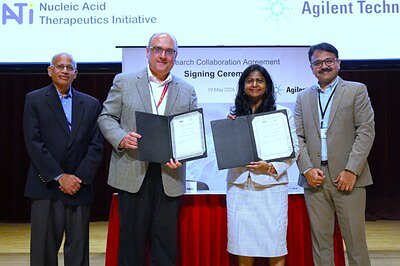
Agilent & Singapore Target New Disease Frontiers with Gene Therapy Tech
SINGAPORE – May 20, 2026 -- A new two-year research collaboration between U.S.-based life sciences giant Agilent Technologies and Singapore’s Nucleic Acid Therapeutics Initiative (NATi) aims to solve one of the most significant challenges in modern medicine: delivering precision gene-targeting therapies to tissues beyond the liver. The partnership will focus on developing advanced analytical methods for lipid-conjugated oligonucleotides, a promising technology designed to unlock treatments for a vast array of diseases currently considered untreatable.
This strategic alliance combines Agilent's world-class analytical instrumentation with NATi's deep expertise in nucleic acid chemistry, positioning the collaboration at the forefront of a rapidly expanding therapeutic field.
The $18 Billion Race to Target the Untreatable
Oligonucleotide therapeutics, which are short strands of synthetic DNA or RNA, represent a revolution in medicine. By precisely targeting the genetic roots of disease, they can silence faulty genes or correct molecular errors, offering hope for conditions ranging from rare genetic disorders to cardiovascular disease and even infections. This potential has ignited a commercial firestorm, with the global market exceeding $7 billion in 2025 and projected to skyrocket to $18 billion by 2030.
However, a critical bottleneck has limited the technology's full potential. The vast majority of these therapies, when injected into the bloodstream, are rapidly filtered out and absorbed by the liver. While this has led to groundbreaking treatments for liver-specific diseases, it has left organs like the heart, muscles, and brain largely out of reach. Breaking this "liver barrier" is the holy grail for the next generation of oligonucleotide drugs, promising to expand their application to a much wider spectrum of human ailments.
The collaboration between Agilent and NATi directly confronts this challenge. By creating robust workflows to analyze and purify complex oligonucleotides designed for extrahepatic (non-liver) delivery, they are not just developing a single drug, but building the foundational tools needed to accelerate the entire field.
A New Delivery System for Precision Medicine
The key to unlocking non-liver tissues lies in a strategy known as ligand-conjugation, specifically using lipids. By chemically attaching a lipid—a fatty molecule—to the oligonucleotide, researchers aim to create a "molecular passport" that allows the therapeutic to travel through the bloodstream, avoid immediate liver uptake, and gain entry into other cells throughout the body.
While the concept is powerful, the execution is incredibly complex. These lipid-conjugated oligonucleotides (LONs) are difficult to synthesize, purify, and characterize. Ensuring their quality, stability, and safety is a major analytical hurdle that must be overcome before they can be used in preclinical and clinical development.
This is where the synergy of the new partnership becomes clear. NATi, a national platform hosted by Singapore’s Agency for Science, Technology and Research (A*STAR), brings extensive expertise in nucleic acid and chemical modifications. They will design and create the novel LONs. Agilent will provide the advanced technological muscle, including its 1290 Infinity III Bio UHPLC system, 6545XT AdvanceBio LC/MS, and other high-end preparative and analytical instruments. This technology will allow researchers to precisely separate, identify, and quantify the complex molecules, ensuring that only the correct, high-quality therapeutic candidate moves forward.
"Lipid-conjugated oligonucleotides represent a promising next frontier in nucleic acid therapeutics, particularly in expanding beyond hepatic delivery," said Dr Mohamed ElSayed, Executive Director of NATi. "Working with strategic partners like Agilent allows us to tighten the value chain from research to clinic, accelerating the development of next-generation oligo therapeutics that address areas of significant unmet medical need."
Bolstering Singapore's Biomedical Ambitions
This collaboration is more than a simple research agreement; it represents a significant milestone in Singapore's national strategy to establish itself as a global biomedical innovation hub. NATi was established with $97 million in national funding to do precisely this: bridge the gap between cutting-edge research and commercial reality, particularly in the high-growth area of RNA medicines.
The partnership leverages and strengthens Agilent’s deep, 25-year investment in the island nation. Agilent already employs around 600 scientists and engineers in Singapore and operates a massive 860,000-square-foot manufacturing facility, which has been recognized by the World Economic Forum as a leader in advanced "Fourth Industrial Revolution" manufacturing.
The research will be conducted in part at Agilent's Global Solution Development Center (GSDC) in Singapore, providing NATi researchers with structured training and direct access to state-of-the-art equipment. This not only accelerates the project but also contributes to local talent development, creating a skilled workforce capable of driving future innovation.
"As oligo-based therapies continue to transform precision medicine, the ability to reliably analyze and purify complex conjugates becomes increasingly critical," noted Bharat Bhardwaj, Vice President of APAC Sales at Agilent. "This collaboration is yet another example of our commitment to investing in high-growth markets while delivering on Agilent's mission of improving the quality of life."
Navigating a Competitive Therapeutic Frontier
Agilent and NATi are entering a highly competitive and dynamic field. Global pharmaceutical leaders like Alnylam and Ionis Pharmaceuticals, along with a host of agile biotech firms, are all racing to solve the extrahepatic delivery puzzle. Competitors are exploring a variety of sophisticated approaches, including conjugating oligonucleotides to antibodies (AOCs) to target muscle cells or using specialized peptides (POCs) to gain entry into specific tissues.
However, the Agilent-NATi approach has a distinct strategic advantage. Rather than focusing on a single therapeutic candidate, their primary goal is to develop end-to-end analytical and preparative workflows. By creating a standardized, reliable platform for characterizing and purifying lipid-modified oligonucleotides, they are building an essential toolkit that could be used by countless researchers and companies.
This focus on foundational technology plays directly to Agilent's strengths as a global leader in analytical instruments. Success in this collaboration could pave the way for new standards in quality control and manufacturing for an entire class of future medicines, ensuring that as these powerful therapies are developed, they can be produced safely, reliably, and at scale. By tackling the fundamental analytical challenges, the partnership aims to lower the barrier to entry for all who follow, potentially accelerating the arrival of a new era in precision medicine.