
- 1 picajoule per bit (1pJ/bit): Adtran's LiteWave800™ achieves a groundbreaking power consumption benchmark, consuming 12-18 times less power than conventional optical transceivers.
- 10x efficiency improvement: LiteWave800™ uses up to ten times less power than first-generation LPO designs.
- OFC 2026 showcase: Adtran will unveil its innovations from March 15-19, featuring ultra-efficient optical technologies for AI infrastructure.
Experts would likely conclude that Adtran's ultra-efficient optical technologies represent a significant advancement in addressing the energy crisis of AI infrastructure, offering substantial power savings and security enhancements critical for sustainable AI development.
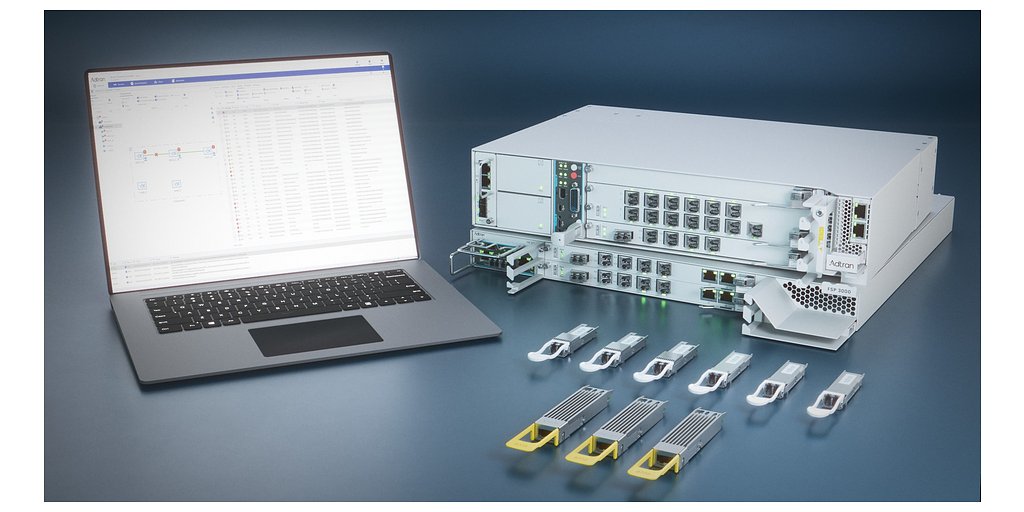
Adtran Confronts AI's Energy Crisis with Ultra-Efficient Optical Tech
LOS ANGELES, CA – March 12, 2026 – As the artificial intelligence revolution accelerates, it is running headlong into a physical wall: energy consumption. The massive data centers that power AI models are demanding electricity at an unprecedented rate, creating a power paradox where computational progress is tethered to unsustainable energy growth. Addressing this critical bottleneck, networking solutions provider Adtran is set to unveil a suite of optical technologies at the upcoming OFC 2026 conference designed to redefine the efficiency, security, and scalability of AI infrastructure.
The company's showcase, running from March 15-19, will feature innovations aimed directly at the heart of the problem, from ultra-low-power data center connectivity to AI-driven network automation and quantum-safe transport, positioning Adtran as a key architect for the next phase of AI development.
The Power Paradox: Slashing Energy Use in AI Fabrics
The engine room of any large-scale AI model is the data center, where thousands of GPUs work in parallel, constantly exchanging immense volumes of data. This east-west traffic flow within AI clusters requires a network fabric that is not only incredibly fast but also brutally efficient. Today, the power consumed by network interconnects is a major contributor to the soaring operational costs and thermal challenges plaguing data center operators.
In response, Adtran is introducing its LiteWave800™, a new class of 800Gbit/s pluggable optics engineered specifically for these dense, short-reach intra-data center links. This linear pluggable optic (LPO) module achieves a groundbreaking power consumption benchmark of just 1 picajoule per bit (1pJ/bit). According to the company, this represents a monumental leap in efficiency, consuming approximately 12 to 18 times less power than conventional DSP-based optical transceivers and up to ten times less than first-generation LPO designs.
This dramatic reduction is achieved through a redesigned architecture that leverages single-mode VCSEL (SM-VCSEL) technology and in-house low-power electronics. By simplifying the signal path, LiteWave800™ not only slashes energy use but also reduces latency—a critical factor for AI training workloads where every microsecond counts. For cloud providers and data center managers scaling their AI capacity, this translates directly into lower electricity bills, reduced cooling requirements, and the ability to build denser, more powerful AI clusters within existing power envelopes.
Beyond Bandwidth: A Secure and Intelligent Foundation
While speed and efficiency are paramount, the long-term viability of AI infrastructure also depends on its security and operational intelligence. Adtran is addressing these pillars with a multi-faceted approach that looks beyond raw bandwidth to future-proof critical networks.
A looming threat to global data security is the advent of quantum computing. Malicious actors are already engaging in "harvest now, decrypt later" attacks, capturing and storing encrypted data today with the intent of breaking it with future quantum computers. To counter this, Adtran is featuring its FSP 3000 S-Flex™, an optical transport solution built with quantum-safe technology. This system is designed to protect mission-critical data in transit by incorporating cryptographic algorithms resistant to quantum attacks, aligning with new standards being finalized by the U.S. National Institute of Standards and Technology (NIST).
Complementing this cryptographic defense is Adtran's ALM fiber assurance technology, which provides a physical layer of security. It offers in-service monitoring to detect and locate physical intrusions or fiber tapping attempts in real-time, providing a robust, defense-in-depth strategy against data theft.
On the operational front, the sheer complexity of managing sprawling AI networks is driving the need for advanced automation. Adtran will demonstrate its REAL AI platform, an explainable, AI-driven automation tool for network operations. Unlike black-box AI systems, REAL AI is designed to provide transparent, context-aware insights, helping network operators quickly diagnose issues, predict failures, and automate routine tasks. This empowers teams to manage larger, more complex networks with greater efficiency and fewer manual interventions, reducing operational costs and improving service uptime.
Championing an Open, Collaborative Future
Adtran is also underscoring its commitment to an open, disaggregated networking model, a philosophy gaining significant traction as a way to avoid vendor lock-in and accelerate innovation. This approach is central to its participation in the Optical Internetworking Forum (OIF) interoperability demonstration at OFC 2026, one of the largest such showcases to date.
At the OIF booth, Adtran will demonstrate its FSP 3000 open line system, a range of 100G, 400G, and 800G ZR+ coherent pluggable optics, and its Mosaic Network Controller operating seamlessly with equipment from numerous other vendors. This live validation is critical, proving that network operators can confidently mix and match best-of-breed components to build flexible, scalable, and cost-effective networks. For the AI era, this means providers can rapidly integrate the latest technologies without being tied to a single supplier's roadmap or pricing structure.
“As AI workloads scale, network operators and cloud providers need an optical foundation that can keep pace with unprecedented demand for capacity and efficiency,” said Christoph Glingener, CTO of Adtran. “Our technology is helping shape the AI era through open, power‑efficient optical architectures and intelligent automation that change the economics of scale. At OFC 2026, we’re demonstrating how operators can boost performance without increasing energy consumption or operational complexity.”
This collaborative spirit extends to research initiatives like SUSTAINET-Advance, a European project focused on building sustainable and sovereign optical infrastructure, and the Optical Testbed Data Space (OTDS), which enables governed data sharing for AI development without compromising sensitive network information. Together, these efforts paint a picture of a company aiming to provide not just the components, but the foundational principles for a trusted, sustainable, and open AI-ready world.
Topics & Related
AI & Machine Learning
Fintech
Artificial Intelligence
Quantum Computing
Automation
AI & Software Platforms
Revenue
Related Company Pulse