
- $2M+ initial cost for custom implementations of Firefly Foundry
- IP indemnification offered for qualifying enterprise plans
- Multimodal generation: images, video, audio, vector graphics, and 3D assets
Experts would likely conclude that Adobe Firefly Foundry represents a strategic move to address enterprise concerns around brand consistency, IP risk, and workflow integration in generative AI.
Adobe Firefly Foundry: Forging Brand Control in the Age of Generative AI
SAN JOSE, CA – June 25, 2026 – Adobe has unveiled Adobe Firefly Foundry, a significant new enterprise offering that moves beyond generic AI tools to give organizations the power to create their own custom generative AI models. The announcement signals a strategic push to address the most pressing concerns for businesses adopting AI: maintaining brand consistency, managing intellectual property risk, and embedding AI directly into production workflows. While the generative AI landscape is crowded, Adobe is betting that providing a guarded, bespoke environment for content creation is the key to unlocking true enterprise adoption.
Beyond Generic AI: The Push for Customization
For months, enterprise marketing and creative departments have grappled with a fundamental paradox of generative AI. While public models offer unprecedented speed for ideation, their outputs are often generic, off-brand, and carry unclear IP lineage. This has relegated much of their use to low-stakes experimentation rather than core content production. Firefly Foundry is Adobe’s direct answer to this challenge.
The platform enables enterprises to develop proprietary AI models trained securely on their own assets. This isn't merely fine-tuning; it involves a deeper collaboration with Adobe's scientists to build models from the ground up, using a company's unique brand content, product libraries, and style guidelines. The scope is multimodal, allowing for the generation of not just images, but also video, audio, vector graphics, and 3D assets that are inherently on-brand. The goal is to create a generative engine that thinks and creates in a company’s specific visual language.
Early adopters are already demonstrating the platform's potential. The Home Depot is leveraging Firefly Foundry to accelerate creative processes and produce on-brand lifestyle imagery for its vast e-commerce and marketing needs. Similarly, Walt Disney Imagineering is exploring its use to speed up creative exploration while ensuring new concepts align with the company's storied storytelling heritage. These use cases highlight a shift from using AI as a novelty to integrating it as a core component of the creative production engine, capable of generating high-fidelity, commercially-ready assets at scale.
The High Stakes of Enterprise AI: IP, Security, and Cost
The rush to implement AI has forced a difficult conversation in boardrooms about risk. Concerns over data privacy, content ownership, and copyright infringement have been significant barriers to widespread adoption. Adobe is positioning Firefly Foundry as a fortified solution, built on a foundation of what it calls "ethical AI."
The company has been vocal about its approach, training its base Firefly models exclusively on licensed Adobe Stock content and public domain works, deliberately avoiding the legal gray areas of scraping the open web. Firefly Foundry extends this security-first approach to custom models. Enterprises provide their own training data within a secure environment, and Adobe contractually guarantees that this proprietary data will not be used to train models for any other customer.
Crucially, for qualifying enterprise plans, Adobe is offering full IP indemnification. This means it will defend customers against third-party copyright infringement claims arising from the use of Firefly-generated content, a legal safety net that few competitors can match. For businesses operating at scale, where a single lawsuit could have massive financial repercussions, this indemnification is a powerful incentive. Ownership is also clear: businesses retain full ownership of both the training data they provide and the unique model outputs.
However, this level of customization and security comes at a price. While specific pricing for Firefly Foundry is not public, the costs associated with enterprise-grade generative AI are substantial. Industry analysts note that custom implementations can easily exceed $2 million in initial costs, with ongoing maintenance and data preparation adding another 25-40%. This aligns with a broader market trend where, according to Gartner, global AI spending is projected to hit nearly $2.6 trillion in 2026. For leaders, the decision to invest in a platform like Foundry requires a rigorous analysis of ROI, weighing the high cost against the potential for massive gains in content velocity and risk reduction.
Adobe's Strategic Moat in a Crowded Market
Firefly Foundry is more than a product launch; it's a calculated strategic move to solidify Adobe's dominance in the creative enterprise sector. The market is saturated with competitors, from the powerful, general-purpose AI services offered by cloud giants like Microsoft Azure, Google Cloud, and AWS, to a host of specialized startups like Jasper and Writer focused on brand-specific text generation.
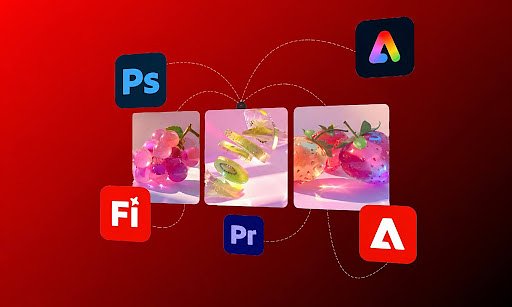
Adobe’s formidable advantage lies in its ecosystem. Firefly Foundry is not a standalone tool but is deeply integrated across Creative Cloud, Express, and Adobe’s new end-to-end content platform, GenStudio. This creates a powerful "moat." An enterprise can use Foundry to generate a custom, on-brand image, edit it in Photoshop, incorporate it into a marketing campaign in Express, and manage its lifecycle through GenStudio—all within a single, interconnected workflow. This seamless integration makes the Adobe ecosystem incredibly sticky and difficult for competitors to replicate.
Furthermore, a partnership with NVIDIA to leverage its AI Enterprise software platform underscores the technical ambition behind Foundry, promising optimized performance and flexibility for the complex models it supports. By providing the tools, the workflow, and the legal protection, Adobe is positioning itself not just as a software vendor but as an essential, strategic partner for any large organization serious about scaling content production with AI.
Reshaping the Content Supply Chain
Ultimately, the success of Firefly Foundry will be measured by its ability to transform the enterprise content supply chain. For years, marketing and creative teams have been buried under an ever-increasing demand for content to feed a fragmented landscape of digital channels, global markets, and personalized customer journeys. This has created significant production bottlenecks.
Foundry aims to break these bottlenecks by automating the creation of high-volume, on-brand assets. This allows for rapid creative testing, localization of campaigns at a scale previously unimaginable, and the generation of personalized e-commerce visuals on the fly. The value proposition is not to replace human creatives but to augment them. By offloading the repetitive, labor-intensive tasks of versioning and adaptation, the platform frees up designers, art directors, and copywriters to focus on strategy, concept development, and the high-level creative thinking that AI cannot replicate.
Governance is another key piece of this operational puzzle. Large organizations struggle to maintain creative oversight as teams become more distributed. Firefly Foundry includes built-in guardrails and integrates with Adobe’s Content Credentials initiative, which attaches transparent, tamper-evident data to content to show how it was created and edited. This provides a mechanism for accountability and responsible use, ensuring that as AI-driven content creation scales, it does so within the brand's established guidelines and ethical frameworks. The platform represents a sophisticated attempt to balance the explosive potential of generative AI with the rigorous operational control that enterprises demand.