
- 86,000: The Association of American Medical Colleges (AAMC) projects a shortage of over 86,000 physicians by 2026.
- 207,000: The American Osteopathic Association (AOA) reports over 207,000 DOs and medical students in the U.S., the largest number in its 150-year history.
- 25%: More than one in four U.S. medical students are training to become DOs.
Experts agree that the lawsuit highlights a critical tension between maintaining certification standards and ensuring equitable access to leadership roles in medical training, with potential implications for the national physician shortage.
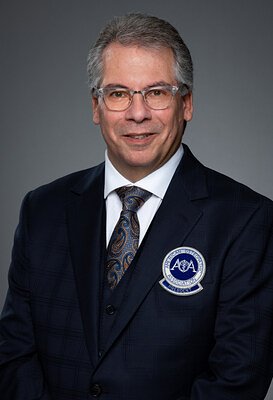
Accreditation Wars: A Lawsuit Threatens to Worsen the Doctor Shortage
CHICAGO, IL – December 04, 2025 – In a move that sends shockwaves through the medical education landscape, the American Osteopathic Association (AOA) has filed a federal lawsuit against the American Board of Internal Medicine (ABIM). The legal challenge targets a policy the AOA claims unfairly sidelines its physicians from leadership roles, disrupts training for a new generation of doctors, and ultimately exacerbates a national physician shortage that is already reaching crisis levels. This is not merely an internal dispute between certifying bodies; it is a flashpoint at the complex intersection of professional governance, workforce innovation, and the future of patient care in America.
At the heart of the conflict is an ABIM rule that effectively blocks residents and fellows from taking its prestigious board certification exams if their program director is certified by the American Osteopathic Board of Internal Medicine (AOBIM) rather than the ABIM. For years, the medical community has moved towards a “single accreditation system,” where all residency and fellowship programs, whether historically allopathic (MD) or osteopathic (DO), are approved under the same standards by the Accreditation Council for Graduate Medical Education (ACGME). This lawsuit argues that while the training has been unified, the recognition of those who lead the training has not.
A Fragile Truce and a Looming Deadline
This is not the first time these organizations have clashed over this very issue. A previous lawsuit filed in 2021 was resolved in September 2022, creating what now appears to have been a temporary truce. That resolution granted AOBIM-certified program directors a two-year grace period, until 2024, to either obtain ABIM certification themselves or be replaced. The agreement also included fee waivers for ABIM exams, a gesture seemingly intended to smooth the transition. However, the core requirement remained: beginning in 2024, only ABIM-certified directors could sign off on their trainees' competence for ABIM exams.
With that deadline having passed, the AOA's new lawsuit suggests the grace period was not a solution but a delay of the inevitable conflict. The AOA and its co-plaintiff, the American College of Osteopathic Internists (ACOI), allege that the ABIM policy maintains a monopoly over internal medicine certifications and coerces hospitals and training programs to sideline highly qualified DOs. “Legal action was our last resort,” stated AOA CEO Kathleen S. Creason, MBA, in a press release. “We filed this lawsuit only after exhaustive efforts to resolve the issue collaboratively. Our goal is to ensure fairness, protect our members, and preserve the integrity of graduate medical education.”
The Real-World Cost of Bureaucracy
The implications of this policy extend far beyond boardrooms and legal filings. The AOA argues that at a time when the nation is grappling with alarming workforce deficits—the Association of American Medical Colleges (AAMC) projects a shortage of over 86,000 physicians by 2026—the ABIM's rule actively closes off essential training pathways. By disqualifying AOBIM-certified physicians from verifying their own trainees' qualifications for ABIM certification, the policy creates a powerful incentive for residency programs to hire only ABIM-certified directors, regardless of a candidate's experience or teaching ability.
“When DOs are excluded, patients lose,” said AOA President Robert G.G. Piccinini, DO, D.FACN. “This policy removes skilled program directors from leadership, disrupts career paths and limits mentorship for young physicians.” His sentiment is echoed by the ACOI, whose president, Damon Baker, DO, MACOI, noted, “When program directors are pushed aside for reasons unrelated to competence, patients lose access to the physicians they need.” The argument is stark: institutional barriers are preventing qualified mentors from training the very doctors needed to fill critical gaps in care, particularly in underserved communities where osteopathic physicians have historically played a vital role.
A Profession on the Rise Demands Parity
This legal battle unfolds against the backdrop of osteopathic medicine's remarkable growth. Once a smaller, distinct branch of medicine, the profession is now a formidable force in American healthcare. The AOA reports more than 207,000 DOs and medical students in the United States, the largest number in its 150-year history. Today, more than one in four U.S. medical students are training to become a DO. With nearly 70% of practicing osteopathic physicians under the age of 45, this young and expanding workforce is perfectly positioned to help mitigate the nation's looming physician shortfall.
DOs are not on the periphery of medicine; they are integral to its core, holding influential positions in the military, at NASA, and within major sports organizations. The AOA's lawsuit is therefore not just a defensive maneuver but an assertion of parity. It is a declaration that in an era of unified training standards, certification from the AOBIM should be recognized as a valid qualification for leadership in any ACGME-accredited program. The lawsuit challenges a system where, in practice, one board's credential holds veto power over another, creating a tiered system that disadvantages a rapidly growing segment of the physician population.
The Future of Medical Governance
This lawsuit forces a difficult and necessary conversation about the role of certifying boards in the 21st century. While boards like the ABIM argue their policies are essential for maintaining rigorous standards of quality and patient safety, critics question whether rules like the one being challenged are truly about quality or more about protecting market share and institutional authority. The AOA's legal complaint, which includes allegations of monopolization, suggests it believes the latter is at play.
The outcome of this case could have profound implications for the future of medical education and professional governance. A ruling in favor of the AOA could dismantle a significant barrier, fostering a more integrated and collaborative environment between MDs and DOs at the leadership level. It could compel certifying boards to re-evaluate their policies of mutual recognition in the wake of the single GME accreditation system. Conversely, a ruling that upholds the ABIM's policy could further entrench the existing hierarchy, potentially slowing the integration of osteopathic physicians into top academic and leadership roles and, as the AOA warns, constricting the pipeline of new physicians when the nation can least afford it. As the legal proceedings commence, the entire healthcare sector will be watching, waiting to see if the future of medical training will be one of open collaboration or entrenched division.