
- 30+ years of public service in military, intelligence, and national security roles
- Principal architect of the Abraham Accords, the most significant Middle East peace breakthrough in 25+ years
- Led a U.S. sanctions campaign against Iran described as the most significant since the Cold War
Experts would likely conclude that Robert Greenway's move to the private sector underscores the growing trend of leveraging high-level government experience to provide strategic insights in geopolitically sensitive industries.
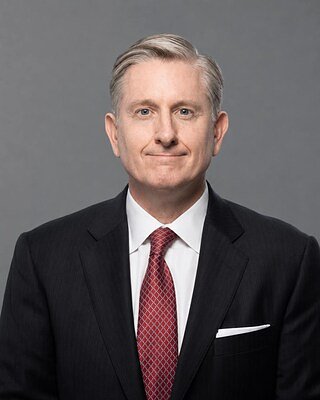
Abraham Accords Architect Robert Greenway Joins DC Strategy Firm
WASHINGTON, DC – June 01, 2026 – American Global Strategies (AGS), a strategic advisory firm founded by top Trump-era national security officials, announced today it has hired Robert Greenway, a former senior White House official and a principal architect of the Abraham Accords. Greenway's appointment as Senior Vice President underscores a growing trend in Washington where deep government experience in defense and intelligence is becoming a highly sought-after commodity in the private sector.
A Career Forged in Conflict and Diplomacy
Greenway brings over 30 years of public service to AGS, with a career that spans the battlefield, intelligence agencies, and the highest levels of national security policymaking. A retired U.S. Army Special Forces officer and combat veteran, he commanded units from team through battalion level. His service included multiple deployments to Iraq and Afghanistan, beginning immediately after the September 11 attacks. In Iraq, his duties included the formidable task of establishing the Iraqi Counterterrorism Force, a key element in the country's security apparatus.
After his military career, Greenway transitioned to an intelligence role, serving as a Senior Intelligence Officer at the Defense Intelligence Agency (DIA) where he supported U.S. Central Command. His innovative work in using big data to uncover illicit financial networks earned him the prestigious David Rist Prize from the Military Operations Research Society.
His government service culminated at the White House National Security Council (NSC), where he served as Deputy Assistant to the President and Senior Director for the Middle East and North Africa. In this capacity, he was the U.S. government's top official responsible for policy across the volatile region. He supervised the creation of the first-ever presidentially approved national strategies for Iran, Syria, Iraq, Libya, Lebanon, and Israel.
During this tenure, Greenway was instrumental in two of the administration's most significant foreign policy initiatives. He was a principal architect of the Abraham Accords, the landmark diplomatic agreements that normalized relations between Israel and several Arab nations, representing the most significant breakthrough in Middle East peace in over a quarter-century. Concurrently, he planned and executed a "maximum pressure" campaign against Iran, leading what the press release described as "the most significant U.S. economic sanctions campaign since the Cold War," which doubled sanctions pressure in a fraction of the time of previous efforts. His work also included coordinating the international coalition to defeat ISIS and overseeing operations that eliminated key terrorist leaders.
Following his time in the White House, Greenway continued to shape policy discussions from influential positions in the think tank world, first as President and Executive Director of the Abraham Accords Peace Institute and later as the Director of the Allison Center for National Defense at The Heritage Foundation.
The Strategic Value of a Seasoned Operator
For American Global Strategies, the addition of Greenway is a significant strategic coup. The firm, which advises clients in the defense, aerospace, and technology sectors, gains an expert with unparalleled, hands-on experience in the precise areas where geopolitical risk and business intersect. His deep knowledge of the Middle East, counterterrorism, and U.S. sanctions policy is a tangible asset for corporations and entities navigating the complexities of international markets.
AGS leadership highlighted the immediate value Greenway brings. "Mr. Greenway brings exceptional experience as a policy practitioner, both functionally and regionally, to AGS," said CEO Alexander Gray in the official announcement. "The depth and breadth of his relationships and understanding of complex issues will be invaluable to our clients."
This sentiment was echoed by AGS Chairman and former National Security Advisor Robert C. O'Brien. "His decades of experience in intelligence and defense policy will offer our clients additional insights into today's geopolitical climate and position AGS to continue to provide the high level of service our clients expect," O'Brien stated.
Greenway's role will involve advising clients on defense strategy, intelligence-related risk, and international security. This goes beyond simple regional analysis; it provides clients with insight into the decision-making processes of governments and the operational realities of high-stakes national security initiatives. For a defense contractor, this could mean better understanding future military needs; for a financial institution, it could mean navigating the intricate web of international sanctions.
Washington's Revolving Door Gathers Pace
Greenway's move from the highest echelons of government and policy influence to a private advisory role is a prominent example of Washington's "revolving door." This well-established career path sees former senior officials leverage their expertise and networks in the private sector. AGS itself is a product of this phenomenon, founded by O'Brien and Gray, the former National Security Council Chief of Staff.
This model has become central to the business strategy of a growing number of elite D.C. advisory firms. Competitors like Beacon Global Strategies, The Cohen Group, and Capstone DC are similarly staffed with former cabinet secretaries, generals, and intelligence chiefs. These firms market a unique product: not just analysis, but actionable strategic insight informed by years spent inside the rooms where decisions are made.
The practice is not without its critics. Watchdog groups frequently raise concerns about the potential for undue influence and the ethical lines between providing advice and peddling access. While firms like AGS are careful to note that they do not engage in registered lobbying, the value of their personnel is inextricably linked to their government experience and the relationships forged during their time in public service.
The hiring of an official so deeply involved in recent, sensitive policy—from the Iran sanctions to the Abraham Accords—highlights the immense value the private sector places on this insider knowledge. As global instability grows and the lines between national security and economic prosperity blur, the demand for individuals like Robert Greenway, who have navigated these challenges from the center of power, is only set to increase. These strategic advisory firms are positioning themselves as indispensable navigators for corporations trying to chart a course through an increasingly turbulent world.
Topics & Related
Aerospace & Defense
Related Company Pulse