
- ¥600 billion: The total investment in TAKANAWA GATEWAY CITY, one of Japan's largest urban redevelopment projects.
- 9.5 hectares: The size of the former railyard being transformed into a smart, sustainable district.
- August 2026: The scheduled opening of TIS's new campus within the development.
Experts would likely conclude that this relocation is a strategic win-win, positioning TIS as a premier educational institution while enhancing the long-term value and appeal of TAKANAWA GATEWAY CITY as a global hub.
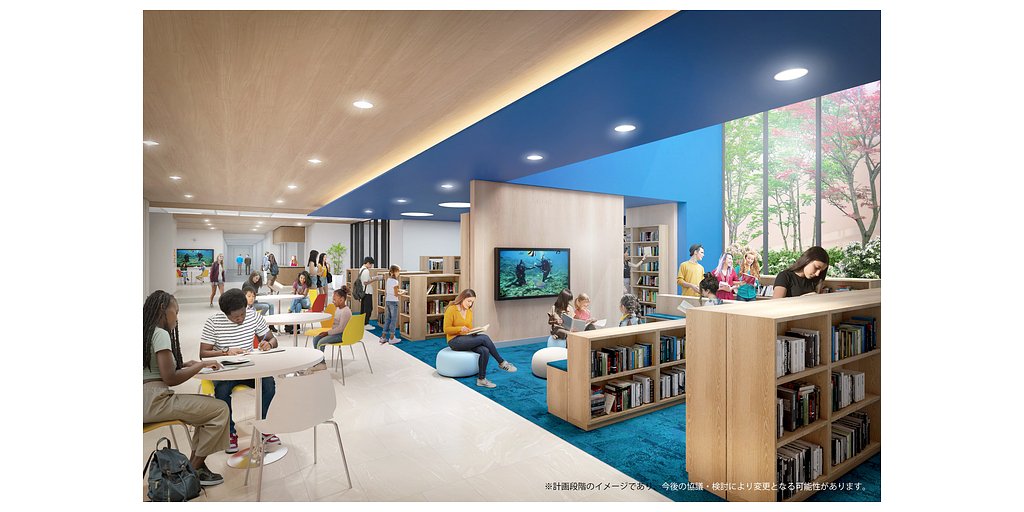
A Strategic Anchor: TIS's Landmark Move to Takanawa Gateway City
TOKYO, JAPAN – December 01, 2025
In a move that signals a profound shift in Tokyo's educational and urban development landscape, Tokyo International School (TIS) has announced its relocation to a state-of-the-art campus within the ambitious TAKANAWA GATEWAY CITY. Scheduled to open in August 2026, this is far more than a simple change of address. The relocation, initiated by an invitation from developer East Japan Railway Company (JR East), represents a calculated strategic investment that embeds a premier educational institution into the very fabric of one of Japan's largest and most technologically advanced urban redevelopment projects. This symbiotic partnership is poised to redefine the value proposition for both the school and the city, creating a new benchmark for integrated living and learning in a global metropolis.
The Ultimate Anchor Tenant in a ¥600 Billion Vision
To understand the significance of this move, one must first appreciate the scale of TAKANAWA GATEWAY CITY. Rising on a 9.5-hectare former railyard, this is JR East's multi-billion-dollar bet on the future of Tokyo. Envisioned as a "Global Gateway" and a "living laboratory for fostering enriched lives 100 years into the future," the project is a marvel of mixed-use design. It combines luxury residences, the JW Marriott Hotel Tokyo, corporate headquarters for giants like KDDI, a convention center, and high-end retail under the NEWoMan brand.
At its core, however, the city is a showcase for smart and sustainable technology. An "Urban OS" will manage city services, autonomous robots will handle security and deliveries, and an on-site biogas plant will convert food waste into energy, helping the entire district achieve net-zero CO2 emissions. This is the forward-thinking environment that TIS will call home. For JR East, inviting TIS is a masterstroke of strategic tenancy. In the competitive world of luxury real estate, amenities drive value. By embedding a prestigious K-12 International Baccalaureate (IB) World School directly within its 44-story residential tower, JR East has created an irresistible draw for its target demographic: high-net-worth expatriates and global executives with families. TIS is not just another tenant; it is a strategic anchor that fundamentally enhances the appeal and long-term value of the entire residential offering, ensuring robust demand for years to come.
A Bold Play in a Competitive Market
Tokyo's international school market is notoriously competitive, with established institutions boasting long histories and loyal alumni networks. TIS's relocation is a decisive maneuver designed to leapfrog the competition. While many rival schools are located in more suburban or less connected parts of the city, the new TIS campus will offer unrivaled accessibility. Directly connected to the JR Yamanote and Keihin-Tohoku lines via TAKANAWA GATEWAY Station, and with easy links to the subway network and Haneda Airport, the campus removes logistical barriers for families across the Greater Tokyo area.
Beyond location, the facilities promise to set a new standard. The purpose-built campus will feature cutting-edge science labs, design and technology studios, a black box theatre, and dedicated arts spaces. Furthermore, TIS is exploring partnerships to grant students access to shared city amenities like swimming pools and large-scale performing arts venues. This strategic positioning elevates the school's stature, transforming it from one of many options into a premier destination for international education in Japan. The move is a clear statement of intent, signaling TIS's ambition to attract top-tier global talent by offering an educational environment that is as modern and globally connected as the city it inhabits.
The 'Living Classroom' as a Strategic Asset
The most compelling aspect of this partnership is the concept of the campus as a "living classroom." This is not merely a marketing slogan but a core pedagogical strategy that leverages the unique environment of TAKANAWA GATEWAY CITY. The IB curriculum, which TIS offers from Kindergarten through Grade 12, is centered on inquiry-based, experiential learning—a philosophy that aligns perfectly with the new location.
Students will have the opportunity to study sustainability not just from a textbook, but by observing the city's circular economy in action through its biogas facilities and renewable energy systems. They will learn about robotics and artificial intelligence by coexisting with the autonomous vehicles and smart infrastructure that define the district. The proximity to major corporations, tech startups in the 'LiSH' innovation hub, and cultural institutions like the Kengo Kuma-designed 'MoN Takanawa' museum creates unprecedented opportunities for mentorships, internships, and real-world projects. As Daniel Reynolds, head of TIS, noted, the new campus provides "an ideal urban canvas befitting our mission." This integration of curriculum and environment becomes a powerful differentiator, promising an education that prepares students not just for university, but for navigating the complex, technology-driven world of the future.
A Symbiotic Future for Education and Urbanism
Ultimately, the relocation of Tokyo International School is a landmark transaction where every party stands to gain significant strategic advantages. TIS secures a future-proof campus that elevates its brand, enhances its educational offerings, and places it at the center of Tokyo's most dynamic new hub. For students and families, it promises a holistic and deeply engaging educational journey unlike any other.
For developer JR East, the school is more than just a tenant; it is a critical piece of the puzzle that completes its vision for a comprehensive urban ecosystem. The presence of TIS solidifies TAKANAWA GATEWAY CITY's identity as a premier destination for global business and life, directly boosting the value of its residential and commercial assets. This move demonstrates a sophisticated understanding of modern urban development, where education is not an afterthought but a foundational pillar for building a vibrant, attractive, and sustainable community. As the city opens in phases through 2026, the integration of TIS will serve as a powerful case study in how strategic investments in education can drive economic value and shape the future of city living.