
- $100 million endowment: Permanent funding for the TSU Breast Cancer Screening and Prevention Center.
- 9 underserved counties: Clinic serves Harris, Brazoria, Galveston, Walker, Grimes, Matagorda, Wharton, Trinity, and Polk.
- 2027 expansion: Clinic will move to a state-of-the-art Community Health Center.
Experts would likely conclude that this initiative sets a replicable model for addressing urban health inequities through sustainable, community-centered care.
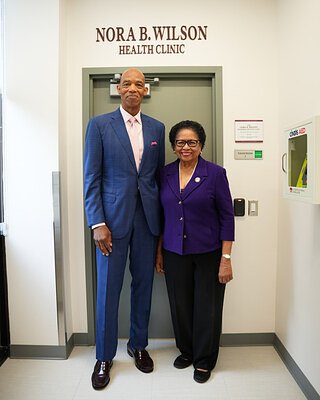
A Sister's Legacy: How One Gift Creates a Blueprint for Urban Health
HOUSTON, TX – June 19, 2026 – In a move that powerfully merges personal legacy with public service, revered academic Dr. Ruth J. Simmons and Texas Southern University have announced the establishment of the Nora B. Wilson Endowment and Health Clinic. The initiative, created in honor of Dr. Simmons' late sister, is far more than a heartfelt tribute; it represents a strategic and sustainable blueprint for confronting health inequity head-on.
This new endowment will provide permanent funding for the TSU Breast Cancer Screening and Prevention Center, a vital resource serving nine underserved counties in Southeast Texas. While the announcement centers on breast cancer, the clinic's mission is a comprehensive one, designed to build a new scaffolding of accessible, preventative care for communities long overlooked by the system. It’s an act of philanthropy that doubles as a masterclass in strategic systems-building.
A Leader's Vision, A Sister's Name
To understand the gravity of this gift, one must understand its source. Dr. Ruth J. Simmons is a figure who has consistently shattered ceilings in American higher education. The youngest of twelve children born to sharecroppers in East Texas, she rose to become the first African American president of an Ivy League institution at Brown University, having previously been the first to lead a major women's college at Smith. Her tenure is synonymous with bold vision, from championing need-blind admissions to confronting institutional histories of slavery.
This endowment is perhaps her most personal work. It honors her sister, Nora B. Wilson, a breast cancer survivor who passed away in May. Dr. Simmons' words paint a picture not of a public figure, but of a quiet pillar of strength whose life's impact resonated far beyond public praise.
"Nora Wilson was such a person who lived a life of dignity and worth without ever being singled out for her importance, but she was important," Dr. Simmons stated. She described a sister who sacrificed for her family, inspired others with her independence, and showed what "everyday determination and persistence could overcome." The endowment, she explained, "honors one who labored largely without praise, who symbolizes the vast and diverse communities that universities ostensibly seek to serve."
It is in this sentiment that the strategic brilliance of the initiative is revealed. The clinic is not named for a titan of industry or a public official, but for a woman who represents the very community it is designed to empower. This is a profound statement on who deserves to be memorialized and who our institutions are truly built to serve.
A Strategic Investment in Urban Health Equity
For Texas Southern University, this is a landmark moment that crystallizes its core mission. As a Historically Black College and University (HBCU) and a special-purpose institution for urban programming, TSU is uniquely positioned to execute this vision. The university is not merely a passive recipient of a generous gift; it is the strategic partner chosen to bring this legacy to life.
TSU President J.W. Crawford III, who recently took the helm, called it a "legacy moment and so much more." He added, "I am truly humbled to take on the obligation to ensure the goodness she delivered in life will be paid forward here at Texas Southern University." This endowment provides a powerful anchor for his leadership as the university approaches its centennial, reinforcing its identity as a force for positive change in urban communities.
Operationally, the Nora B. Wilson clinic is already active, housed within the TSU Institute of Urban Public Health and Housing. However, the long-term vision is even more ambitious. The clinic is slated to move into the university’s new, state-of-the-art Community Health Center upon its completion in 2027. This move signals a significant scaling of operations, transforming the clinic from a contained unit into the cornerstone of a larger, integrated health hub.
Confronting Disparities with Comprehensive Care
The necessity for this clinic is starkly illustrated by the health disparities plaguing the nine counties it serves: Harris, Brazoria, Galveston, Walker, Grimes, Matagorda, Wharton, Trinity, and Polk. Across Texas and the nation, Black women face a cruelly disproportionate mortality rate from breast cancer, often due to later-stage diagnoses stemming from systemic barriers to screening and quality care.
By focusing on education, outreach, and early detection, the Nora B. Wilson clinic directly targets the root causes of this disparity. But its scope is intentionally broader, reflecting a sophisticated understanding that health issues are interconnected. The clinic also provides vital screenings for sexually transmitted infections, blood pressure, A1C for diabetes, and cholesterol. It even offers medication therapy management and a dermatology clinic for conditions like eczema and psoriasis that can severely impact quality of life but are often out of reach for underserved populations.
This holistic approach is the “how-to” of building a more effective health system. It acknowledges that a person who comes in for a mammogram might also be struggling with unmanaged hypertension. By creating a single, trusted point of contact for a range of health needs, TSU is lowering barriers to entry and building a foundation of preventative care that can save lives and reduce long-term costs for the entire healthcare ecosystem.
Building a Sustainable Model for Community Health
The most powerful strategic element of this initiative is its structure. By creating an endowment, Dr. Simmons has ensured the clinic's mission is not subject to the whims of annual budgets or shifting grant cycles. The endowment is a permanent, self-sustaining financial engine. The principal is invested, and a portion of the returns provides a reliable stream of funding for operations, outreach, and research in perpetuity. This ensures the Nora B. Wilson clinic will be serving the community for generations to come.
Furthermore, TSU is actively inviting the community to contribute to the fund, allowing the endowment to grow and expand its impact over time. This creates a shared sense of ownership and transforms the initiative from a single gift into a collective community asset. The success of this model will depend on effective community engagement—building trust, partnering with local leaders and faith-based organizations, and deploying outreach in a way that is culturally competent and genuinely accessible. Given TSU's deep roots in the community, it is well-equipped for this task, creating a powerful, replicable model for how universities can serve as anchors of public health and social progress.