
- 35,000 serious injuries and 85 fatalities annually in the U.S. from forklift accidents
- 70% of forklift accidents are preventable (OSHA)
- AI system reduces vehicle speed automatically when collision is imminent
Experts would likely conclude that this AI-integrated forklift technology represents a significant advancement in warehouse safety, with the potential to drastically reduce preventable accidents through real-time collision avoidance and proactive intervention.
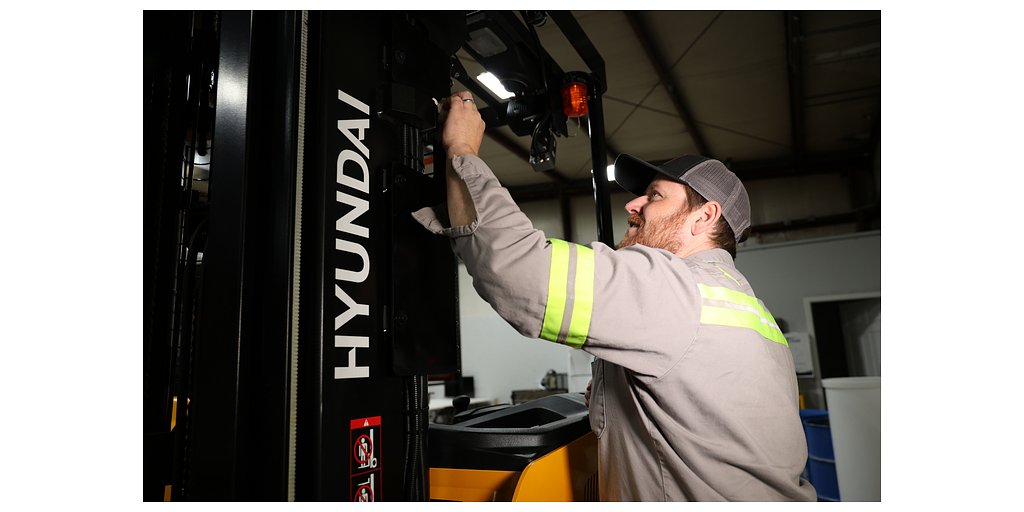
A New Vision for Safety: How AI Is Making Forklifts Intelligently Aware
NEWBURGH, IN – June 09, 2026 – The cavernous spaces of modern warehouses are the arteries of global commerce, bustling with activity. But within this constant motion lurks a persistent danger. Every year in the United States, forklifts are involved in approximately 35,000 serious injuries and are responsible for about 85 fatalities. For the workers on the floor and the operators in the driver's seat, a moment of distraction or a simple blind spot can have devastating consequences. Now, a strategic partnership is tackling this problem not with more warnings signs or louder alarms, but with something far more advanced: artificial intelligence that gives the machine itself the power to see, think, and react.
In a move timed for National Forklift Safety Day, AI safety technology specialist Matrix Design Group and global equipment manufacturer Hyundai Material Handling announced a partnership to embed intelligent vision directly into the operational core of forklifts. This collaboration moves beyond aftermarket add-ons, integrating Matrix's HiVision® powered by OmniPro® system deep into Hyundai’s lift trucks. The goal is to create a new standard where collision avoidance is not just a feature, but a fundamental part of the machine's DNA, promising a tangible difference in the daily safety of countless workers.
The Technology of Tangible Difference
At the heart of this innovation is OmniPro, an AI-powered vision system that operates on the “edge.” Unlike systems that send vast amounts of data to a distant cloud for analysis, edge computing processes information directly on the vehicle. This distinction is critical. In a dynamic warehouse environment, the milliseconds saved by local processing can be the difference between a near-miss and a tragic accident. It allows for the real-time, instantaneous response required to prevent a collision.
The system functions as a vigilant co-pilot. Cameras mounted on the forklift feed a constant stream of visual data to the onboard AI, which is trained to identify and differentiate between pedestrians, other vehicles, and static obstacles like shelving. It doesn't require employees to wear special electronic tags, meaning every single person in the vicinity—from a new hire to a visiting contractor—is visible to the system. As the forklift moves, the technology establishes dynamic safety zones around it. An on-screen display provides the operator with escalating visual alerts, shifting from green to yellow to red as the proximity to an obstacle becomes more critical. But the system's most crucial capability lies in its ability to intervene. Through a direct connection to the forklift’s CAN-bus—its central nervous system—the system can automatically reduce the vehicle's speed when a collision is imminent, taking decisive action when human reaction time may not be enough.
“The value of this technology extends well beyond collision avoidance,” said Mark Watson, CEO of Matrix Design Group, in the official announcement. “By integrating OmniPro Vision AI into the lift truck platform, we are helping customers create a foundation for safer operations, better visibility and more productive facilities.” This proactive intervention addresses a stark reality highlighted by OSHA: an estimated 70% of all forklift accidents are preventable.
Beyond Safety: Building a Resilient Operation
The human cost of warehouse accidents is incalculable, but the business impact is also severe. A single incident can lead to catastrophic financial losses from workers' compensation claims, equipment damage, operational downtime, and potential regulatory fines. By actively preventing these events, the integrated AI system offers a powerful return on investment that extends far beyond a clear conscience.
Industry analysts note that facilities adopting such technologies often see significant reductions in insurance premiums. The data-logging capabilities of systems like OmniPro provide documented proof of a safer operating environment and can identify high-risk areas or behaviors before they lead to an incident. This shifts safety management from a reactive, incident-based model to a proactive, data-driven strategy. Fewer accidents mean less downtime for investigations and repairs, translating directly into enhanced productivity and smoother workflow. Furthermore, a visible commitment to cutting-edge safety technology can dramatically improve worker morale and trust, fostering a culture where safety is a shared, technology-assisted responsibility.
A Gateway to the Connected Warehouse
Perhaps the most significant aspect of the Matrix-Hyundai partnership is its strategic vision. This collaboration represents a deliberate shift away from fragmented, standalone safety gadgets toward a deeply integrated, cohesive ecosystem. It’s a foundational step in the journey toward the fully connected, intelligent warehouse of the future.
“As Hyundai looks ahead, working with Matrix as an official technology partner helps shift the approach from standalone point solutions to a more cohesive strategy,” noted Lewis Byers, Executive Vice President and COO of Hyundai Material Handling. “Collision avoidance is the starting point, but the roadmap extends well beyond into a more connected and intelligent machine ecosystem.”
This integration creates a platform for future innovation. The data gathered by the vision system—on traffic patterns, near-miss hotspots, and operational bottlenecks—can be fed into larger warehouse management systems to optimize layout and workflow. It lays the groundwork for more advanced automation, as robust, reliable collision avoidance is a non-negotiable prerequisite for deploying autonomous guided vehicles (AGVs) and other robotic solutions safely alongside human workers. The partnership combines Matrix's certified expertise in AI and information security (holding both ISO 9001 and ISO 27001 certifications) with Hyundai's vast manufacturing scale and market presence. The result, demonstrated to the industry at the MODEX 2026 trade show in Atlanta, is not just a concept but a market-ready solution poised to redefine industry standards.
By embedding intelligence directly into the machines that form the backbone of our supply chain, this partnership isn't just making forklifts safer. It is building a smarter, more resilient foundation for the entire logistics industry, one that values the safety of its people as the most critical component of its operations.