
- Study Focus: Comparative analysis of the Bio Leg (powered prosthetic) vs. C-Leg (passive microprocessor knee).
- Technology: Bio Leg actively generates movement, reducing user fatigue and improving gait symmetry.
- Clinical Validation: Study conducted at Brooks Rehabilitation's Motion Analysis Center, led by experts like Dr. Emily J. Fox and Dr. Howard Weiss.
Experts conclude that the Bio Leg's active power assistance shows strong potential to improve mobility and quality of life for above-knee amputees, pending rigorous clinical validation.
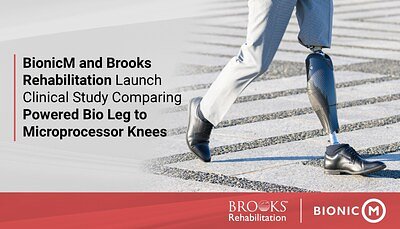
A New Era in Prosthetics: BionicM and Brooks Rehab Test Powered Bio Leg
JACKSONVILLE, FL – March 27, 2026 – A groundbreaking clinical study is underway that could redefine mobility for individuals with above-knee amputations. BionicM USA LLC, a robotics firm born from university research, has partnered with the nationally acclaimed Brooks Rehabilitation to launch a comparative study on its powered prosthetic, the Bio Leg. The research aims to provide what has been critically lacking: objective data on how active power assistance in a prosthetic knee can improve real-world movement and quality of life.
The collaboration, titled Adaptive Mobility Technology: A Comparative Study of Bio Leg and C-Leg, brings together BionicM's engineering prowess and Brooks Rehabilitation's deep clinical and research expertise. It puts the Bio Leg, a powered microprocessor knee, head-to-head with the current standard of care—passive microprocessor-controlled knees—to measure its impact on everything from walking on ramps to simply standing up from a chair.
The Power to Move: Redefining Prosthetic Knees
For decades, the standard for advanced prosthetic knees has been the microprocessor knee (MPK), which uses sensors to anticipate a user's movement and adjust resistance, providing stability and preventing falls. While a significant leap from mechanical joints, these devices are fundamentally passive; they control motion but do not generate it. The user's own body must provide all the force to walk, climb, and navigate daily life.
BionicM's Bio Leg represents a paradigm shift. As a powered prosthetic, it doesn't just resist motion—it actively generates it. Born from humanoid robotics research at the University of Tokyo, the Bio Leg is designed to replace lost muscle strength. Integrated sensors detect the user's intent, signaling a motor to provide active assistance. This means the knee can help propel the user up stairs, power them from a sitting to a standing position, and ensure a more natural, symmetrical gait during walking.
This active assistance is designed to address a core issue: the immense physical and cognitive load on the user. The Bio Leg's technology aims to prevent knee buckling by actively assisting in knee extension during the stance phase and lifts the toes during the swing phase to prevent stumbling. By taking on some of the work, the device promises to reduce fatigue, increase endurance, and make movement more intuitive and less of a conscious effort.
Overcoming Daily Hurdles for Amputees
The need for such an innovation is rooted in the persistent challenges faced by individuals with transfemoral amputations. Life on level ground may be manageable, but the real world is filled with inclines, uneven surfaces, and stairs. Navigating these obstacles with a passive prosthesis often requires developing compensatory movement strategies.
These adjustments—such as vaulting on the sound limb to create clearance for the prosthesis or using exaggerated hip and trunk movements—are physically taxing. They lead to an asymmetrical gait that increases energy expenditure significantly. Studies show that transfemoral amputees have a much higher metabolic cost of walking compared to non-amputees, which leads to fatigue and limits their overall activity levels. Over time, this reliance on compensatory movements can lead to secondary health issues, including lower back pain and osteoarthritis in the remaining limb and joints.
This study directly confronts these issues by investigating if the Bio Leg's active power can reduce the need for these strenuous compensations. The goal is to see if providing power at the knee joint can lead to a more symmetrical, efficient, and less physically demanding way of moving, empowering users to stay active and engaged in their daily lives with greater ease and confidence.
From Lab to Life: The Crucial Role of Clinical Validation
While the Bio Leg technology is promising, translating innovation into accepted clinical practice requires rigorous, objective evidence. This is the core purpose of the collaboration with Brooks Rehabilitation, a non-profit organization ranked as the top rehabilitation hospital in Florida and one of the best in the nation.
The study will be conducted within Brooks' state-of-the-art Motion Analysis Center, using a combination of clinical testing, biomechanical analysis, and patient-reported outcomes. The research employs a within-subject comparative design, meaning each participant will be evaluated using their current, familiar microprocessor knee and then again after an acclimation period with the Bio Leg. This allows for a direct comparison of performance and experience for the same individual, providing powerful and personalized data.
Leading the research is a distinguished interdisciplinary team. Principal Investigator Emily J. Fox, PhD, DPT, MHS, director of the Brooks Motion Analysis Center, brings extensive expertise in neuromuscular research. She is joined by Howard Weiss, DO, medical director of the Amputee Program at Brooks Rehabilitation, who provides critical clinical insight.
"This study reflects a collaborative effort to rigorously evaluate powered prosthetic knee technology using established clinical and biomechanical methods," said Dr. Fox. "Our goal is to generate high-quality data that can inform clinicians, researchers and individuals with limb loss."
Dr. Weiss added his perspective from clinical experience, noting the device's potential. "In my clinical experience, the Bio Leg has demonstrated promising outcomes and a level of intuitive use that is unique among prosthetic knee technologies," he stated. "This study is an important step toward objectively evaluating its impact on mobility, endurance and functional performance in individuals with transfemoral amputation."
The results of this research will be critical. With the Bio Leg having already received FDA registration and approval for U.S. medical insurance billing codes, strong clinical data is the final, essential piece to drive widespread adoption and convince insurers of its medical necessity. The findings will be shared through scientific and clinical channels, potentially setting a new standard for what is possible in prosthetic care and empowering amputees with a level of mobility once thought to be out of reach.