
- Market Opportunity: India's non-alcoholic beverage market valued at nearly $35 billion in 2025, projected to grow at 8% CAGR over the next decade.
- Consumer Shift: Non-carbonated segment holds 56% market share, driven by health-conscious urban middle class.
- Product Potential: Fermented dairy market in India expected to nearly double from $5.9 billion in 2025 to $11.1 billion by 2035.
Experts would likely conclude that Asahi's strategic partnership with Varun Beverages is a well-calculated move to capitalize on India's growing demand for healthier, non-carbonated beverages, leveraging local expertise to navigate a complex market.
A Calculated Alliance: Asahi's Bet on India's Shifting Tastes
TOKYO, JAPAN – June 18, 2026 – In a move that signals a deep understanding of modern global expansion, Japanese beverage giant Asahi Group Holdings has announced it will introduce its iconic CALPIS brand to India. This isn't a simple export strategy; it's the formation of a powerful alliance with Varun Beverages Limited, one of India's most formidable manufacturing and distribution players. The deal, which will see the century-old fermented milk drink hit shelves in late 2026, is a masterclass in strategic partnership, designed to navigate one of the world's most promising yet challenging consumer markets.
This entry is about more than just a new product. It represents a confluence of global ambition, local expertise, and shifting consumer desires. For Asahi, it’s a calculated leap into a market of 1.4 billion people who are increasingly trading sugary sodas for healthier alternatives. For Varun Beverages, it’s a chance to diversify beyond its blockbuster partnership with PepsiCo and capture a new, burgeoning category. And for the Indian consumer, it’s the arrival of a global heritage brand, tailored for the local palate, ready to compete in a crowded field.
The Anatomy of a Power Partnership
The structure of this alliance is its most compelling feature. Rather than building a new system from the ground up—a capital-intensive and time-consuming endeavor fraught with risk—Asahi is effectively plugging its brand into an existing, high-performance engine. Varun Beverages, the second-largest PepsiCo franchisee outside the U.S., operates a staggering 53 production facilities and commands a distribution network that penetrates deep into the fabric of Indian commerce, from bustling cities to smaller towns.
Under the franchise agreement, the division of labor is clear and synergistic. Asahi will do what it does best: leverage its century of experience to manage the CALPIS brand, drive marketing, and provide the technical know-how for its unique fermentation process. Varun Beverages, in turn, will handle the immense operational lift of manufacturing, distributing, and selling the product at scale. This model allows Asahi to remain asset-light and focused, while empowering a local expert to navigate the intricate logistics and retail relationships that define the Indian market.
Varun Jaipuria, Executive Vice Chairman at Varun Beverages, highlighted the strategic fit, stating, “We are honored to partner with Asahi Group... CALPIS is a brand with over a hundred years of heritage and consumer trust, and we are excited to introduce it to India. This is a category we are committed to building at Varun Beverages and one in which we see significant long-term potential.”
This sentiment underscores the mutual benefit. Varun Beverages isn't just a hired hand; it's a partner invested in building a new category. This commitment is crucial for a product like CALPIS, which requires more consumer education than a simple cola or juice.
Tapping into India’s Thirst for Health
Asahi's timing is impeccable. The Indian non-alcoholic beverage market is not just growing; it's transforming. Valued at nearly $35 billion in 2025, the market is projected to expand at a robust CAGR of nearly 8% over the next decade. More importantly, the growth is being driven by a fundamental shift in consumer behavior. The non-carbonated segment already holds a dominant 56% market share, fueled by a rising tide of health consciousness, particularly among the expanding urban middle class.
Indian consumers are actively seeking out beverages that offer functional benefits, natural ingredients, and a break from high-sugar formulas. This trend has turned the dairy-based beverage segment into a hotbed of innovation. With India being the world's largest milk producer, fermented drinks like lassi and chaas are already dietary staples. The market for fermented dairy products is expected to nearly double from $5.9 billion in 2025 to $11.1 billion by 2035. CALPIS, a ready-to-drink, fermented, non-carbonated beverage, lands squarely at the intersection of these powerful trends.
Asahi Group CEO Atsushi Katsuki commented on this opportunity, noting, “India is one of the world’s most dynamic and promising beverage markets, and we are pleased to partner with Varun Beverages, a leading beverage company with strong manufacturing capabilities and extensive market reach.” His statement reflects a clear-eyed view of the opportunity: to introduce a product that aligns with an existing cultural affinity for dairy while offering the modern conveniences of a ready-to-drink format and a novel taste profile.
A Cultural Taste Test in a Crowded Field
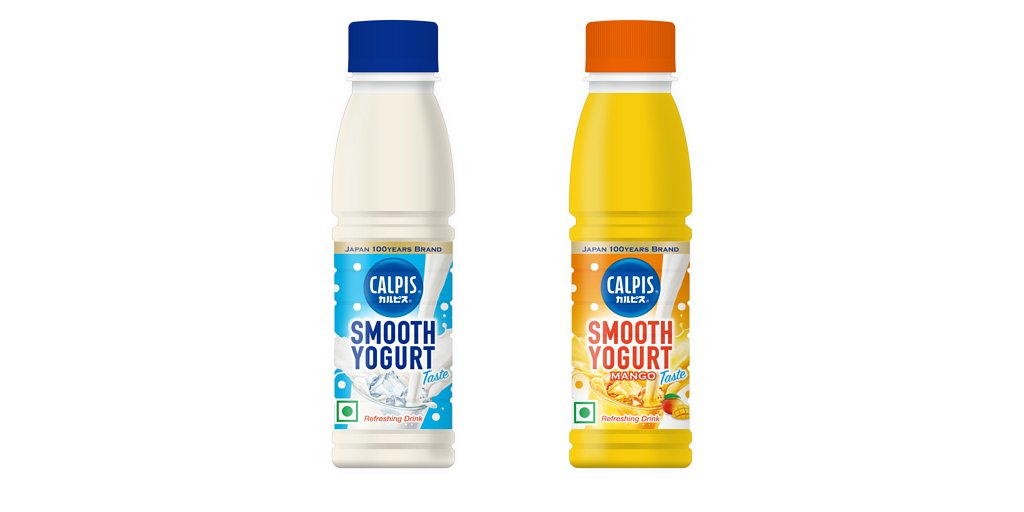
The greatest challenge and opportunity for CALPIS will be the question of taste and tradition. The drink’s signature “sweet and tangy” flavor, a result of its proprietary lactic acid fermentation, is beloved in Japan and parts of Asia but will be new to many in India. The initial launch flavors—Original and Mango—reveal a savvy strategy. While the Original flavor introduces the brand's authentic profile, the inclusion of Mango, India’s most popular fruit flavor, serves as a familiar and welcoming bridge for consumers.
However, CALPIS will not be entering a vacuum. It will go head-to-head with domestic titans like Amul and Mother Dairy. These are not merely companies; they are national institutions, cooperatives woven into the country's agricultural and cultural identity. They command immense brand loyalty and dominate the dairy aisle with a vast array of products, from traditional dahi and lassi to flavored milks and probiotic drinks. To succeed, Asahi and Varun must position CALPIS not as a replacement for these beloved staples, but as a complementary, modern, and convenient option for on-the-go consumption or new taste experiences.
By leveraging Varun Beverages' distribution muscle, CALPIS can achieve a level of market presence that would be impossible for a newcomer to build alone. The partnership is a bet that operational excellence, combined with a unique, high-quality product and smart marketing, can carve out a meaningful space even in a market defended by giants. It is a test of whether a global brand can become a local favorite, one sip at a time.