
- 56 kg: Weight of the superconducting magnet core in the 3Tracer HF Relaxometer 2.0, enabling benchtop deployment. - 128 MHz: Maximum magnetic field strength achievable by the device, allowing for comprehensive molecular analysis. - <500 watts: Power consumption of the air-cooled cryocooler, making the instrument energy-efficient.
Experts agree that the 3Tracer HF Relaxometer 2.0 represents a significant leap in scientific instrumentation, democratizing access to high-field NMR technology and accelerating research across biomedical, energy, and food science sectors.
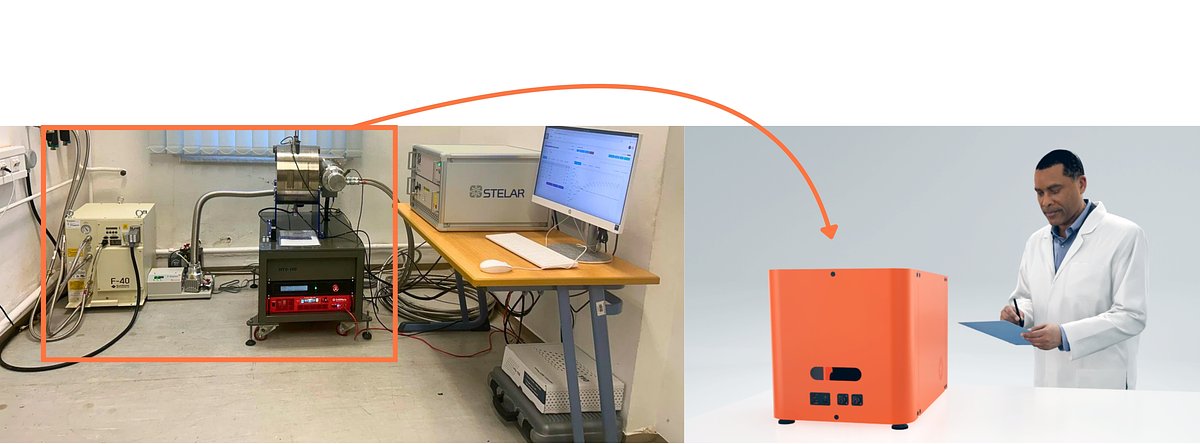
A Benchtop Revolution: How Superconductors Are Democratizing Science
LOWER HUTT, New Zealand and MEDE, Italy – June 01, 2026 – A quiet but profound shift is underway in the world of scientific research, one that promises to move powerful analytical tools from cavernous, resource-intensive facilities directly onto the laboratory bench. The latest dispatch from this frontier comes from a strategic partnership between Italian relaxometry pioneer Stelar and New Zealand-based magnet specialist HTS-110. The duo has just launched the 3Tracer HF Relaxometer 2.0, a device that encapsulates a much larger trend: the democratization of high-end science.
For decades, Nuclear Magnetic Resonance (NMR) has been a cornerstone of chemistry and medicine, but its most powerful iterations have been confined to specialized centers with heavy infrastructure demands. The 3Tracer 2.0 shatters that paradigm. It’s a high-field (3 tesla) instrument that plugs into a standard wall outlet, requires no cryogenic liquids, and is compact enough to sit beside a researcher's microscope. This isn't just an incremental improvement; it's a fundamental change in accessibility that could dramatically accelerate the pace of innovation across multiple industries.
The Technology Unlocking Molecular Secrets
To grasp the significance of this launch, one must look past the sleek exterior and into the physics it commands. The instrument performs a technique called Fast Field Cycling (FFC) Nuclear Magnetic Relaxation Dispersion (NMRD). Unlike conventional NMR, which observes molecular behavior at a single, fixed magnetic field, FFC-NMR rapidly cycles through a wide range of field strengths—from 10 kHz up to 128 MHz in the 3Tracer 2.0's case. This is critical because the way molecules tumble, stretch, and interact is strongly dependent on the magnetic field they are in. Fixed-field instruments see only a single snapshot; FFC provides the full motion picture, revealing subtle but crucial dynamics that are otherwise invisible.
The historical challenge has been generating these variable high fields in a compact form. The first-generation 3Tracer, for example, required three-phase power and a dedicated room. The breakthrough in the 2.0 version lies in its superconducting magnet, powered by second-generation (2G) high-temperature superconducting (HTS) tape. Developed by HTS-110, this ReBCO (Rare-Earth Barium Copper Oxide) tape is a feat of materials science. It can carry immense electrical currents with zero resistance at temperatures far warmer than traditional superconductors, allowing for a powerful magnet core that weighs a mere 56 kg and can be cooled by a small, air-cooled cryocooler consuming less than 500 watts.
"Researchers told us, quite simply, that they don’t want to walk across campus to a dedicated NMR facility. They want the instrument directly by their bench," said Donald Pooke, CEO of HTS-110. "We took our proven 3 tesla architecture, upgraded it to ReBCO and further reduced the facility burden."
This move from a facility-bound behemoth to a plug-and-play benchtop device is the epitome of the ongoing revolution in scientific instrumentation, where the focus has shifted from raw power to accessible, deployable power.
Accelerating Discovery from Medicine to Materials
The real-world impact of putting this capability into more hands is vast. The 3Tracer 2.0 is not a solution in search of a problem; it directly addresses bottlenecks in several high-growth research areas.
In biomedical research, the development of new contrast agents for MRI scanners is a prime example. The effectiveness of these agents is measured by their 'relaxivity,' a property that is highly field-dependent. The 3Tracer 2.0 allows scientists to measure the complete NMRD profile of a potential contrast agent, precisely matching the 1.5 T and 3.0 T field strengths of modern clinical MRI scanners. This provides a direct, predictive map of how an agent will perform in a clinical setting, drastically streamlining the design and validation process for safer, more effective diagnostics.
In the race for better energy storage, the instrument offers a unique window into the inner workings of batteries. Understanding the movement—or dynamics—of lithium ions within an electrolyte is key to improving battery performance, lifespan, and safety. FFC-NMR can precisely track these ionic movements, providing data on diffusion rates and activation energies that are critical for developing next-generation liquid, semi-solid, and solid-state electrolytes.
Even the food on our shelves stands to benefit. In food science, FFC-NMR can be used as a non-destructive tool to analyze the structure and stability of products. It can measure water mobility in meat to assess quality and freshness, determine the solid fat content in products like margarine, or analyze water droplet size in emulsions—all without destroying the sample. This opens the door to more sophisticated and reliable quality control, both in the lab and potentially closer to the production line.
A Partnership Forging the Future of Instrumentation
The 3Tracer 2.0 is a testament to a successful strategic alliance. Stelar, founded in 1984, is the established global leader in FFC-NMR relaxometry. HTS-110, spun out of New Zealand's Robinson Research Institute in 2004, is a world-class specialist in cryogen-free HTS magnet systems. Their collaboration, described by Stelar CEO Gianni Ferrante as the "culmination of a close, continuous collaboration," merges deep expertise in relaxometry software and user experience with cutting-edge magnet engineering.
This partnership doesn't exist in a vacuum. While the benchtop NMR market includes major players like Bruker, Nanalysis, and Magritek, these competitors primarily focus on fixed-field spectroscopy for structural analysis. Stelar and HTS-110 have carved out a unique niche by delivering variable-field capabilities to the benchtop, a market gap that previously forced researchers to choose between lower-field benchtop options or queueing for time on facility-scale instruments.
This launch is a key milestone in the broader trend of research decentralization. By lowering the barrier to entry—in terms of cost, infrastructure, and specialized expertise—the benchtop revolution empowers a larger and more diverse group of scientists. It reduces bottlenecks at shared core facilities, accelerates experiment-to-insight cycles, and fosters a more agile research environment. This shift is a core component of the "Decentralized Science" (DeSci) movement, which envisions a more open, collaborative, and efficient scientific ecosystem.
The 3Tracer 2.0 is more than just a new product; it is a powerful symbol of where scientific instrumentation is headed. By harnessing advanced materials to solve practical user challenges, Stelar and HTS-110 are not just selling a machine, they are delivering on the promise of a more accessible and innovative scientific future.