
- 40 years of impact: The Ricordi® Chamber has been a global standard for diabetes research since 1985.
- 300 million islets distributed: Supported 630 research studies and over 1,100 scientific publications.
- 23 countries served: The device has been shipped worldwide, enabling major clinical milestones like the Edmonton Protocol and FDA-approved cell therapy.
Experts agree that the Ricordi® Chamber revolutionized diabetes research by automating islet cell isolation, making it a critical tool for advancing cell therapy and regenerative medicine.
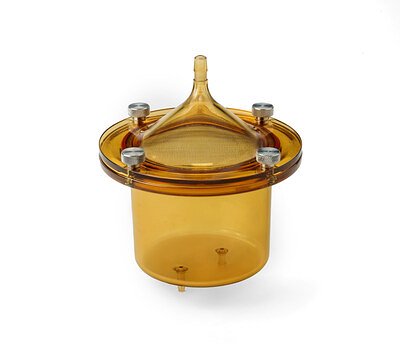
A 40-Year Legacy: The Device That Redefined Diabetes Research
MIAMI, FL – February 25, 2026 – Four decades ago, a novel concept emerged that would fundamentally alter the course of diabetes research. Today, Biorep Technologies, a Miami-based medical device manufacturer, celebrates the 40th anniversary of that concept-turned-cornerstone: the Ricordi® Chamber. This landmark device, which automated the isolation of insulin-producing islet cells from the pancreas, has become a global standard, underpinning thousands of studies and paving the way for the first FDA-approved cell therapy for Type 1 diabetes.
The Genesis of a Revolution
Before 1985, isolating viable islet cells for research or transplantation was a monumental challenge. The process was manual, inefficient, and yielded inconsistent results, often requiring multiple donor pancreases for a single procedure. This bottleneck severely limited the potential of islet transplantation as a viable treatment for diabetes.
That year, Camillo Ricordi, M.D., conceptualized a new approach. Working at Washington University in St. Louis, he developed an automated method that combined enzymatic digestion and mechanical agitation within a single, specialized chamber. This innovation dramatically increased the yield and quality of isolated islets. But a laboratory concept, no matter how brilliant, requires industrial discipline to achieve global impact.
This is where Ramón E. Poo, founder of Biorep Technologies, entered the picture. A longtime collaborator with the University of Miami's Diabetes Research Institute (DRI), Poo brought the manufacturing rigor and engineering precision needed to transform Dr. Ricordi's prototype into a reliable, scalable, and reproducible medical device. For Poo, the mission was deeply personal; his daughter's diagnosis with Type 1 diabetes at age three fueled a lifelong drive to advance a cure.
Together, Ricordi's scientific vision and Poo's engineering expertise created a powerful synergy. They chose a path of accessibility, making the patent royalty-free to accelerate research worldwide. "The Ricordi® Chamber was designed to answer a fundamental question: can we isolate and transplant insulin-producing cells to restore function?" said Dr. Ricordi, now Director Emeritus of the DRI. "By keeping the patent royalty-free and partnering with Biorep to ensure high-quality, consistent manufacturing, we chose accessibility over exclusivity."
From Lab Bench to Global Gold Standard
The decision to prioritize access paid off spectacularly. The Ricordi® Chamber, refined and produced by Biorep for over three decades, became the undisputed gold standard in the field. Biorep has since shipped the device to over 23 countries, supporting virtually every major clinical and research islet program worldwide.
The numbers tell a story of profound scientific enablement. Through a collaboration with the Integrated Islet Distribution Program (IIDP), the technology has helped distribute over 300 million islets, supporting approximately 630 research studies and contributing to more than 1,100 scientific publications.
Its impact is most evident in the clinical milestones it made possible. The device was instrumental in the development of the Edmonton Protocol in 1999, a groundbreaking procedure that demonstrated consistent insulin independence in Type 1 diabetes patients following islet transplantation. More recently, it provided the scientific groundwork for the first FDA-approved allogeneic islet cell therapy, a landmark achievement in regenerative medicine.
"This anniversary reflects more than the longevity of a device, it represents decades of disciplined engineering, manufacturing rigor, and a commitment to translating innovation into real-world clinical impact," said Felipe Echeverri, CEO at Biorep Technologies. "The Ricordi® Chamber embodies what Biorep does best: taking transformative ideas and building the systems, processes, and platforms that allow them to change lives."
The Manufacturing Engine Behind the Breakthrough
While the Ricordi® Chamber is Biorep's most famous legacy, it also serves as a masterclass in the company's core function as a medical device contract design and manufacturing organization (CDMO). Translating a scientific concept into a globally adopted medical device requires a distinct set of skills focused on standardization, reproducibility, and regulatory compliance.
Operating under an FDA registration and an ISO 13485-certified quality management system, Biorep established the standardized materials, precision tolerances, and modular configurations that ensure every Ricordi® Chamber performs consistently, whether in a lab in Miami or a research institute in Europe. This manufacturing discipline is the unseen engine that powers reliable scientific discovery.
Biorep has since applied this expertise to a wide range of medical fields. The company has developed instruments used in over 40,000 cardiovascular, oncology, ENT, dental, and plastic surgery procedures worldwide, cementing its reputation as a single-source partner for turning complex med-tech ideas into dependable, commercial-ready solutions.
"We are carrying forward a deep-rooted legacy of disciplined engineering and continuous refinement," Echeverri added. "For more than three decades, Biorep has served as the manufacturing engine behind the Ricordi® Chamber's success. It is an honor to continue building devices that enable scientific discovery and improve patient outcomes around the world."
Building the Future on a Proven Foundation
Biorep is not content to rest on its legacy. The decades of experience gained from the Ricordi® Chamber are now fueling the next generation of cell therapy platforms. The company's new PRISM system represents a significant leap forward in islet isolation technology.
The PRISM system is a closed, modular, and fully automated platform designed to standardize the entire islet isolation workflow. It addresses a critical industry need for greater consistency, traceability, and control—key requirements for scaling up cell therapies for clinical use. By automating processes, reducing operator dependence, and minimizing contamination risk with a closed, disposable system, PRISM promises to make cell isolation faster, cheaper, and more reproducible.
This move towards automation and standardization is a direct response to the evolving needs of regenerative medicine. As cell therapies move from the research lab to the clinic, the demand for robust, scalable manufacturing solutions becomes paramount.
"Everything we are building today is informed by three decades of learning how to engineer biology at scale," Echeverri explained. With the Ricordi® Chamber as a defining example of what disciplined engineering and long-term scientific collaboration can achieve, Biorep continues to apply these same principles to the development of next-generation medical device platforms. As the company continues its work in multiple clinical areas, Biorep remains focused on advancing innovation that is not only novel, but reliable, scalable, and built for real-world clinical impact.