
- Crypto gambling has grown into one of the most active sectors of the blockchain economy.
- 7.io offers real-time jackpot balances in cryptocurrencies like USDT and TRXT.
- The platform emphasizes 'provably fair' gaming using cryptographic verification.
Experts view 7.io's expansion as a strategic move to capitalize on the growing demand for transparent, crypto-native gambling platforms, though they caution about regulatory and security challenges in the high-risk Web3 gambling sector.
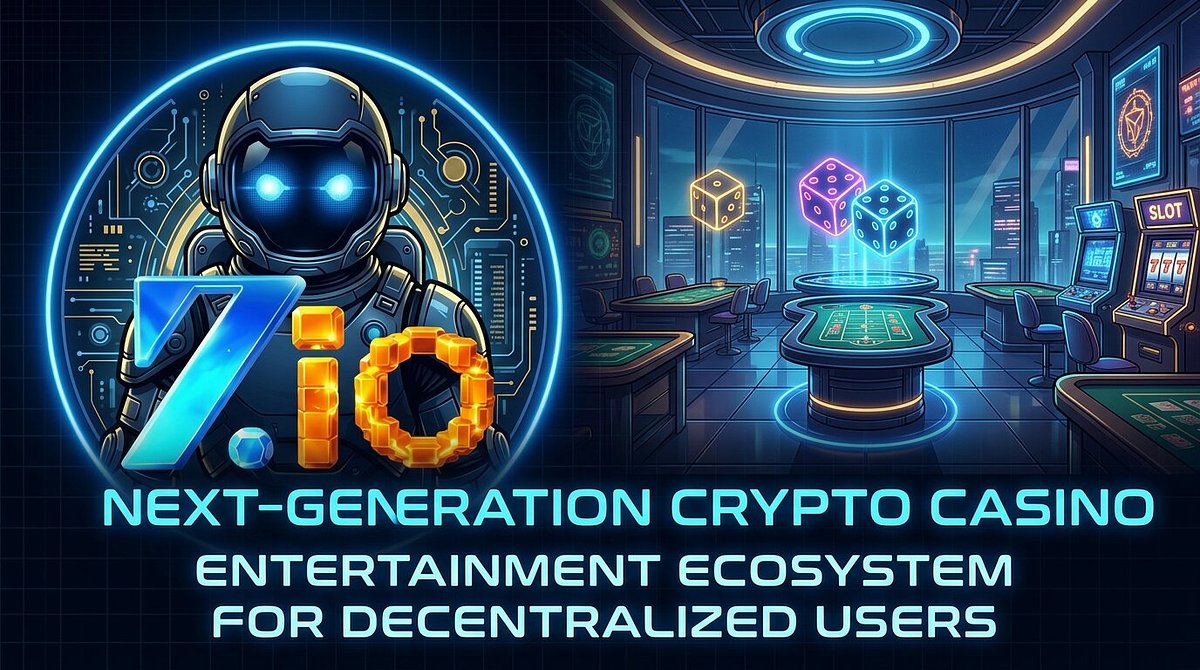
7.io Bets on Transparency in High-Stakes Web3 Gambling Expansion
KUALA LUMPUR, Malaysia – May 15, 2026 – As the digital world accelerates its pivot towards decentralized technologies, crypto-gambling firm 7.io has announced a significant expansion of its vision for Web3-powered entertainment. The move positions the company to capitalize on a rapidly growing global demand for online gaming experiences that prioritize instant crypto transactions, operational transparency, and seamless user accessibility, signaling a broader industry shift that challenges the foundations of traditional online wagering.
Crypto gambling has quietly mushroomed from a niche corner of the blockchain economy into one of its most active sectors. Market observers have noted a sustained surge in user activity across decentralized casinos, sportsbooks, and gaming ecosystems. This growth is fueled by a new generation of users who are native to digital assets and expect a higher standard of speed and fairness than legacy systems typically provide. In this burgeoning market, 7.io is strategically positioning itself not just as a gambling platform, but as a community-centric entertainment hub built on the core tenets of Web3.
A New Playbook for Online Wagering
At the heart of 7.io's strategy is a fundamental departure from the conventional online casino model. Instead of relying on centralized payment processors and cumbersome, multi-step registration forms, the platform embraces a crypto-native approach. Users can often connect directly with their existing cryptocurrency wallets, a process that dramatically reduces onboarding friction and reflects a wider trend across decentralized applications.
This emphasis on a seamless user experience is most evident in its financial infrastructure. The platform, which displays a real-time jackpot balance in cryptocurrencies like USDT and TRXT, leverages blockchain technology to facilitate deposits and withdrawals that are significantly faster than traditional banking systems. This near-instantaneous movement of funds is a powerful competitive advantage in a global marketplace where players demand immediate access to their winnings.
An exploration of the 7.io platform reveals a diverse suite of offerings designed to appeal to a broad audience. The core of its gaming library includes a variety of "Hash Games," such as Hash Slot Machines and Hash Table Games, which implicitly point to the use of cryptographic hashing for game mechanics. Alongside popular modern crypto games like Crash and Mines, the site also features a comprehensive sportsbook covering everything from football and basketball to ice hockey and tennis, aiming to be a one-stop shop for crypto-native bettors.
The Promise of Provable Fairness
Perhaps the most transformative concept being championed by platforms in this space is "provably fair" gaming. This technology, powered by cryptographic verification, aims to solve a long-standing trust issue in online gambling. In theory, it allows players to independently audit game outcomes using blockchain data, verifying that the results were random and not manipulated by the house. This creates a level of transparency that is virtually impossible for traditional, centralized platforms to replicate.
By building its entertainment ecosystem around this principle, 7.io is tapping into a deep-seated user desire for trust and integrity. The industry is evolving to a point where transparency is no longer a bonus feature but a core expectation. As users become more sophisticated, they are increasingly drawn to ecosystems where the rules are clear, the outcomes are verifiable, and the platform's integrity can be scrutinized on a public ledger.
While the promise is compelling, the true test lies in the implementation. The effectiveness of provably fair systems depends on transparent technical documentation and, ideally, independent security audits that validate the underlying code. As the sector matures, platforms that can demonstrably prove their fairness will likely build the strongest and most loyal communities.
Navigating a High-Risk, High-Reward Landscape
Despite the technological innovation, the path forward for 7.io and its competitors is lined with significant hurdles. The press release itself acknowledges that "regulation, security, and long-term market trust remain important considerations across the sector." The global regulatory landscape for crypto gambling is a complex and fragmented patchwork of laws, with many jurisdictions still struggling to define their approach. This legal ambiguity creates considerable operational risks for platforms and potential uncertainty for users.
In a nod to these regulatory pressures, the 7.io website includes a Know Your Customer (KYC) policy, suggesting an effort to align with anti-money laundering (AML) standards. However, navigating the specific licensing requirements of different countries remains a monumental challenge for any global crypto-native platform.
Security is another paramount concern. The immense value held in digital assets makes gambling platforms a prime target for hackers. Ensuring the security of user funds, protecting against exploits, and building resilient smart contracts are continuous battles. At the same time, users face the inherent risks of cryptocurrency market volatility and the personal responsibility of securing their own wallets and private keys.
Beyond the Bet: Building a Digital Entertainment Economy
The broader vision for the Web3 gambling sector, which 7.io appears to embrace, extends far beyond simple wagering. The future of these platforms lies in their ability to cultivate vibrant digital economies. This involves integrating elements of creator culture, livestreaming, social engagement, and blockchain-powered reward systems to create a more holistic entertainment experience.
This evolution marks a shift from solitary gambling to interactive, community-driven entertainment. Platforms are becoming social spaces where users can interact, streamers can build audiences, and engagement itself becomes a form of value. By fostering this sense of community and participation, companies aim to build a loyal user base that is invested in the ecosystem for more than just the chance of a payout.
As blockchain technology continues to reshape digital interaction, the projects that succeed will be those that masterfully blend cutting-edge infrastructure with a deep understanding of user experience and community dynamics. While the risks are undeniable, the drive to create more transparent, efficient, and engaging online entertainment ecosystems continues to accelerate, potentially defining the next chapter of the global digital economy.