
- 5th Anniversary: The final chapter of 1/6: The Graphic Novel is released on the fifth anniversary of the January 6, 2021, U.S. Capitol attack.
- 2023 Debut: The series began in 2023 and has since gained critical acclaim for its political fiction.
- Educational Reach: The graphic novel is supported by a free 'Action Guide' and academic lesson plans for civic engagement.
Experts view 1/6: The Graphic Novel as a stark warning about the fragility of democratic institutions and a call to action for defending democratic values through grassroots resistance and civic education.
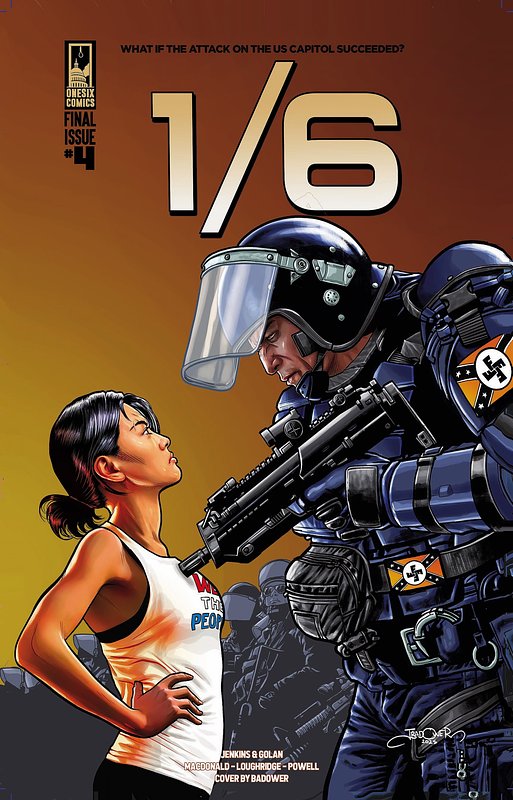
'1/6' Graphic Novel Concludes With A Warning for American Democracy
NEW YORK, NY – January 05, 2026 – On the fifth anniversary of the January 6, 2021, attack on the U.S. Capitol, a critically acclaimed graphic novel series that imagined the insurrection’s success is releasing its final chapter. The fourth issue of 1/6: The Graphic Novel, subtitled “And Still We Rise,” launches today, concluding a narrative that has been described as both a chilling political thriller and a prescient warning about the fragility of democratic institutions.
Created by a unique team—Harvard Law Professor Alan Jenkins and New York Times bestselling graphic novelist Gan Golan—the series has carved out a significant space in the landscape of political fiction since its 2023 debut. It posits a stark “what if” scenario: what if the mob had succeeded in overturning the election, leading to the rise of an autocratic 'Regime' in the United States? The final issue shifts the story’s focus from the consolidation of power to the grassroots movements that rise to challenge it, offering a conclusion driven by resistance and hope.
A Chilling 'What If' Colliding with Reality
Across its first three issues, 1/6: The Graphic Novel has drawn comparisons to dystopian classics like George Orwell’s 1984 and Margaret Atwood’s The Handmaid's Tale. The creators constructed a fictional timeline where an authoritarian government, having seized power, systematically dismantles democratic norms. The press release for the final issue highlights several plot points, written years ago, that it says now feel “stunningly familiar,” including the deployment of unaccountable federal troops to U.S. cities, the prosecution of journalists and political rivals, and people being snatched off the streets based on their beliefs.
This speculative narrative has been praised by reviewers for its layered vision and its ability to blend factual events with fictional consequences, using a distinct visual system to help readers distinguish between the two. The series doesn't just imagine a coup; it meticulously explores the aftermath, from the rebuilding of the White House into what the creators describe as a “tacky, downscale casino” to extrajudicial drone executions. The result is a narrative that, according to YES! Magazine, offers a “stark warning about how close the U.S. came to a fascist coup.”
With “And Still We Rise,” the focus pivots from the grim reality of the Regime to the spirit of those who oppose it. The story moves to chronicle the efforts of everyday people banding together to defend the rule of law and human dignity. This narrative shift fulfills the creators' long-stated goal for the project.
“1/6 has always been about more than a single day,” said co-author Alan Jenkins, a Professor of Practice at Harvard Law School, in the announcement. “It's about the values we choose as a country—and what happens when people decide they won't surrender democracy without a struggle.”
From Page to Classroom: A New Tool for Civic Education
Beyond its role as entertainment, the series has been purposefully designed as a tool for civic engagement and education. The creators have partnered with prominent organizations to ensure the graphic novel sparks real-world dialogue. The Western States Center, a pro-democracy organization where both Jenkins and Golan serve as senior fellows, helped develop a free “Action Guide” to accompany the series. This guide provides principles and suggests actions that individuals and communities can take to defend democratic values.
In the academic sphere, San Diego State University’s Center for Comics Studies has created a detailed lesson plan for educators. The curriculum encourages students to analyze the constitutional rights impacted in the story, engage in civic action by writing to elected officials, and even debate the complex issues surrounding censorship and whether a book like 1/6 should be banned. This educational framework places the graphic novel in a growing market of literature used to make complex social and political topics accessible, standing alongside acclaimed works like John Lewis’s March trilogy and Art Spiegelman’s Maus.
To further this mission, the project has consistently used Kickstarter campaigns to fund free and low-cost distribution to schools, libraries, and community groups. The campaign for the final issue marks a new step, with a special outreach initiative aimed at veterans and military families, a demographic deeply connected to the oath to defend the Constitution.
The Minds Behind the Mirror: Art, Law, and Activism
The power of the series stems directly from the combined expertise of its creators. Alan Jenkins brings decades of experience in law and human rights, having served at the U.S. Department of Justice, the NAACP Legal Defense Fund, and the Ford Foundation. His deep knowledge of constitutional law and racial justice provides the story with an unnerving authenticity, grounding its speculative leaps in real-world legal and political frameworks.
Complementing this is the work of Gan Golan, an activist and artist known for using visual culture to support social movements. His previous New York Times bestseller, The Adventures of Unemployed Man, was influential during the Occupy Wall Street movement, and he was a key designer of the massive People's Climate March. Golan sees the comic book medium as an inherently democratic art form.
“Comics have always been a people's tool for change,” Golan stated. “This final issue is about ordinary folks stepping into their power. The question we're asking readers is simple: What part will you play?”
Together, Jenkins and Golan have leveraged the graphic novel as a “pop-culture bridge,” making urgent questions about authoritarianism accessible to a broad audience. Their collaboration embodies a fusion of legal scholarship, artistic storytelling, and grassroots organizing, aimed not only at warning of a potential future but at inspiring the action needed to prevent it.
As the final chapter of 1/6: The Graphic Novel reaches audiences, it serves as both a conclusion to a fictional saga and a beginning for countless conversations. By exploring how a democracy can fail, the series ultimately leaves its readers to ponder the most critical question of all: how it can be defended.