
- 91% reduction in net loss: Year-over-year decrease in net loss to $0.72 million from $7.92 million.
- $1.38 million contribution profit: Highest-ever quarterly profit, marking 9 consecutive profitable quarters.
- 58% repeat users: Strong customer loyalty driving demand without promotional incentives.
Experts would likely conclude that Zoomcar's strategic operational discipline and focus on organic growth have successfully positioned it for sustainable profitability, with significant potential in India's expanding shared mobility market.
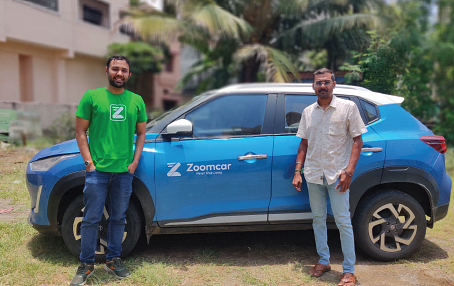
Zoomcar's Profitability Drive: Slashing Losses, Eyeing US Market
BENGALURU, India – February 17, 2026 – Zoomcar Holdings, Inc. (OTCQB: ZCAR) today showcased a dramatic financial turnaround in its third-quarter results, signaling a potential new era of sustainable growth for India's largest peer-to-peer car-sharing marketplace. The company announced its highest-ever contribution profit and a staggering 91% year-over-year reduction in net loss, achievements it attributes to rigorous operational discipline and a strategic pivot away from costly marketing.
For the quarter ending December 31, 2025, the Bengaluru-based firm delivered a record contribution profit of $1.38 million, marking its ninth consecutive quarter in the black for this key non-GAAP metric. This performance was underpinned by stronger unit economics, with contribution profit per booking climbing 14% to $14.10. The bottom line showed equally impressive progress: the adjusted EBITDA loss shrank by 74% to just $0.83 million, while the net loss attributable to shareholders narrowed to a mere $0.72 million from a substantial $7.92 million in the same period last year.
These results arrive as Zoomcar executes a series of strategic financial maneuvers, including a new capital raise and a potential uplisting to a major U.S. stock exchange, suggesting the company is gearing up for its next phase of growth and market consolidation.
A New Blueprint for Profitability
Perhaps the most remarkable aspect of Zoomcar's journey toward the black is its method. The company has achieved this acceleration in profitability while abstaining from performance marketing for 21 consecutive months. This counter-intuitive strategy in the high-cash-burn world of tech startups has forced a reliance on organic growth and customer loyalty—a bet that appears to be paying off.
"Our Q3 FY25-26 results reflect stronger booking level economics and continued operating discipline," said Deepankar Tiwari, CEO of Zoomcar. "With repeat usage remaining resilient without significant promotion spend, we believe we're well positioned to consolidate India's peer-to-peer mobility market as consumer preferences shift from ownership to access."
The numbers support this claim. Repeat users accounted for 58% of all bookings during the quarter, indicating a strong, loyal customer base that drives demand without the need for constant promotional incentives. This focus on retention and product experience is further validated by an all-time high average guest trip rating of 4.79 out of 5. While the Gross Booking Value (GBV) saw a modest 1% year-over-year increase to $6.60 million, the ability to maintain this level without paid advertising underscores the platform's inherent market traction.
This disciplined approach stands in stark contrast to its historical performance. For the fiscal year ending March 31, 2025, the company had reported an 8% decline in revenue. However, the seeds of the current strategy were already visible, as its loss from operations had improved significantly to $(10.40) million from $(31.67) million the prior year, driven largely by cost-cutting measures that included an 80% reduction in marketing spend.
Riding the Wave of Shared Mobility
Zoomcar's internal discipline is amplified by powerful external tailwinds in the Indian market. With a population of over 1.4 billion, India has one of the lowest car penetration rates globally, with fewer than 25 vehicles per 1,000 people compared to nearly 900 in the United States. This, combined with rapid urbanization and increasing traffic congestion, is fueling a fundamental shift in consumer behavior from car ownership to flexible access.
The company is a prime beneficiary of this trend, connecting over 40 million under-utilized private vehicles with a growing base of digitally-savvy users. Zoomcar projects its total addressable market will expand from 18.5 million users in 2025 to 65 million by 2031. Broader industry forecasts are similarly bullish, with some analysts projecting the Indian shared mobility market to grow at a compound annual growth rate (CAGR) of over 25% through the next decade.
While competitors like Myles Car, which focuses on self-drive rentals and subscriptions, and DriveU, which provides on-demand drivers, operate in the adjacent mobility space, Zoomcar claims a dominant 95% market share in India's asset-light peer-to-peer car-sharing segment. Its digital-first platform is designed to seamlessly connect vehicle owners (Hosts) with users (Guests), promoting an economic model that empowers individuals and offers a more sustainable transportation alternative.
Strategic Maneuvers for Future Growth
Bolstered by its improving financial health, Zoomcar is now making decisive moves to strengthen its balance sheet and prepare for future expansion. The company is in the process of raising between $2 million and $10 million through a private placement bridge financing. This follows a $9.15 million placement completed in late 2024, which was used to pay down debt and fund operations.
This fundraising is critical, as recent SEC filings have noted the company's limited cash reserves and significant liabilities, leading to a "going concern" warning contingent on securing new financing. The current capital raise is a direct step to address these challenges and secure the company's long-term financial sustainability.
In parallel, Zoomcar has launched a tender offer to exchange outstanding investor warrants for shares of common stock. This move is intended to simplify its complex capital structure, a necessary step for attracting new institutional investors and achieving a cleaner valuation. The offer is contingent on shareholder approval to increase the number of authorized shares.
Perhaps most significantly, the company confirmed it is evaluating a possible uplisting to a major U.S. national securities exchange like Nasdaq. After a previous delisting from Nasdaq for failing to meet market value rules, a successful return would represent a major milestone, providing greater liquidity, a broader investor base, and enhanced credibility in the global capital markets. This ambition signals that Zoomcar sees its future not just as a survivor, but as a public-market growth story with global appeal.
Topics & Related
Private Placement
IPO
Revenue
EBITDA
Fintech
Digital Transformation
Related Company Pulse