
- EV to Charger Ratio: Thailand's EV-to-public-charging-station ratio grew from 14:1 in 2021 to an estimated 64:1 in 2023.
- Charging Network Goal: Thailand aims to deploy 12,000 public fast chargers by 2030.
- Zerova's Reach: Over 100 site deployments in Thailand since 2023.
Experts agree that Zerova's modular, scalable charging solutions are critical for addressing Thailand's infrastructure gap and supporting the nation's ambitious EV adoption goals.
Zerova's Quiet Charge: Powering Thailand's EV Future
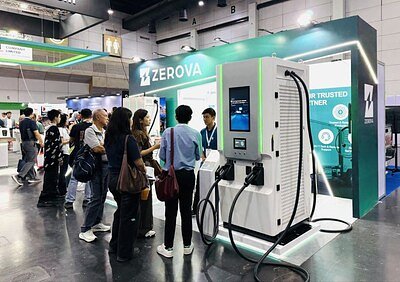
BANGKOK, THAILAND – January 30, 2026 – As Thailand accelerates its ambitious drive to become a regional hub for electric vehicles, a critical challenge looms: building a robust and reliable charging network capable of supporting the surge in EV adoption. At the EVCharge Live Thailand 2026 conference, charging solutions provider Zerova Technology showcased a strategy aimed directly at this challenge, emphasizing modular, scalable systems designed to serve as the foundational infrastructure for the nation's electric future.
The company's presence at the event goes beyond a simple product display, signaling a deep-seated commitment to the Southeast Asian market by offering not just hardware, but a collaborative model designed to empower local partners and overcome complex grid limitations.
Thailand's EV Ambition Meets an Infrastructure Gap
Thailand has firmly established itself as a frontrunner in Southeast Asia's EV transition. The government's "30@30" policy aims for zero-emission vehicles to make up at least 30% of total auto production by 2030, a goal supported by substantial consumer subsidies and investment incentives from the Board of Investment (BOI). A key pillar of this strategy is the planned deployment of 12,000 public fast chargers by the decade's end.
However, the rapid success of these policies has created a significant challenge. The ratio of EVs to public charging stations has widened dramatically, growing from 14:1 in 2021 to an estimated 64:1 in 2023. This infrastructure gap threatens to slow adoption momentum, creating "charger anxiety" for consumers and logistical headaches for the growing number of commercial fleet operators transitioning to electric. It's within this high-stakes environment that advanced, flexible charging solutions become not just a convenience, but a national necessity.
Smart Solutions for a Strained Grid
Addressing this gap requires more than just installing more chargers; it demands intelligent infrastructure that can work within existing constraints. Zerova's showcase at EVCharge Live centered on this principle, highlighting technologies engineered for the realities of urban and fleet deployment in power-constrained environments.
A cornerstone of their offering is a split-type system architecture, featuring the powerful DZ480 kW power cabinet paired with separate, slimmer dispenser units. This modular design allows for phased construction, enabling site operators to scale their capacity over time without requiring massive, cost-prohibitive initial grid upgrades. It also facilitates charging multiple vehicles simultaneously, a critical feature for high-density fleet depots and busy public stations.
"As fleet electrification and urban charging demand continue to grow, operators need solutions that can be deployed in phases, scaled easily, and configured for different grid conditions," commented Alex Lin, Chairman of Zerova Technology, at the event.
Central to this adaptability is the company's Dynamic Power Distribution technology. This system intelligently allocates available power across multiple chargers in real-time, optimizing energy use and ensuring vehicles are charged as efficiently as possible without overloading the local grid. Furthermore, Zerova's systems are designed for seamless integration with Battery Energy Storage Systems (BESS). This allows operators to store cheaper, off-peak electricity and deploy it during peak charging times, enhancing grid stability and creating new revenue opportunities while insulating operations from grid volatility.
The 'Brand Behind the Brand' Strategy
Perhaps most significantly, Zerova is positioning itself not just as a hardware vendor, but as a strategic enabler for the entire ecosystem. Through its "brand behind the brand" model, the company provides Original Design Manufacturer (ODM) and Joint Design Manufacturer (JDM) solutions, effectively acting as a white-label partner for a diverse range of clients.
This approach allows utilities, energy companies, and Charge Point Operators (CPOs) to rapidly deploy their own branded charging networks without the immense cost and time associated with in-house hardware research and development. Partners can customize everything from the system's physical design and user interface to its integration with backend management software. With support for over 60 different Open Charge Point Protocol (OCPP) platforms, Zerova ensures its hardware can fit into virtually any partner's existing or planned operational software.
This collaborative strategy is already bearing fruit in Thailand. Since entering the region in 2023, the company has completed over 100 site deployments and established a local service team for installation and maintenance. This includes ongoing collaboration with key state enterprises like the Provincial Electricity Authority (PEA), which is a major player in the national charging network through its PEA VOLTA platform. By empowering local entities to build and scale their networks, Zerova is helping weave the very fabric of Thailand's charging infrastructure.
Local Insights Fueling a Regional Strategy
Zerova's focus on Thailand is part of a broader, carefully orchestrated Southeast Asian strategy. The regional EV charging market is projected to grow at a compound annual growth rate of over 24% through 2030, representing a massive opportunity. By establishing a strong operational footprint in key markets, the company is gathering invaluable real-world data and experience.
Insights gained from deployments in Thailand, as well as in Singapore, Malaysia, Cambodia, and Indonesia, are directly informing the company's product roadmap. For example, feedback from regional partners has led to the development of next-generation concepts, such as a new slim-profile DC fast charger with an 80-120 kW output, specifically tailored for the space-limited and aesthetically sensitive urban environments common across Southeast Asia.
This continuous feedback loop, combined with a flexible and powerful technology stack, allows the company to stay ahead of the curve. By providing the tools, technology, and collaborative framework needed to overcome infrastructure hurdles, Zerova is playing a pivotal, if often unseen, role in ensuring the region's ambitious electric vehicle goals become a reality.