
- 14-day free trial: Yuki offers a full-featured trial on live Snowflake workloads, replacing simulated results with real-world cost and performance improvements. - Metadata-only architecture: Yuki's platform analyzes system metadata without accessing or modifying customer data, enhancing security and compliance. - Zero engineering effort: The trial requires no SQL rewrites or changes to data architecture, enabling quick deployment and evaluation.
Experts would likely conclude that Yuki's innovative trial model sets a new standard for transparency in enterprise software evaluation, offering verifiable, real-world benefits that could redefine how cloud optimization tools are assessed and adopted.
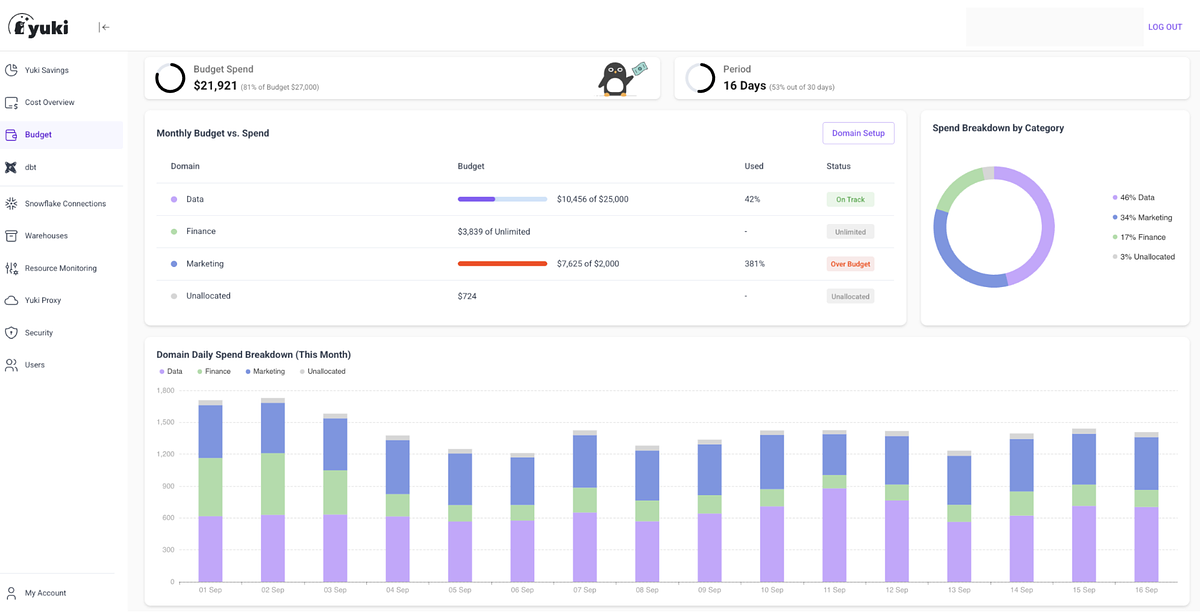
Yuki Disrupts Cloud Trials with Live Snowflake Optimization Platform
TEL AVIV, Israel – January 13, 2026 – In a move that challenges the standard operating procedure for enterprise software evaluation, Israeli startup Yuki today launched a 14-day free trial for its Snowflake optimization platform. The company is breaking from the industry norm of offering simulated results and limited dashboards by allowing potential customers to run its complete, fully-featured platform directly on their live, production-level Snowflake workloads.
This "try-before-you-buy" model aims to replace projected savings with verifiable, real-world cost and performance improvements, a proposition designed to resonate with data teams and financial decision-makers grappling with escalating cloud data warehouse expenses. By providing tangible evidence of its impact from day one, Yuki is betting that transparency will be its most powerful sales tool in the increasingly crowded market for cloud cost management.
A New Model for Proving Value
For many data and platform teams, the process of evaluating a new optimization tool can become a project in itself. Traditional free trials often involve complex setup procedures, coordinating approvals across security and engineering, and a significant time investment before any real evaluation can begin. The results are frequently based on simulations or historical data analysis, leaving teams to extrapolate potential savings and trust that the tool will perform as advertised in their unique production environment.
Yuki aims to flip this model on its head. The company asserts that its trial requires zero engineering effort, no SQL rewrites, and no changes to a customer's data architecture. The platform is designed to be deployed and activated quickly, allowing teams to measure actual outcomes rather than estimates within the 14-day window.
"This is a huge moment for Yuki. For the first time, teams can run the full platform in their own Snowflake environment and see real savings," said Amit Yahalom, Product Manager at Yuki, in the company's announcement. "We obsessed over making onboarding simple so customers can get to evidence quickly, not spend two weeks setting things up."
The trial includes the complete Yuki platform with no feature caps, providing real-time cost and performance optimization, comprehensive analysis of Snowflake usage, and system-generated insights. Furthermore, the company guarantees that stopping the trial is an immediate and reversible process, leaving no residual impact or cleanup requirements on the customer's Snowflake environment.
The Metadata-Only Advantage: Security Meets Performance
A key enabler of Yuki's full-production trial is its "metadata-only" architecture, a design choice that directly addresses the primary barrier to adopting new tools in sensitive data environments: security and compliance. By design, the platform does not read customer data, store query text, or have the ability to modify tables, schemas, or data pipelines.
Instead, it operates by analyzing Snowflake system metadata—information about the data and system operations, such as query execution patterns, warehouse utilization statistics, and performance characteristics. This approach allows Yuki to understand how the Snowflake environment is behaving and identify optimization opportunities without ever accessing the underlying, often sensitive, business data.
This architectural decision significantly lowers the security risk profile, making it far easier for enterprise security and compliance teams to approve a trial. In an era governed by strict regulations like GDPR and HIPAA, avoiding the movement or access of personal identifiable information (PII) streamlines the procurement process. It allows Yuki to operate in a customer's environment exactly as it would in a long-term deployment, providing a true-to-life evaluation experience that is inherently production-safe.
This contrasts with other optimization approaches that may require more intrusive access, such as tools that rewrite inefficient SQL queries or directly modify data configurations. While effective, these methods can create a higher barrier to entry and require more rigorous vetting before a trial can even commence.
Navigating the Crowded Snowflake Optimization Market
Yuki enters a competitive landscape where numerous vendors, from established players to fellow startups, are vying to help companies control their Snowflake spend. Competitors like Unravel Data, Keebo, and Select.dev all offer solutions aimed at providing visibility and driving down costs. However, their approaches and trial models vary, highlighting different philosophies on optimization.
For instance, some tools focus heavily on observability, providing granular dashboards and reports that help FinOps teams and engineers pinpoint cost drivers. Others, like Unravel Data, offer AI-powered agents that can go a step further by automatically implementing fixes and rewriting queries. Keebo promotes a "data-learning platform" that also operates on metadata to optimize performance without application changes.
Where Yuki seeks to differentiate itself most starkly is in the trial experience. While competitors offer free trials or assessments—such as Unravel's "Health Check" app on the Snowflake Marketplace or Select.dev's 14-day trial based on read-only metadata access—Yuki's emphasis is on running the full, active optimization engine in production from the outset. This moves the conversation from "Here is what you could save" to "Here is what you are saving, right now."
Extending Snowflake's Native Capabilities
Snowflake itself provides a robust set of native tools for managing costs and performance, including resource monitors, auto-suspend features, detailed usage views in Snowsight, and performance-enhancing services like query acceleration. These tools serve as an essential foundation for any organization using the platform.
However, as enterprises scale, many find these native tools are a starting point that requires significant manual effort and expertise to yield maximum efficiency. This creates a market for third-party solutions that offer a layer of advanced automation, AI-driven insights, and more sophisticated governance.
Snowflake has actively cultivated this ecosystem through its partner program and technologies like the Snowflake Native App Framework. This framework allows partners like Yuki to build and deploy their applications directly inside a customer's Snowflake account. This model ensures that customer data never leaves their secure environment, further reinforcing the security and governance benefits. By operating as a Snowflake Native App, Yuki is positioned not as a replacement for Snowflake's features, but as a synergistic extension that automates and enhances the optimization potential of the platform.
The launch of this production-ready trial signals a broader shift in the FinOps space. As cloud costs continue to be a top concern for executives, the demand for tools that can demonstrate tangible, immediate value is higher than ever. By removing the friction and uncertainty from the evaluation process, Yuki is placing a confident bet that its real-world results will speak for themselves, potentially setting a new standard for transparency in how enterprise software is bought and sold.