
- Two new flagship products: ULTRALOQ Latch 7 Pro and ULTRALOQ Bolt Sense
- Biometric authentication: 3D facial recognition and palm vein scanning
- Availability: Bolt Sense in Q2 2026, Latch 7 Pro in Q1 2026
Experts would likely conclude that ULTRALOQ's new biometric smart locks represent a significant advancement in keyless entry technology, but the long-term success will depend on robust privacy protections and interoperability with open standards.
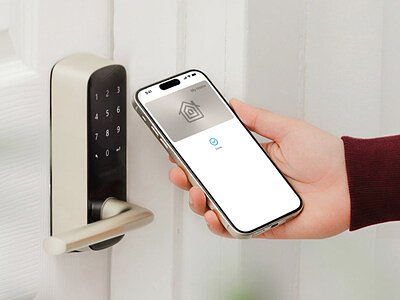
Your Face is the Key: ULTRALOQ Unveils Next-Gen Biometric Smart Locks
LAS VEGAS, NV – January 05, 2026 – The front door is becoming the next frontier in the battle for a truly seamless smart home, and at CES 2026, one company is pushing the concept of keyless entry into the realm of science fiction. Xthings Inc., the parent company of the popular ULTRALOQ smart lock brand, today unveiled its vision for "Smart Access," a future where your very presence and unique biological traits are the only credentials you need. Headlining this push are two new flagship products, the ULTRALOQ Latch 7 Pro and the ULTRALOQ Bolt Sense, which leverage everything from next-generation biometrics to precision presence-sensing to make the act of unlocking a door a completely invisible and intuitive experience.
The announcement signals a strategic shift away from the first generation of smart locks, which often required fumbling with a phone app or punching in a PIN. Instead, Xthings is betting on a unified ecosystem where proximity, identity, and interoperability work in concert.
"Keyless entry shouldn't feel like a workflow," said Raj Sundar, Senior Director of Product Management at Xthings, in the company's press release. "The next era of smart access is invisible: your credentials, your proximity, and your biometric identity working together securely, so your home responds naturally to you."
Biometrics, Beams, and the 'Walk-Up' Welcome
At the heart of this new vision is the ULTRALOQ Bolt Sense, a deadbolt that treats the user's body as the key. Available in the second quarter of 2026, the Bolt Sense integrates two forms of advanced biometric authentication: 3D facial recognition and palm vein scanning. This dual-biometric approach is designed to overcome the common pitfalls of fingerprint sensors, which can struggle with wet, dry, or worn-down fingers. Palm vein recognition, an emerging technology in the consumer space, reads the unique, subsurface vein patterns in a user's hand, a biometric marker that is extremely difficult to forge or replicate.
The Bolt Sense combines these methods with active approach sensing and advanced infrared capabilities, allowing it to reliably identify a user from total darkness to harsh daylight, unlocking the door touch-free. This is the embodiment of the "arms-full" use case, where a resident carrying groceries can gain entry without setting anything down.
Furthering the theme of invisible access, Xthings also announced the immediate availability of its ULTRALOQ Bolt Mission UWB. First unveiled at CES 2025, this deadbolt uses Ultra-Wideband (UWB) radio technology to offer what the company calls "presence unlock." Unlike Bluetooth, which estimates proximity based on signal strength, UWB measures the precise time it takes for radio waves to travel between the lock and a UWB-enabled device like a smartphone. This allows for centimeter-level accuracy, enabling the lock to understand not just if you are near, but your exact location and direction of travel. This precision is critical for preventing accidental unlocks when a user is simply walking past the door inside the house.
An End to the Walled Garden? The Push for Open Standards
Beyond flashy new entry methods, Xthings is making a significant bet on solving one of the smart home's most persistent headaches: interoperability. The new ULTRALOQ Latch 7 Pro, a commercial-grade latch lock available in the first quarter of 2026, is being positioned as a "standards-first" device.
It arrives with planned support for a trifecta of connectivity standards. First is Matter over Thread, the cross-platform protocol backed by Apple, Google, and Amazon that promises fast, reliable, local-first connectivity. Second is the Z-Wave 800 Series platform, which brings robust S2 security and Z-Wave Long Range, reducing the need for signal repeaters in larger homes. As a member of both the Connectivity Standards Alliance (CSA) and the Z-Wave Alliance, Xthings is signaling its commitment to these ecosystems.
Most notably, the Latch 7 Pro is being built with the new Aliro standard in mind. Aliro, also managed by the CSA, is a dedicated communication protocol for smart locks and digital keys. Its goal is to create a universal standard, allowing devices from different manufacturers to work together seamlessly using NFC, Bluetooth, and UWB. With the first Aliro-certified products expected in early 2026, ULTRALOQ is positioning the Latch 7 Pro to be among the first wave of devices that could finally free consumers from being locked into a single proprietary system, a strategy also being pursued by competitors like Yale and Schlage.
The Privacy Equation: Convenience at What Cost?
While the convenience of unlocking a door with a glance or a wave of the hand is compelling, the technology raises profound questions about privacy and security. The ULTRALOQ Bolt Sense's reliance on 3D facial scans and palm vein patterns means it collects and processes some of the most sensitive personal data imaginable. As biometric technology becomes more mainstream, it falls under increasing scrutiny from both consumers and regulators worldwide.
In 2026, the legal landscape around biometric data is more stringent than ever, with regulations like Europe's GDPR and Illinois' Biometric Information Privacy Act (BIPA) imposing strict rules on how this data is collected, stored, and used. The critical factor for security and privacy is where the biometric data lives. Industry best practices, as highlighted in reports from firms like Gartner, point towards decentralized models where a user's biometric template is encrypted and never leaves their personal device in a usable form. A less secure, centralized model that stores this data in the cloud creates a high-value target for hackers.
Xthings has stated its commitment to high standards of data protection, but the company has not yet detailed the specific data architecture for the Bolt Sense. Whether the facial and palm vein templates are stored locally on the lock itself, in a decentralized fashion, or on a cloud server will be a decisive factor for privacy-conscious consumers. The balance between frictionless access and data security remains the central challenge for the entire industry, and users will have to decide how much they trust companies to be responsible stewards of their most personal information.
As these advanced technologies move from the showroom floor to residential front doors, they represent more than just an evolution of the lock and key. They mark a fundamental shift in how we interact with our homes, promising a future where the environment anticipates our needs. However, this seamless future depends entirely on whether companies can build not just smart devices, but also a foundation of trust with the people who use them.