
- 25,000+ students from over 90 countries enrolled at XJTLU
- 88% of graduates in 2024 planned to pursue postgraduate studies, with 42.9% securing places at the world's top 10 universities
- 184 million RMB in government research funding and 176 million RMB from industry collaborations invested in high-tech fields
Experts view XJTLU as a strategic asset for the global biopharmaceutical industry, producing highly skilled, cross-culturally fluent talent and driving innovation through AI integration and life sciences research.
XJTLU's 20-Year Rise: Building a New Talent Engine for Global Pharma
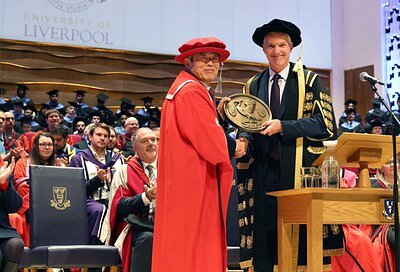
SUZHOU, China – December 10, 2025 – The recent conferral of an Honorary Fellowship upon Professor Youmin Xi by the University of Liverpool is, on the surface, a well-deserved recognition of a distinguished academic leader. As Executive President of Xi'an Jiaotong-Liverpool University (XJTLU), Professor Xi has guided a unique Sino-British educational partnership from a fledgling concept to a thriving institution. However, for industry leaders watching the evolution of the global biopharmaceutical landscape, this award signifies something far more strategic. It marks the maturation of a 20-year venture that has become a powerful engine for cultivating the exact talent and innovation the life sciences sector critically needs.
As XJTLU approaches its 20th anniversary in 2026, the honor bestowed upon its leader is less about celebrating the past and more about acknowledging the institution's pivotal role in shaping the future. Under Professor Xi's guidance, XJTLU has transcended its origins as a joint venture to become a blueprint for developing globally-minded, technically proficient leaders poised to drive the next wave of pharma innovation. "This honour reflects his pivotal role in building a globally respected institution," noted University of Liverpool Vice-Chancellor Professor Tim Jones, underscoring the deep strategic success the fellowship represents.
A Blueprint for Global Talent Development
The foundation of XJTLU's market impact lies in its unique educational model. The university’s flagship ‘2+2 programme’ allows students to spend two years in Suzhou, China, followed by two years at the parent university in Liverpool, UK. Graduates emerge not only with dual degrees but with an invaluable blend of cross-cultural fluency and technical expertise—a combination highly prized by multinational corporations.
This model's success is quantifiable and impressive. From an initial intake of just 164 students in 2006, XJTLU has expanded to a vibrant community of over 25,000 students from more than 90 countries. The academic ambition instilled in these students is palpable. In 2024, over 88% of its graduates planned to pursue postgraduate studies, with a remarkable 42.9% securing places at the world's top 10 universities. These are not just academic statistics; they are lead indicators of a high-caliber talent pipeline flowing directly into the world’s most demanding research and development ecosystems.
The curriculum itself is designed for future relevance. A common first year grounds students in fundamentals like Artificial Intelligence and Global Citizenship before they specialize. With teaching conducted in English from the second year onwards, graduates are prepared for immediate integration into global R&D teams. This structure effectively de-risks international hiring for companies and produces a workforce that is adaptable, resilient, and inherently global in its perspective.
Visionary Leadership and Strategic Execution
The university's trajectory was not an accident but the result of a deliberate, long-term strategy championed by Professor Xi since his appointment in 2008. His philosophy of a "future-oriented" and "innovation-driven" educational ecosystem has been the guiding principle. "As we enter our third decade, I'm confident that XJTLU will continue to shape the future with wisdom and courage," Professor Xi stated upon receiving the fellowship, hinting at the forward-looking ambition that defines his leadership.
This vision has been translated into concrete institutional achievements. The university's International Business School Suzhou (IBSS) has secured prestigious AACSB and EQUIS accreditations, placing it in the top echelon of business schools worldwide. XJTLU has also steadily climbed global rankings, entering the top 1% worldwide in the Essential Science Indicators (ESI) rankings in four critical fields: Engineering, Computer Science, Social Science, and, most notably for the pharma sector, Environment/Ecology. This consistent progress demonstrates a disciplined execution of a strategy focused on high-impact research and educational excellence.
Powering China's Life Science Ambitions
While XJTLU's model is impressive in its own right, its true strategic significance for the biopharma industry lies in its future direction. The university is making a deliberate and powerful pivot towards life sciences, positioning itself as a cornerstone of China's growing ambitions in the sector. The institution’s research output already reflects this, with Bioinformatics emerging as a key strength alongside Computer Science and Engineering.
This is backed by significant investment. XJTLU has secured over 184 million RMB in government research funding and another 176 million RMB from industry collaborations, much of it directed towards high-tech fields. The university is leveraging its strategic location in the Suzhou Industrial Park—a major hub for Fortune 500 companies and a growing cluster of life science enterprises—to forge deep ties between academia and industry.
Most compelling is XJTLU's explicit plan to establish a research-based medical school. The stated goal is to create a "Pharma Valley of China" by fostering a powerful ecosystem of academic researchers, hospitals, and industrial partners. For pharmaceutical companies, this initiative represents the emergence of a new, integrated hub for research, clinical development, and talent acquisition in one of the world's most important markets.
The AI Pivot: Forging the Next Generation of Innovators
Perhaps the most forward-looking element of XJTLU's strategy is its aggressive push into Artificial Intelligence. The university’s "Education + AI Strategic Framework 2025-2028" is a clear declaration of intent to become a leading AI-empowered institution. The plan is not merely to offer AI courses but to integrate AI as a core competency across all academic programs, starting in the 2025-2026 academic year.
This initiative directly addresses a major skills gap in the pharmaceutical industry. As AI and machine learning revolutionize everything from drug discovery and clinical trial optimization to manufacturing and supply chain logistics, the demand for talent that is bilingual in both life sciences and data science is exploding. By embedding AI education across its curriculum, XJTLU is proactively engineering a workforce that can meet this demand.
The strategy includes building strategic partnerships with leading industries to drive collaborative innovation in AI, with a focus on real-world problem-solving. For biopharma companies, this presents a unique opportunity to collaborate with an academic partner that is not only generating foundational research but also training a generation of graduates who think natively about AI's application to biological and chemical challenges. This makes XJTLU not just a university, but a vital strategic asset for any organization looking to compete in the next era of data-driven medicine.