
- 12% surge in U.S. industrial robot installations in 2023
- 95% of U.S. industrial firms plan to introduce new automation in the coming years
- 8 Mbps data transfer rate with CAN FD protocol for high-speed tactile sensing
Experts agree that XELA Robotics' advancements in tactile sensing are critical for industrial automation, offering robust solutions tailored to the chaotic environments of modern factories and positioning the company as a key player in the booming U.S. robotics market.
XELA Robotics Gives Robots a Human Touch for US Factory Expansion
NEW YORK, NY and TOKYO, JAPAN – April 29, 2026 – In a significant move signaling a new phase of industrial automation, XELA Robotics is accelerating its expansion into the United States, armed with breakthrough sensor technology and a strategic investment from Silicon Valley innovation platform Plug and Play. The Tokyo-based firm, a specialist in giving machines a human-like sense of touch, has announced major enhancements to its uSkin® sensor family, designed to solve some of the most persistent challenges in robotic manipulation.
The advancements—comprehensive magnetic interference compensation and a high-speed communication protocol—are not merely incremental updates. They represent a direct response to the demands of the booming U.S. robotics market, promising to make automated systems more reliable, scalable, and capable of handling tasks that were previously too delicate or complex for machines. This strategic push could reshape factory floors, logistics centers, and beyond, as robots gain the dexterity needed to work in increasingly unstructured environments.
Solving Robotics' Toughest Touch Challenges
For robots to move beyond simple, repetitive motions, they must be able to perceive and interact with their environment. While vision systems have become incredibly advanced, the sense of touch remains a critical frontier. XELA Robotics' latest innovations tackle two fundamental problems that have long hindered the widespread adoption of advanced tactile sensing in industrial settings.
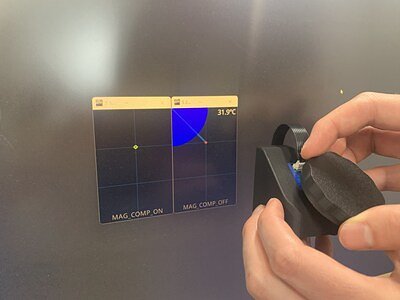
The first breakthrough is a powerful magnetic interference compensation capability. In a typical factory, the presence of strong magnets, motors, and ferromagnetic materials like iron and steel creates a chaotic electromagnetic environment. This “noise” can scramble the data from sensitive electronics, rendering a robot's sense of touch unreliable. XELA's new technology effectively filters out this interference, allowing its uSkin® sensors to function flawlessly even when handling magnetic components or operating in close proximity to powerful magnetic fields. This is a game-changer for industries like automotive and electronics manufacturing, where robots are constantly required to manipulate metallic parts and magnetic clips with precision.
"The U.S. is a critical market for us, and we've been listening closely to what our customers there need," said Alexander Schmitz, CEO of XELA Robotics. "Further reducing magnetic interference and supporting more sensors on a robotic hand or gripper without sacrificing frequency were high on the list. These enhancements answer those requests directly, and they will benefit our customers across Asia and Europe as well."
The second enhancement addresses the challenge of data overload. A sophisticated robotic hand might be covered in hundreds of individual sensor points to mimic the sensitivity of a human fingertip. The new implementation of CAN FD (Controller Area Network Flexible Data-Rate) provides a high-speed, high-capacity data highway for this information. With data transfer rates up to 8 Mbps and the ability to handle larger data packets, CAN FD allows for more sensors to be integrated onto a single robotic hand without creating a data bottleneck or reducing measurement frequency. This ensures the robot's central processor receives a smooth, high-fidelity stream of tactile information, preventing sensor overload and enabling faster, more responsive manipulation.
A Strategic Play for the Booming U.S. Market
The technological advancements are backed by a savvy business strategy centered on the American market. The strategic, undisclosed investment from Plug and Play is more than just a capital injection; it's a golden ticket into the heart of the U.S. innovation ecosystem. Plug and Play will actively facilitate high-level introductions to its vast network of corporations, potential partners, and customers, significantly accelerating XELA's market penetration.
This move is perfectly timed. The U.S. robotics market is experiencing unprecedented growth, with industrial robot installations surging 12% in 2023. This boom is fueled by a confluence of factors, including persistent labor shortages, supply chain vulnerabilities exposed by the pandemic, and a national push to reshore manufacturing. An overwhelming 95% of U.S. industrial firms report plans to introduce new automation in the coming years. XELA Robotics is positioning itself to supply the critical sensory components that will make this next generation of automation possible, particularly in leading sectors like automotive and electronics, which are voracious adopters of robotic technology.
That the company’s new features were developed in direct response to feedback from its U.S. customers underscores a deep understanding of market needs. By solving tangible problems for American manufacturers, XELA is not just selling a product; it is offering a competitive advantage in the global race for efficiency and productivity.
The Competitive Landscape of Robotic Touch
The quest to perfect robotic touch has spawned a variety of innovative approaches. Competitors like GelSight leverage vision-based technology, using cameras to analyze the deformation of a gel-like pad to create high-resolution 3D maps of an object's surface. Others, like SynTouch with its BioTac sensor, create multi-modal systems that can detect force, vibration, and temperature. These technologies have found success in applications ranging from quality control to research.
However, XELA Robotics' latest enhancements carve out a distinct and critical niche focused on industrial robustness and scalability. While other sensors may offer different modalities, the new uSkin® features are laser-focused on enabling reliable performance in the chaotic, high-speed environments of modern factories. The immunity to magnetic fields and the high-throughput CAN FD protocol are not lab-centric features; they are solutions built for the factory floor, designed to make complex, multi-sensor robotic hands a practical and scalable reality for industrial automation.
Beyond the Factory: The Future of Tactile AI
While the immediate impact of XELA's technology will be felt in manufacturing, its implications stretch much further. Experts agree that advanced tactile sensing is a critically important technology for augmenting robotic vision, enabling robots to perform delicate tasks, safely interact with humans, and operate in the unstructured environments of the real world. The ability to feel pressure, texture, and slip is fundamental to achieving human-like dexterity.
The same technology that allows a robot to handle a metal component in a factory could enable a logistics robot to gently grasp a fragile item in an e-commerce warehouse or allow a surgical robot to provide a surgeon with haptic feedback, effectively letting them “feel” the tissue they are operating on. As these sensor technologies become more integrated with artificial intelligence, robots will learn to interpret and respond to tactile data in increasingly sophisticated ways.
Enthusiasts and potential customers will have a chance to see these capabilities firsthand. XELA Robotics is set to demonstrate the new sensor enhancements at the upcoming Robotics Summit & Expo in Boston this May, followed by a showcase at ICRA 2026 in Vienna. These events will offer a tangible glimpse into a future where robots can not only see the world but truly feel it, unlocking a new era of automation and human-machine collaboration.