
- 12,932 saplings planted: One for each victim of the 2001 Bhuj earthquake.
- 500,000+ trees: Existing in the Smritivan Earthquake Memorial Forest, the world's largest Miyawaki forest.
- 470 acres: Size of the Smritivan site, blending a museum with a living forest.
Experts recognize Smritivan as a groundbreaking model for ecological restoration and disaster remembrance, combining innovative afforestation techniques with profound social and environmental impact.
Where Grief Grows Green: A Forest of Remembrance Rises in Bhuj
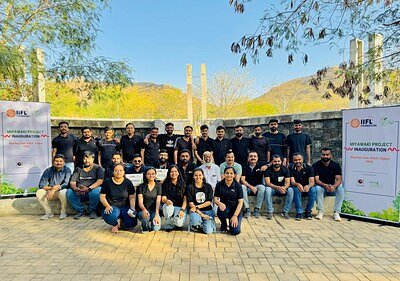
BHUJ, India – March 17, 2026 – A sapling for every life lost. This is the solemn promise being fulfilled on the once-barren slopes of Bhujiyo Hill, where a poignant act of remembrance is taking root. The IIFL Foundation, in a significant partnership with the Enviro Creators Foundation and the Gujarat State Disaster Management Authority (GSDMA), has planted 12,932 native trees, one for each victim of the devastating Bhuj earthquake that struck on January 26, 2001.
This initiative adds a new layer of life to the Smritivan Earthquake Memorial Forest, a unique sanctuary that intertwines memory with ecological rebirth. The project not only honors the past but also invests in a greener, more resilient future for the Kutch region.
A Monument of Life and Memory
Smritivan, meaning 'Forest of Memories', is far more than a traditional monument. Recognized globally, it was recently named one of the world's most beautiful museums by the prestigious Prix Versailles, an award presented in association with UNESCO. This distinction, a first for an Indian museum, celebrates its seamless blend of architecture, local culture, and profound respect for the environment.
Sprawling across 470 acres, the site pairs a state-of-the-art museum—which offers visitors an educational and often deeply emotional journey through the science of seismology and the history of the 2001 tragedy—with a vast, living forest. The museum's exhibits, including a powerful earthquake simulator, serve to educate future generations about disaster preparedness and the indomitable human spirit.
Outside the museum walls, the landscape itself tells a story of recovery. The new saplings join an existing expanse of over 500,000 trees, forming what is now considered the world's largest forest cultivated using the Miyawaki method. For the families of victims and the wider community, Smritivan has become a cherished space for healing, reflection, and quiet contemplation, where the rustling leaves seem to whisper tales of resilience.
The Science of a 'Miracle' Forest
The remarkable transformation of Bhujiyo Hill from an arid, rocky landscape into a thriving woodland is powered by an innovative Japanese botanical technique known as the Miyawaki method. Pioneered in India by Dr. R.K. Nair, co-founder of the Enviro Creators Foundation, this approach to afforestation is designed for rapid, dense growth.
"The Smritivan project is internationally recognised for its use of the Miyawaki method, a specialised afforestation technique that enables forests to grow up to ten times faster and thirty times denser than conventional plantations," said Dr. Nair, who is widely hailed as the 'Green Hero of India' for his extensive work in establishing over 100 such forests across the nation. "By planting 12,932 saplings, IIFL Foundation is strengthening a landscape that already hosts more than 500,000 trees, reinforcing Smritivan's position as the world's largest Miyawaki forest."
The method involves planting a dense, diverse mix of native saplings in specially prepared soil enriched with organic matter. This density forces the young trees to compete for sunlight, accelerating their upward growth. While the technique requires significant initial effort, including a two-to-three-year period of watering and weeding, the resulting forest becomes self-sustaining remarkably quickly.
In an arid region like Kutch, this approach has proven exceptionally effective. The dense canopy creates a cooler microclimate, reduces water evaporation, and improves soil quality, fostering a multi-layered, biodiverse habitat that attracts birds, insects, and other wildlife. This living ecosystem stands as a powerful tool for carbon sequestration and ecological restoration in a climate-vulnerable area.
A Partnership Rooted in Purpose
The initiative is a testament to a collaborative vision shared by corporate philanthropy, environmental expertise, and government oversight. For the IIFL Foundation, the CSR arm of the IIFL Group, the project aligns with a broader commitment to long-term, high-impact social and environmental programs. The foundation, recognized as one of India's largest, has a diverse portfolio that includes 'Sakhiyon Ki Baadi', a flagship program that has brought 36,000 out-of-school girls into education in Rajasthan, alongside extensive work in healthcare and livelihood development.
This venture into large-scale ecological restoration demonstrates a strategic approach to corporate social responsibility that integrates environmental sustainability with profound social value.
"The IIFL Foundation and the IIFL Group remember the innocent lives lost in the Gujarat earthquake of 2001," stated Mrs. Madhu Jain, Director of the IIFL Foundation. "We are grateful to GSDMA for giving us the opportunity to contribute to ecological restoration while honouring their memory. We appreciate the efforts of Enviro Creators in planting and nurturing native saplings that have helped transform the once-barren landscape of Bhuj into a thriving, self-sustaining ecosystem and a global landmark."
The expertise of the Enviro Creators Foundation, which has planted over 3.5 million trees across India with a 97% survival rate, ensures the project's long-term viability. Their specialized knowledge in applying the Miyawaki method has been critical to the success at Smritivan and numerous other sites, turning degraded lands into vibrant green spaces.
As the 12,932 new saplings take hold, they represent more than just an expansion of the forest. They are individual memorials, a collective tribute, and a symbol of life's persistent ability to regenerate. For the people of Kutch, the ever-growing forest on Bhujiyo Hill is a constant, living reminder that even in the shadow of immense loss, new life can flourish, bringing with it the promise of healing, strength, and a sustainable future.