
- $47 billion: WeWork's peak valuation before restructuring
- $12 billion: Estimated reduction in future rent obligations post-bankruptcy
- 80%: Hybrid work models adopted by remote-capable professionals
Experts would likely conclude that WeWork's launch of private on-demand office pods represents a strategic pivot towards sustainable growth, leveraging flexible, asset-light models to capitalize on the evolving work-from-anywhere economy.
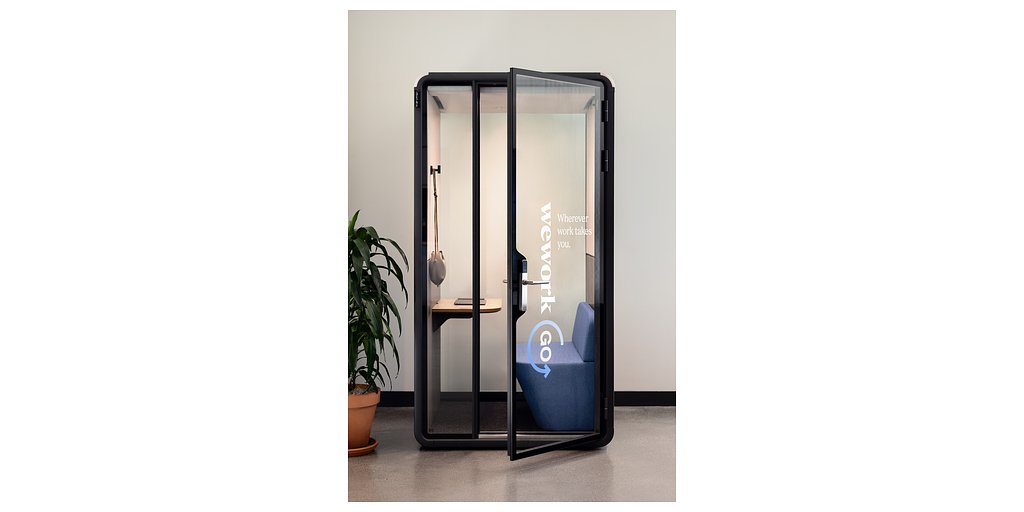
WeWork's Next Act: Private Pods for the Mobile Professional
NEW YORK, NY – April 13, 2026 – In a significant move signaling its strategic direction in a post-bankruptcy era, WeWork today launched WeWork Go, a network of private, on-demand office pods designed for professionals in transient, high-traffic locations. Debuting at the prestigious Semafor World Economy Annual Convening in Washington D.C., the new product aims to plant the company’s flag firmly in the bustling territory of airports, convention centers, and hotel lobbies, offering a sanctuary for focus amidst the chaos.
This launch is more than just a product release; it's a calculated step for a company actively redefining its identity. Emerging from Chapter 11 bankruptcy less than two years ago in June 2024, WeWork has been on a mission to prove its resilience and adapt to a profoundly changed world of work. The introduction of WeWork Go represents a tangible piece of this new, more pragmatic strategy, expanding its ecosystem beyond traditional coworking spaces to meet workers wherever they are.
A Strategic Play for a Rebounding Giant
The WeWork of 2026 is a far cry from the sprawling, lease-heavy behemoth that once commanded a staggering $47 billion valuation. After a dramatic restructuring that shed over $4 billion in debt and trimmed future rent obligations by an estimated $12 billion, the company, now under the operational guidance of property management software firm Yardi Systems, is focused on sustainable growth and profitability. WeWork Go fits squarely into this leaner, more agile framework.
By offering pods, the company is diversifying into a less capital-intensive, asset-light model. Instead of signing long-term leases on entire buildings, it can partner with venue owners to monetize previously underutilized square footage, generating recurring revenue while expanding its brand footprint. This pivot addresses the growing demand for flexible work solutions without the financial risks that previously plagued the company.
“The workday is no longer static; it doesn’t start and end at a desk,” said John Santora, WeWork’s Chief Executive Officer, in a statement. “With WeWork Go, we’re bringing the quality, privacy, and experience of a WeWork office to the locations where and when people need it most. It’s a powerful extension of our platform and another bold step toward delivering real estate solutions designed for the way the world works today.”
This move aligns with the company's broader shift towards becoming a vertically integrated real estate platform, combining physical space with services and technology. It follows the 2022 launch of WeWork Workplace, its space management software, and complements existing offerings like WeWork All Access and On Demand, creating a more holistic ecosystem for businesses and individual members.
Tapping the 'Work-From-Anywhere' Economy
The launch of WeWork Go is impeccably timed to capitalize on durable shifts in work culture. With hybrid models becoming the default for over 80% of remote-capable professionals, the line between the office, home, and third spaces has irrevocably blurred. Simultaneously, business travel is rebounding with force, with global spending projected to reach $1.62 trillion in 2026. This confluence has created a significant, unmet need for professional, private, and productive spaces on the move.
The market is not without its pioneers. Airport lounges from providers like Regus Express have long offered business amenities, while services like Minute Suites and Jabbrrbox (also known as Escape Pods) introduced the concept of private micro-spaces in U.S. airports. However, WeWork aims to differentiate itself through its powerful brand recognition, seamless technology integration, and a premium design ethos.
For the modern professional, the challenges are familiar: taking a sensitive client call in a noisy airport terminal, finalizing a presentation during a long layover, or finding a quiet corner for a video conference at a packed convention. WeWork Go is engineered as the direct solution to these productivity killers, offering an escape from the surrounding environment.
Design for Distraction-Free Productivity
At the heart of the WeWork Go offering is the pod itself, a product of a partnership with design firm Bureau. Meticulously engineered, the pods are intended to be a microcosm of the full WeWork experience. They will be available in three distinct models: a single-user pod for individual focus, a collaborative version for up to four people, and an ADA-compatible design ensuring universal accessibility.
“We approached the concept with the goal of capturing the essence of a WeWork workspace in a single, sleek and premium pod,” explained Ebbie Wisecarver, Chief Design and Product Officer. “Every element, from acoustics and lighting to materials and comfort, was intentionally designed to deliver the high-quality, focused experience WeWork is renowned for.”
Key to this experience is superior soundproofing. The pods feature a polished polycarbonate shell and dense exterior materials to block external noise, while soft, sound-absorbing surfaces inside create a high Sound Transmission Class (STC) rating. Inside, users will find a high-pressure wood laminate desk, ergonomic seating, and curated lighting designed for comfort during both short syncs and longer work sessions. Integrated, enterprise-grade Wi-Fi and optional monitors ensure connectivity and functionality. The company also emphasized the use of environmentally responsible materials, with the pods being GREENGUARD GOLD certified for low chemical emissions.
Rollout, Access, and Future Ambitions
Accessibility is a cornerstone of the WeWork Go model. Users can book a pod in seconds directly at the unit, using the WeWork Go app to gain immediate access. The pricing is flexible, with rates varying by location and duration, allowing users to pay only for the time they need. This frictionless experience is designed to appeal to both existing WeWork members and new customers who need a one-off solution.
Following its debut at the Semafor summit, WeWork plans a global expansion, “thoughtfully and opportunistically” targeting high-traffic locations where demand is highest. By integrating WeWork Go into its broader membership platform, the company hopes to create a network effect, where an All Access member can seamlessly move from their primary office to a collaborative hub and then to an airport pod, all within the same ecosystem.
This launch is a clear indicator of WeWork's forward-looking strategy. By moving beyond the confines of the traditional office building and embedding itself in the flow of modern professional life, the company is making a compelling argument for its relevance and a determined bid for long-term, profitable growth in the new landscape of work.