
- $23 billion: Projected global market size for medical adhesives by 2030
- XRF Method: New cost-effective, rapid testing for extractable silicone in release coatings
- Gamma-Sterilizable PSA: Breakthrough in medical adhesive technology for safer sterilization
Experts would likely conclude that WACKER's innovations in silicone technology represent significant advancements in manufacturing efficiency and medical safety, reinforcing its leadership in specialty chemicals.
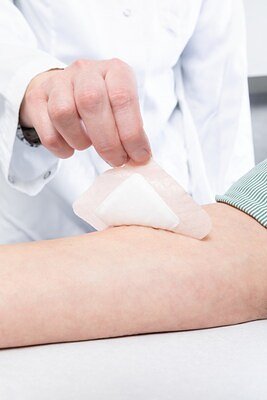
WACKER's Dual Silicone Innovations to Target QC Costs and Medical Safety
ANN ARBOR, Mich. – April 27, 2026 – Global chemical giant Wacker Chemical Corporation is set to make a significant impact at Tape Week 2026, the premier North American event for the pressure-sensitive adhesive (PSA) industry. The company will present two technical papers detailing major advancements in silicone technology: a novel, cost-effective testing method for release coatings and a groundbreaking gamma-sterilizable PSA for the medical sector. These innovations address critical industry needs for enhanced manufacturing efficiency and improved patient safety, signaling WACKER's strategic push to reinforce its leadership in specialty chemicals.
A Strategic Showcase at an Industry Nexus
Tape Week, scheduled for May 4-7 in Louisville, Kentucky, is more than a conference; it is the central hub where the PSA tape industry's manufacturers, suppliers, and technical experts converge to collaborate and shape the future of adhesive technology. WACKER's decision to unveil two distinct but equally significant research papers at this event underscores its importance as a platform for industry-defining announcements. The company will not only present its research but also engage with industry partners at Booth 204.
"Tape Week is an important forum for technical exchange across the pressure-sensitive adhesive industry and to continue to showcase our team's ingenuity," said John Young, Marketing Manager for Healthcare and Release Coatings Silicones at Wacker Chemical Corporation. "This year, we're looking forward to sharing work which speaks both to product performance and to practical industry needs, from more efficient testing methods to silicone adhesive technologies designed for demanding medical applications."
This participation highlights WACKER's commitment to driving progress within the sector, bringing solutions that address both immediate operational challenges and long-term market trends.
Revolutionizing Quality Control with XRF
The first of WACKER's presentations tackles a persistent and costly challenge in manufacturing: the quality control of silicone release liners. These liners are ubiquitous, found on everything from shipping labels and graphic films to medical dressings, ensuring that the adhesive product can be peeled away cleanly and consistently. A key factor in their performance is the measurement of "extractable silicone"—minute amounts of un-cured silicone that can migrate from the coating, potentially compromising product quality and raising regulatory concerns.
Currently, the industry relies on a range of analytical techniques to measure extractables, including Inductively Coupled Plasma - Optical Emission Spectrometry (ICP-OES), atomic absorption, and gas chromatography. While effective, these methods often present significant hurdles for manufacturers. They can be expensive to operate, require extensive sample preparation by highly trained personnel, and sometimes produce variable results, making them less than ideal for rapid, in-process quality checks.
On May 7th, WACKER technical chemist Justin Horst will present a more elegant and practical solution in his paper, "WACKER Method for Determination of Extractable Silicone from Release Coatings by XRF." The presentation details a new method that relies solely on X-ray fluorescence (XRF) technology, a non-destructive analytical technique.
The ingenuity of this approach lies in its accessibility. XRF analyzers are already a common fixture in many manufacturing facilities, where they are used to measure the thickness, or coat weight, of silicone coatings. WACKER's method leverages this existing equipment, drastically lowering the financial and operational barrier to adoption. The method has been validated across multiple laboratories and instruments, proving its robustness and reliability. By offering a cost-effective, rapid, and easy-to-use alternative to more complex procedures, this innovation stands to democratize high-precision quality control, empowering manufacturers to ensure their products meet stringent standards more efficiently than ever before.
A Breakthrough for Safer Medical Adhesives
The second innovation, to be presented by lead scientist Shabnam Pordel on May 6th, addresses a crucial need in the rapidly growing medical adhesives market, a sector projected to exceed $23 billion globally by 2030. This growth is fueled by the proliferation of wearable medical devices, advances in wound care, and an increasing number of minimally invasive surgeries.
Silicone-based PSAs are highly prized in medical applications for their unique combination of properties: they provide secure adhesion yet allow for gentle, low-trauma removal from sensitive skin, and they are inherently biocompatible. However, their broader adoption has been constrained by the final step in medical device manufacturing: sterilization.
Historically, the commercial sterilization of these sensitive adhesives has been largely limited to ethylene oxide (EtO) gas. While effective at killing microbes, EtO is a toxic gas that poses environmental and safety risks. The process also requires a lengthy and costly aeration period to ensure all harmful residues are removed from the final product.
Pordel's presentation, "Formulation and Characterization of a Skin-Friendly Gamma Sterilizable Pressure Sensitive Adhesive Technology," introduces a novel RTV-2 (room-temperature-vulcanizing) silicone PSA. This new formulation is specifically engineered to withstand gamma irradiation, a preferred sterilization method for many medical devices due to its efficiency and safety profile.
Gamma sterilization uses high-energy rays to destroy microbial DNA, offering deep penetration that allows for the terminal sterilization of products already sealed in their final packaging. Crucially, it leaves no chemical residues, making it a cleaner and often faster alternative to EtO. By developing a silicone PSA that maintains its structural integrity and adhesive performance after gamma exposure, WACKER is unlocking new possibilities for medical device manufacturers. Furthermore, the new adhesive is a solvent-free formulation, aligning with the healthcare industry's broader push for more environmentally responsible and safer materials. This breakthrough allows manufacturers to pair the patient-friendly benefits of silicone with a more efficient and cleaner sterilization process, ultimately enhancing both product quality and patient safety.
A Dual Innovation Strategy to Solidify Market Leadership
Viewed together, these two announcements are not isolated technical achievements but rather a calculated strategic maneuver by WACKER. In a competitive landscape that includes specialty chemical giants like 3M, Henkel, and Dow, WACKER is demonstrating its deep R&D capabilities and its sharp focus on creating high-value solutions that solve real-world problems.
This dual-pronged innovation aligns perfectly with the company's stated corporate strategy of concentrating on high-margin specialty chemicals and capitalizing on global megatrends. The XRF method enhances manufacturing efficiency—a key driver in any industry—while the gamma-stable medical adhesive directly serves the expanding healthcare and medical technology markets, a core growth area worldwide. Despite a challenging global economic environment that has impacted the chemical industry, WACKER's continued investment in R&D, as evidenced by these presentations, signals a resilient and forward-looking vision. The company is competing not just on volume but on ingenuity, solving practical problems for its customers in the release coatings industry while opening new frontiers for its clients in the medical device field.
By bringing these advancements to Tape Week 2026, WACKER is doing more than just sharing research; it is providing tangible solutions that resonate across the entire value chain, from the factory floor where release liners are produced to the hospitals and homes where advanced medical devices are used. These innovations in testing and material science are poised to influence industry standards and product development for years to come, solidifying the critical role of advanced silicones in modern manufacturing and healthcare.