
- 45% of global blindness is caused by cataracts, affecting over 15 million people and causing vision impairment in an additional 78 million. - The VR training system allows trainees to perform 300-500 simulated surgeries per week, a volume that could take years in a clinical setting. - Widespread adoption of this training model could reduce cataract-caused visual impairment by 113 million cases globally by 2030.
Experts agree that HelpMeSee’s VR-based surgical training system represents a transformative advancement in ophthalmic education, offering a scalable, cost-effective solution to address the global shortage of skilled cataract surgeons and significantly reduce preventable blindness.
VR Surgery: A New Vision in the Fight Against Global Blindness
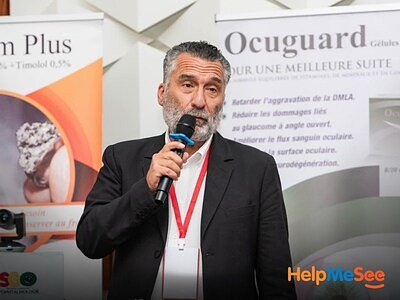
CONAKRY, Guinea – February 05, 2026 – In a move poised to reshape the fight against global blindness, the non-profit HelpMeSee today unveiled a next-generation surgical training system that borrows its core principles from the rigorous world of aviation. Announced at the French-Speaking African Ophthalmology Society (SAFO) conference, the Comprehensive Manual Small Incision Cataract Surgery (MSICS) Training System leverages high-fidelity virtual reality to accelerate the training of surgeons who can reverse a condition that needlessly robs millions of their sight.
Set for a global rollout in the second quarter of 2026, the system represents a fundamental shift from traditional, time-consuming surgical apprenticeships. Instead of learning under the immense pressure of live surgery, trainees can now master complex procedures in a risk-free, simulated environment, potentially changing the calculus in a global health crisis that has long outpaced intervention efforts.
A Crisis of Sight and Skill
Cataracts, the clouding of the eye's natural lens, remain the single largest cause of blindness in the world. According to global health data, they are responsible for nearly 45% of all blindness, affecting more than 15 million people, and cause moderate to severe vision impairment in an additional 78 million. While cataract surgery is one of the most successful and cost-effective interventions in modern medicine, access to it remains tragically uneven.
The disparity is particularly stark in Sub-Saharan Africa, where cataracts account for an estimated 36% of all blindness. In countries like Uganda and Ghana, the condition is responsible for over half of all cases of blindness. This is not due to a lack of a cure, but a critical shortage of skilled surgeons to perform it. The average ophthalmologist in Africa performs just 120 cataract operations per year, a rate far too slow to address the overwhelming backlog of patients.
Traditional surgical training models have proven insufficient to close this gap. The "see one, do one, teach one" approach is limited by the availability of training opportunities on live patients, creating a bottleneck that restricts the number of new surgeons who can be brought into the field. This high-stakes environment can also lead to variable outcomes and prolongs the learning curve, leaving countless individuals waiting in darkness.
The Flight Simulator for Surgeons
HelpMeSee’s new system tackles this challenge head-on by applying a philosophy that has made air travel extraordinarily safe: standardized, high-fidelity simulation. The organization was co-founded by Al Ueltschi, an aviation icon who also founded FlightSafety International and co-founded the flying eye hospital, Orbis International. He envisioned a future where surgeons could be trained with the same rigor and precision as commercial airline pilots.
The result is a training system built around an advanced VR simulator with sophisticated haptic feedback, allowing trainees to feel the delicate tissues of the eye and the resistance of surgical instruments. This technology mimics the physics of live surgery with remarkable accuracy, enabling what the organization calls "massive repetition." In a single week, a trainee can perform between 300 and 500 complete MSICS procedures on the simulator—a volume that could take years to achieve in a clinical setting. This intensive practice builds the critical muscle memory and confidence needed for surgical excellence.
However, the technology is only one part of a holistic, competency-based curriculum. The program is an end-to-end educational ecosystem that covers the entire patient care cycle, from preoperative diagnosis and patient selection to managing potential complications and providing long-term postoperative follow-up. This ensures that graduates are not just technically proficient but are well-rounded specialists prepared for the realities of their practice.
"The goal has always been to move faster than the rate of blindness," said Dr. Jean-Marie André, a surgical training pioneer in Africa who led the announcement. "By providing this optimized, simulation-first system, we are empowering the next generation of surgeons in Africa and beyond to provide world-class care from day one."
Scaling a Solution Across a Continent
The launch in Conakry underscores a deep commitment to Africa, a continent on the front lines of the battle against preventable blindness. HelpMeSee has been steadily building a network of training hubs, with active centers already established at Korle Bu Teaching Hospital in Ghana, Eleta Eye Institute in Nigeria, and Kilimanjaro Christian Medical Centre in Tanzania.
One of the most promising initiatives is the Mazava Program in Madagascar, a collaboration with the country's Ministry of Public Health. The project aims to train over 100 general practitioners to become proficient MSICS specialists, dramatically increasing the nation's surgical capacity. As of late 2023, the first cohorts of graduates were already actively performing surgeries with positive outcomes, demonstrating the model's real-world viability. A crucial element of their training was mastering complication management on the simulator before ever operating on a patient, a safety-first approach that defines the program.
The potential for large-scale impact is enormous. A study by the RAND Corporation projected that, under optimistic scenarios, the widespread adoption of this training model could help reduce cataract-caused visual impairment by a staggering 113 million cases globally by 2030. The study also affirmed the program's high cost-effectiveness, making it a sustainable and attractive solution for governments and health organizations.
A New Standard in Surgical Education
While the immediate focus is on regions with the most critical need, the simulation-based methodology is gaining recognition as a new global standard in ophthalmic education. HelpMeSee has recently forged partnerships with prestigious institutions in the United States, including the University of Southern California/LA General Medical Center and the University of Illinois Chicago, integrating the simulation program into their ophthalmology residency training.
This expansion demonstrates that the benefits of risk-free, high-volume practice are universal, applicable to both the cost-effective MSICS procedure common in developing nations and the more technology-intensive phacoemulsification technique prevalent in high-income countries.
By decoupling surgical training from the constraints of the operating room, HelpMeSee is not just creating more surgeons; it is creating a new, higher standard for how they are trained. By making this advanced education accessible and affordable through its non-profit model, the organization is building a global workforce of specialists equipped to finally win the war against cataract blindness, one simulated surgery at a time. The system's rollout promises to bring a clearer future into focus for millions around the world.
Topics & Related
Product Launch
AI & Emerging Technology
Healthcare & Life Sciences
Related Company Pulse