
- Net Profit (2025): 1.02 billion yuan
- Revenue Growth (2025): 80% year-on-year to 34.87 billion yuan
- Gross Margin (2025): 20.9%
- Vehicle Deliveries (2025): 150,169 units (87% increase)
Experts would likely conclude that VOYAH's disciplined approach to profitability, technological self-sufficiency, and methodical global expansion positions it as a standout player in the competitive EV market, offering a sustainable alternative to cash-burning competitors.
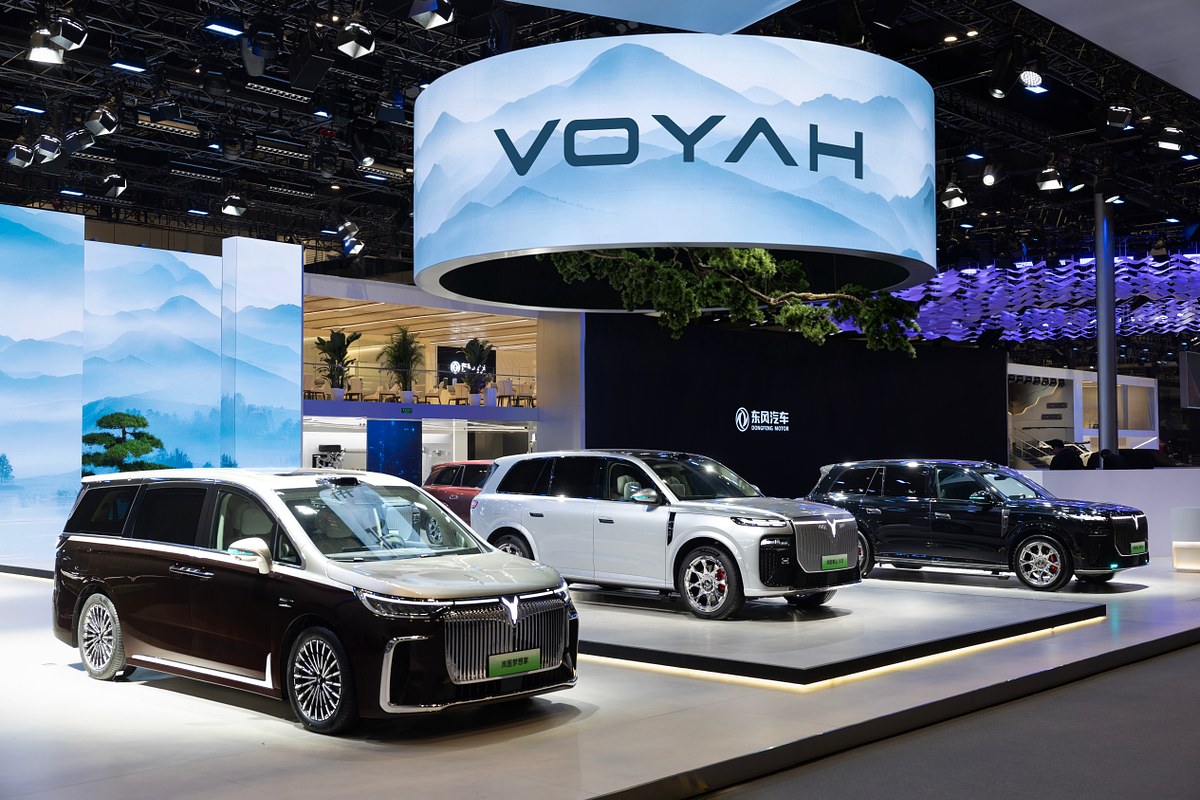
VOYAH's Quiet Revolution: Profitability and Tech Challenge EV Norms
BEIJING – May 11, 2026 – While the electric vehicle market remains a chaotic arena of ambitious promises and staggering financial losses, one Chinese premium brand is charting a conspicuously different course. At the recent Beijing Auto Show, VOYAH, backed by state-owned auto giant Dongfeng, laid out a strategy that prioritizes systemic innovation, proven profitability, and methodical global expansion over high-growth hype. This quieter, more disciplined approach may prove to be its most potent weapon in the long-term battle for EV supremacy.
In a sector where burning cash has become a business model, VOYAH stands out by already being in the black. The company is positioning itself not just as another EV startup, but as a sustainable automotive powerhouse with a clear vision for long-term competition. “VOYAH has not gone off track,” Chairman Lu Fang stated at the show. “Our core technologies are fully self owned. We can compete with any global brand.”
A Blueprint for Profit in a Cash-Burn Industry
VOYAH's most striking differentiator is its bottom line. The company reported a net profit of 1.02 billion yuan for 2025, a significant achievement that makes it one of the few new energy vehicle makers to turn a profit. This was achieved on the back of a substantial 80% year-on-year revenue increase to 34.87 billion yuan and an impressive gross margin of 20.9%, a figure that places it among the industry's top performers.
Sales figures reflect this momentum, with deliveries jumping 87% to 150,169 units in 2025. However, a closer look at the financials reveals a dependency on state support; VOYAH received 1.08 billion yuan in government-related subsidies in 2025, a figure that exceeds its net profit and highlights the ongoing role of industrial policy in its success. Despite this, the company's operational efficiency and strong margins suggest a robust underlying business.
This financial discipline was further tested during its public debut. VOYAH listed on the Hong Kong Stock Exchange (07489.HK) in March via introduction, a method that doesn't raise new capital. The market's reception was lukewarm, with the stock price dipping in initial trading sessions. Yet, in a clear show of confidence, major shareholders, including controlling entity Dongfeng Asset, moved to increase their stakes and announced a significant share buyback plan within weeks. This signals a long-term strategic bet on VOYAH's value, detached from short-term market volatility, and reinforces its image as a company building for endurance, not just for a fleeting market cap.
From Lab to Road: Delivering on Advanced Tech
While many automakers are still navigating the complexities of advanced autonomous driving, VOYAH is already putting its technology on the road. The company emphasized its production-ready innovations at the auto show, moving beyond concepts to tangible products. A key example is the Taishan Ultra, an L3-capable production vehicle that began deliveries in China in March.
This vehicle is equipped with formidable hardware, including an 896-line image-grade lidar—a product of its deepening collaboration with Huawei—capable of detecting an object just 30 centimeters high from 162 meters away. This commitment to advanced, real-world application is supported by over 110,000 kilometers of L3 real-road testing and a portfolio of more than 6,100 patents. VOYAH is not just integrating off-the-shelf solutions; it is building a proprietary ecosystem, underscored by its development of the Tianyuan Smart Architecture to process data from its advanced sensor suite.
This focus on self-sufficiency extends to its manufacturing. VOYAH highlighted a welding line constructed entirely with locally sourced PLC systems, robots, and sensors. This move is a strategic hedge against global supply chain disruptions and a testament to its goal of building a resilient, end-to-end industrial capability. By investing 3.9 billion yuan in R&D—a significant 11.2% of its revenue—VOYAH is ensuring its technological advancements are both proprietary and sustainable.
A Calculated Global Conquest
VOYAH's international expansion strategy is as deliberate as its financial and technological roadmaps. Chairman Lu Fang was explicit in his rejection of a common playbook: “We will not take the low value export involution route.” Instead of flooding markets with low-priced vehicles, the company is focused on building local ecosystems, fostering strong partner networks, and investing in long-term brand development.
This strategy is already in motion across several continents. In Europe, VOYAH has established a presence in Norway, Italy, Spain, Finland, Denmark, and the Netherlands, with plans to enter Germany, Portugal, and Belgium next. In the Middle East, after launching in the UAE and Qatar in 2025, it demonstrated its vehicles' resilience with a successful charging test in 52°C heat, achieving a 20-80% charge in under 13 minutes. A major announcement for the Saudi Arabian market is anticipated this month.
Looking ahead, VOYAH is preparing to enter the nearly 18-million-unit annual right-hand drive market in the second half of 2026, a move that would significantly broaden its global footprint. This calculated expansion is bolstered by its backing from Dongfeng, which provides the financial stability and industrial might to execute such a patient, capital-intensive strategy. While this state-owned enterprise connection could attract geopolitical scrutiny in some Western markets, VOYAH's focus on premium quality, localized service, and transparent ESG initiatives under its “Better VOYAH” plan aims to build trust and differentiate it from price-focused competitors. In the crowded global EV market, this methodical approach may be the key to building a brand that lasts.