
- 58° Field of View (FOV): The Beast offers a 58° FOV, surpassing competitors like XREAL Air 2 Ultra (52°) and Rokid Max (50°).
- 1,250 nits peak brightness: Outshines rivals in the 500-600 nit range, improving visibility in varied lighting.
- 35% power reduction: VITURE's implementation of Sony's display cuts power consumption by 35%.
- $549 price point: Positioned as a premium offering, competing with high-end XR glasses but below full-fledged spatial computers.
Experts would likely conclude that VITURE's 'The Beast' represents a significant advancement in XR technology, particularly in visual fidelity and ecosystem integration, positioning the company as a strong contender in the competitive XR market.
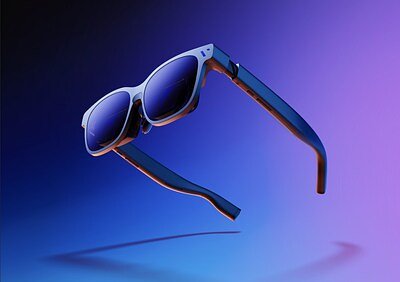
VITURE Unveils 'The Beast' XR Glasses, Aiming for Market Dominance
LAS VEGAS, NV – January 06, 2026 – Amid the technological spectacle of CES 2026, XR innovator VITURE has made a significant play for market leadership, unveiling 'The Beast'—its new flagship extended reality (XR) glasses. Positioned as the company's most powerful and ambitious offering to date, the device is aimed squarely at power users who demand uncompromising visual fidelity and stability. The launch comes as VITURE asserts its dominance in the U.S. market, citing a recent IDC report that ranked it No.1 in shipments for extended display glasses in Q3 2025.
However, the announcement of new hardware is only part of the story. VITURE also revealed a series of high-profile collaborations with industry titans like NVIDIA, Stanford Medicine, and INAIR, signaling a broader strategy focused on building an interconnected and intelligent XR ecosystem. These partnerships suggest a future where XR glasses are not just personal displays, but critical tools integrated into sectors ranging from healthcare to professional design.
A New Benchmark for Visual Fidelity
'The Beast' enters a competitive field with a formidable set of specifications designed to push the boundaries of wearable displays. At its core is Sony's latest micro-OLED panel, which, combined with VITURE's proprietary optical system, powers a massive 58-degree field of view (FOV). This represents a significant increase over competitors like the XREAL Air 2 Ultra (52°) and Rokid Max (50°), promising a more enveloping and immersive experience. The virtual screen can project an image equivalent to a 174-inch display with 4K-like clarity.
Perhaps its most striking feature is a peak brightness of up to 1,250 nits. This figure dramatically outshines the 500-600 nit range of its closest rivals, suggesting superior visibility in varied lighting conditions—a critical factor for real-world usability. The company also claims its unique implementation of the Sony display cuts power consumption by 35%, addressing the perennial challenges of battery life and thermal comfort during extended use.
To manage this expansive virtual screen, VITURE has integrated its VisionPair™ 3DoF (Three Degrees of Freedom) tracking directly into the hardware. While some competitors have moved towards 6DoF tracking for full spatial awareness, VITURE is betting on perfecting 3DoF for its target use case. The focus is on delivering a 'rock-solid' anchored screen that remains stable and distortion-free, which is crucial for productivity and media consumption at wide fields of view. Users can instantly switch between modes like Spatial Anchor, which fixes the screen in space, and Smooth Follow, which keeps it in their line of sight. The device also introduces 'Immersive 3D,' a real-time 2D-to-3D conversion feature that aims to add meaningful depth to standard content.
Encased in a premium magnesium-aluminum alloy frame, 'The Beast' also features 9+ levels of dynamic electrochromic tint control, allowing users to adjust the opacity of the lenses to block out external light. In a deliberate design choice aimed at prioritizing optical performance, the glasses do not include built-in diopter adjustments for myopia, instead relying on prescription lens inserts for vision correction.
Forging an Open, Interoperable Ecosystem
Beyond the impressive hardware, VITURE's announcements at CES underscore a strategic shift towards collaboration and interoperability. The company revealed a new partnership with INAIR, the creators of the INAIR Pod, a portable spatial computing system. The Pod functions as a powerful, Android-based smart terminal for AR glasses, providing dedicated processing power, multi-window productivity, and real-time 3D conversion for a wide range of applications.
This collaboration ensures native, seamless compatibility between VITURE's Luma lineup and the INAIR Pod, notably enabling stable 6DoF experiences for the Luma Ultra model. This move is significant as it signals a departure from the walled-garden approach common in the tech industry. By working with INAIR to support a universal platform, VITURE is actively contributing to an open XR ecosystem where users are not locked into a single brand's hardware. This philosophy aligns with the broader industry momentum behind standards like OpenXR, which seek to reduce fragmentation and make it easier for developers to create applications that run across diverse hardware.
Further expanding the device's utility, a partnership with portable power station manufacturer Jackery was also showcased. At Jackery's booth, VITURE demonstrated how 'The Beast' could be used for outdoor entertainment and work, highlighting the potential for high-fidelity XR experiences untethered from a stationary power source.
The Convergence of XR and AI in Healthcare
The most forward-looking collaboration announced is with NVIDIA and Stanford Medicine, aimed at pioneering the next era of XR and AI in healthcare. VITURE is a featured partner in NVIDIA's newly unveiled XR + AI initiative, a platform designed to connect XR devices to immense computational power, enabling the use of spatially aware, intelligent AI agents.
This initiative leverages AI with visual-language models (VLMs) to provide real-time contextual understanding and assistance. For the medical field, the implications are profound. Potential applications include voice-assisted support during complex procedures, real-time guidance for surgeons overlaid onto their field of view, immersive and interactive training simulations for medical students, and advanced data visualization for diagnostics. By integrating its hardware into this powerful ecosystem, VITURE is positioning its technology not just as a consumer gadget, but as a potentially transformative tool for high-stakes professional environments.
Navigating a Competitive Market
With the launch of 'The Beast', VITURE is making an aggressive move to solidify its market position. The company's claim to be the No. 1 seller of extended display glasses in the US, based on the IDC 2025 Q3 report, provides a strong foundation for this new flagship push. Priced at $549, 'The Beast' is positioned as a premium offering within its category, sitting above the Luma Pro ($499) and below the advanced Luma Ultra ($599) in VITURE's own product hierarchy.
This pricing places it in direct competition with other high-end XR glasses but well below the cost of full-fledged spatial computers like the Apple Vision Pro. The strategy appears to be a focused effort to capture the 'power user' segment—creators, designers, gamers, and professionals who need a best-in-class wearable display but not necessarily a standalone computing headset. By prioritizing screen size, brightness, and stability, VITURE is carving out a distinct niche and betting that for many users, visual perfection is the most critical feature of all.