
- $30 billion: Annual cost of cargo theft to the U.S. economy
- 27% increase: Cargo theft incidents in 2024 (U.S. and Canada)
- $454.9 million: Reported financial losses from cargo theft in 2024
Experts agree that Verified Pickup's real-time, multi-layered verification system represents a critical advancement in combating cargo theft, particularly against sophisticated fraud tactics like theft-by-deception.
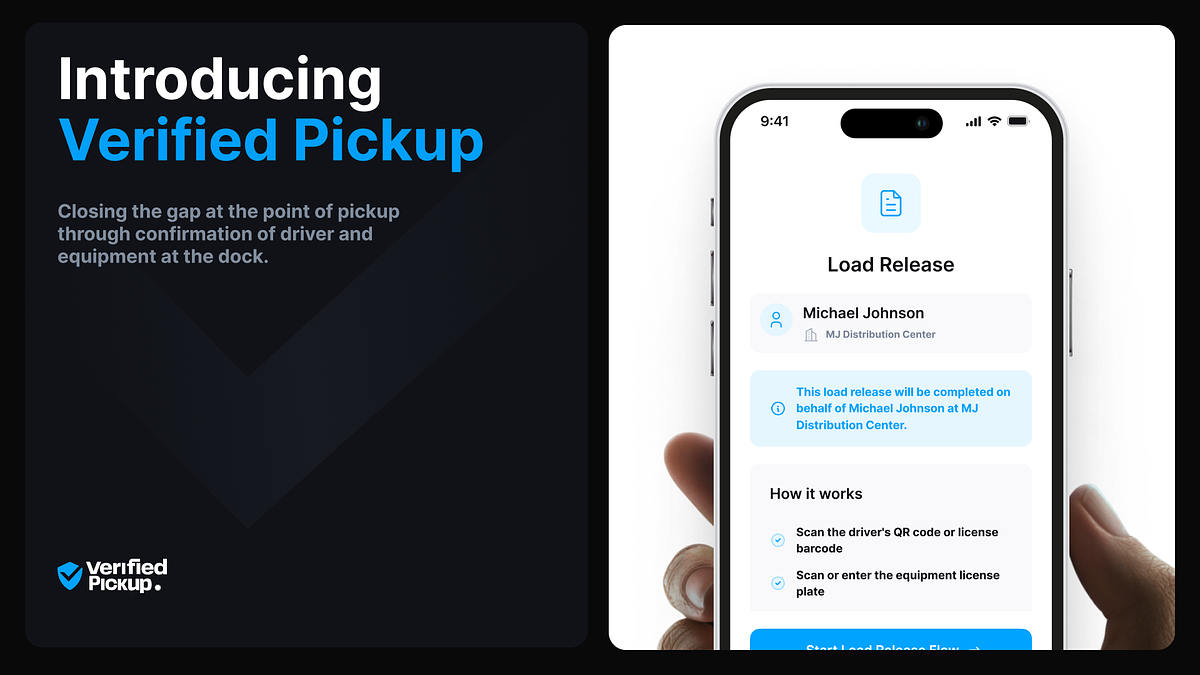
Verified Carrier Launches New Defense Against Surging Cargo Theft Epidemic
VANCOUVER, WA – April 15, 2026 – As the freight industry grapples with a cargo theft crisis costing the U.S. economy an estimated $30 billion annually, a new solution aims to lock down the supply chain's most vulnerable moment: the physical pickup. Today, Verified Carrier, a prominent name in motor carrier vetting, announced the launch of Verified Pickup, a first-of-its-kind system designed to extend verification from the carrier company down to the individual driver and their truck.
The launch comes at a critical time. Cargo theft incidents are not only increasing in frequency but are also evolving in sophistication. Criminals are shifting from brute-force heists to more insidious “strategic theft” tactics, where they use stolen identities and fraudulent paperwork to deceive brokers and shippers into willingly handing over valuable freight. This gap—between verifying a carrier on paper and confirming the identity of the person at the loading dock—has become a gaping wound for the industry.
A Deepening Crisis in the Supply Chain
The scale of the problem is staggering and continues to worsen. Industry security network CargoNet recorded a 27% increase in cargo theft incidents across the U.S. and Canada in 2024, with reported financial losses climbing to $454.9 million. These figures, however, only represent voluntarily reported thefts and are widely considered to be the tip of the iceberg. The FBI's estimate of a $30 billion annual impact paints a much starker picture of the economic damage.
Geographic hotspots like California and Texas have seen theft activity surge by over 30%, with criminal enterprises becoming more organized and technologically adept. The targets have also broadened. While food and beverage products remain a consistent target, thieves are increasingly going after high-value industrial and electronic goods, including raw copper, high-end servers, and cryptocurrency mining hardware.
The most alarming trend is the rise of theft-by-deception. This includes fictitious pickups, where criminals pose as legitimate carriers, and double-brokering scams that leave shippers and brokers on the hook for lost loads. These tactics exploit the industry’s reliance on digital verification of the carrier entity, a system that often fails to confirm who is physically present to take possession of the goods.
Closing the 'Last Mile' Vulnerability
Verified Pickup is engineered to close this precise vulnerability. It creates what the company calls a “continuous chain of verified identity” that links the vetted motor carrier to a specific, authorized driver and their vehicle at the point of exchange.
“The industry has invested heavily in verifying motor carriers at onboarding, but that’s only half the equation,” said Alex Panfilov, Founder and CEO of Verified Carrier, in a statement. “Verified Pickup completes the circle. We can now confirm in real time that the verified motor carrier sent an authorized, verified driver in a confirmed truck to pick up that specific load. That full-circle verification has never existed before.”
The multi-step process begins after a motor carrier is vetted and approved. The carrier invites its drivers to enroll in the platform, where they must complete a robust identity check that includes government ID confirmation paired with facial recognition technology. This creates a verified link between the company and its authorized drivers.
When a truck arrives at a shipper’s facility, the system’s final checks are initiated. On-site cameras or a shipper’s mobile app can capture the truck’s license plate, matching it against the carrier’s registered fleet. The warehouse staff then scans an encrypted QR code on the driver’s phone or their physical driver’s license. This action instantly pulls up the driver's confirmed photo and the motor carrier's verification status, allowing staff to confirm that the person and equipment on-site are exactly who and what they are supposed to be.
Beyond Automation: Human-Tech Synergy
While the freight industry has embraced automation for efficiency, experts note that purely algorithmic systems can be exploited. Verified Pickup’s approach represents a crucial synthesis of advanced technology and human oversight.
“The industry has relied heavily on automated vetting to fight freight fraud, but algorithms can be bypassed while human judgment remains resilient,” noted Andrey Drotenko, President of Strategic Relations at Verified Carrier. “Verified Pickup brings that human verification layer to the point of pickup, confirming not just the motor carrier, but the actual driver and equipment at the dock.”
This layered security model is designed to outsmart criminals who have become adept at circumventing digital-only defenses. By reintroducing a simple but powerful human-led check at the final handoff, the system makes it significantly more difficult for a fraudulent actor to succeed, even if they have managed to create a convincing digital facade.
Navigating Implementation and Industry Impact
While the security benefits are clear, widespread adoption will hinge on seamless integration and a demonstrable return on investment. The solution will need to integrate with a complex ecosystem of Transportation Management Systems (TMS) and Warehouse Management Systems (WMS) to avoid disrupting the fast-paced flow of logistics. Shippers will need to equip their facilities with the necessary scanning technology, and carriers must manage the onboarding and training of their drivers, who may have privacy concerns about biometric data collection.
However, the potential rewards are substantial. The financial and operational incentives for adoption could reshape industry standards, particularly concerning insurance and liability. Logistics risk managers and insurance providers are increasingly looking for proactive security measures. Shippers and carriers who can demonstrate they use a robust, end-to-end verification system may benefit from lower cargo insurance premiums, more favorable policy terms, and a stronger position in liability disputes.
Early results shared by the company are promising. In one instance, a brokerage that had blocked a large portion of its carrier base due to fraud concerns used Verified Carrier to safely re-engage 60% of them, restoring critical capacity. In another high-risk case, a brokerage reported zero fraud or loss events on shipments protected by the system.
As supply chains remain a prime target for organized crime, the focus is shifting from reactive recovery to proactive prevention. The introduction of driver-level, on-site verification marks a significant step in hardening the supply chain against a pervasive and costly threat.
“Every company in the freight supply chain deserves to know with certainty who they are doing business with,” Panfilov stated. “Verified Pickup means there is no longer a simple loophole for criminals to exploit. The motor carrier is verified. The driver is verified. The pickup is confirmed. That's the level of confidence and security our industry deserves.”