
- 24-month transferable warranty: Extended coverage for early Brawley EV owners as part of the BOSS 200 program.
- 200+ early owners: Targeted for concierge-level support to rebuild trust.
- Safety recall (Feb 2026): All 2024-2026 Brawley models recalled due to steering and stability risks.
Experts would likely conclude that Vanderhall's BOSS 200 program is a strategic but high-risk effort to recover from a troubled launch by prioritizing customer trust and long-term reliability.
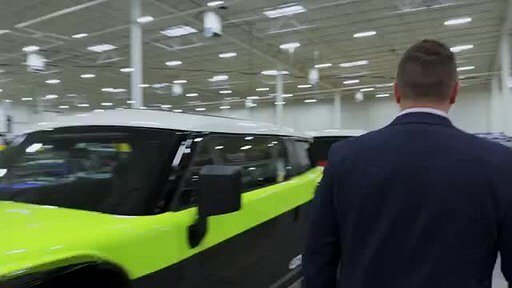
Vanderhall's High-Stakes Reset: A Support Program to Fix a Troubled Launch
PROVO, UT – June 03, 2026 – Vanderhall North America today announced the public activation of its BOSS 200 (Brawley Ownership Support System) program, a move that appears less like a routine customer service initiative and more like a calculated strategic maneuver. Timed with the resumption of production for its ambitious Brawley off-road EV, the program signals a critical pivot for the Utah-based manufacturer. After a launch marred by significant delays and quality control issues, Vanderhall is making a high-stakes bet that a robust, high-touch support system for its earliest—and most patient—customers is the key to building a scalable future.
At its core, the BOSS 200 program offers tangible benefits: an additional 24 months of transferable warranty coverage, concierge-level support with a dedicated advocate, and exclusive product updates. But the real story isn't in the perks; it's in the admission they imply. This is Vanderhall's public acknowledgment of a rocky start and a clear signal that the company is shifting from the chaotic sprint of a startup to the disciplined marathon of a mature manufacturer. As newly appointed CEO Kasey Evans stated, "Confidence is built through actions, not timelines." For Vanderhall, those actions are now squarely focused on rectifying the past to secure its future.
The Anatomy of a Course Correction
To understand the significance of the BOSS 200 program, one must look at the turbulent journey of the Brawley itself. First unveiled in July 2021 with deliveries slated for 2022, the vehicle's entry into the market was anything but smooth. Widespread production delays left reservation holders in limbo, with some reporting as late as September 2023 that they had yet to receive their vehicles or any clear communication. The initial excitement surrounding the category-defining EV began to curdle into frustration within enthusiast communities.
When deliveries finally began to ramp up, they were accompanied by concerning reports of quality issues. These were not minor cosmetic flaws. One early owner documented a series of significant mechanical failures, including a broken tie rod and malfunctioning regenerative braking after limited use, publicly calling the vehicle an "expensive, fragile toy." This anecdotal evidence was substantiated in the most official way possible: a safety recall. On February 2, 2026, Vanderhall recalled all 2024-2026 Brawley models due to tie rods that could break and cause a sudden loss of steering control. The recall notice also cited risks of stability loss and electric shock hazards.
This history is the crucial context for the company's renewed emphasis on "quality control, supplier alignment, and internal validation processes." The resumption of production isn't just about flipping a switch back on; it's about fundamentally re-engineering the processes that allowed flawed vehicles to reach customers in the first place. The BOSS 200 program is the olive branch extended to the 200-or-so early owners who weathered these initial storms, effectively turning them from potential detractors into a protected class of brand stakeholders.
Dissecting the Playbook: Trust as a Tangible Asset
In launching BOSS 200, Vanderhall is deploying a classic crisis-management playbook, but with a premium, hardware-centric twist. The promise of "concierge-level support" featuring a single, dedicated point of contact is a direct response to the communication vacuum that frustrated early buyers. It replaces impersonal service tickets with a personal relationship, a luxury-brand tactic designed to make customers feel heard and valued. It’s a resource-intensive strategy, but one that can pay enormous dividends in brand loyalty.
The enhanced, 24-month transferable warranty is an even more direct financial signal. By extending coverage and, crucially, making it transferable, Vanderhall is not only reassuring current owners but also shoring up the Brawley's resale value—a key factor in the total cost of ownership for any premium vehicle. This move demonstrates a long-term commitment to the product's viability and directly addresses concerns about reliability.
CEO Kasey Evans's commentary frames this entire initiative. His deliberate choice to delay the program's public rollout to "listen first" and incorporate real-world feedback is a masterstroke in narrative control. It reframes the delay not as another setback, but as a period of intentional customer-centric refinement. "We made a conscious decision to listen first, make improvements, and then build a program that reflects what our customers actually need," Evans said. This messaging is vital as the company attempts to rebuild its reputation from one of over-promising to one of deliberate, responsible execution.
Carving a Niche in a Crowded Field
The Brawley's operational reset is happening against the backdrop of a fiercely competitive and rapidly expanding off-road EV market. The vehicle occupies a unique and potentially lucrative niche. It is not a direct competitor to road-legal adventure vehicles like the Rivian R1T or Tesla Cybertruck. Instead, it is classified as a Recreational Off-Highway Vehicle (ROV), placing it in the world of UTVs and side-by-sides.
However, it bears little resemblance to a typical open-air UTV from Polaris or Can-Am. With its fully enclosed, climate-controlled cabin, refined interior, and advanced tech features like four-wheel steering (eSteer) and the ability to pivot in place (eTank), the Brawley offers a level of comfort and sophistication that its more utilitarian rivals lack. It aims to deliver a "glamping" experience on wheels, a proposition that could appeal to a wealthy demographic seeking adventure without sacrificing creature comforts. This unique positioning is its greatest strength but also its challenge, as it must create and define its own market segment.
This operational reset and the BOSS 200 program are Vanderhall's attempt to build a stable foundation from which to conquer that niche. By ensuring its initial fleet of vehicles is well-supported and its first owners are converted into advocates, the company is mitigating the brand damage from its troubled launch. The success of this maneuver will be a critical determinant of whether the Brawley becomes a dominant force in its category or a case study of a promising concept undone by early execution failures.