
- 80+ territories have achieved self-governance through the UN decolonization framework.
- Native Turkic population in Xinjiang/East Turkistan has dropped from 90% to 55% since 1949, while Han Chinese settlers have risen from 42%.
- 2022 UN report found China's actions in Xinjiang may constitute 'crimes against humanity.'
Experts would likely conclude that this legal challenge represents a significant shift in the international discourse on Xinjiang, reframing the issue from human rights violations to a question of colonial occupation and self-determination, with potential implications for China's global standing.
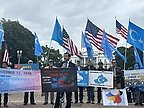
Uyghur Exiles Challenge China's Rule as Colonial at United Nations
WASHINGTON, DC – May 07, 2026 – In a move that fundamentally alters the international narrative surrounding the Xinjiang crisis, Uyghur exile groups have launched an unprecedented legal challenge against the People's Republic of China (PRC), formally accusing it of being a colonial power. On May 5, the East Turkistan Government-in-Exile (ETGE) and the East Turkistan National Movement (ETNM) submitted a historic petition to the United Nations Special Committee on Decolonization (C-24), demanding that East Turkistan—which Beijing calls the Xinjiang Uyghur Autonomous Region—be listed as a Non-Self-Governing Territory.
The filing marks the first time China's sovereignty over the vast, resource-rich region has been legally contested as a matter of colonial occupation before a UN body. It represents a strategic pivot by Uyghur advocates, moving beyond the framework of human rights to invoke the foundational UN principles of self-determination and decolonization.
The Decolonization Gambit
The petition seeks to place East Turkistan on the agenda of the C-24, a committee established in 1961 to monitor the progress of former colonies toward independence. Since its inception, the committee's work has paved the way for over 80 territories to achieve self-governance. By appealing to this body, the ETGE is arguing that the plight of Uyghurs, Kazakhs, Kyrgyz, and other Turkic peoples is not simply an internal human rights issue, but the result of a prolonged and illegal foreign occupation.
"More than 80 nations achieved independence through the UN decolonization framework," said Dr. Mamtimin Ala, President of the ETGE, in a statement accompanying the release. "The peoples of East Turkistan now formally assert that same right. Our struggle is not merely a human rights issue, but an international struggle for decolonization."
To be successful, the petitioners must convince the UN that East Turkistan fits the definition of a Non-Self-Governing Territory—a territory whose people have not yet attained a full measure of self-government. The petition argues that this is precisely the case, citing historical claims of sovereignty that predate the PRC's formation.
A Contested History
Central to the ETGE's case is the assertion that East Turkistan was an independent state before its absorption by the PRC. The region, which had a long history of Turkic kingdoms, declared independence twice in the 20th century, most recently as the East Turkistan Republic (1944-1949). The petitioners contend that this republic was overthrown by the People's Liberation Army's invasion in late 1949.
The filing argues that China's control was never legitimized. "No treaty of cession, no plebiscite, and no instrument reflecting the free and genuine will of its peoples has ever legitimized Chinese control," the press release states. The very name China uses for the region, "Xinjiang," translates to "New Territory," which the ETGE points to as an admission of its colonial status.
To bolster their claim of colonization, the petitioners highlight dramatic demographic shifts over the past 76 years. The native Turkic population has reportedly plummeted from constituting 90% of the region's inhabitants to approximately 55%. In parallel, the population of Han Chinese settlers has surged from under 5% to over 42%, a change the ETGE frames as a deliberate state-sponsored policy to displace the indigenous population and solidify Chinese control.
From Human Rights Crisis to a Question of Sovereignty
This legal maneuver comes after more than a decade of escalating human rights abuses that advocacy groups and several governments have labeled a genocide. The petition follows what its authors describe as the failure of existing human rights mechanisms to halt the persecution. Despite a damning 2022 report from the Office of the UN High Commissioner for Human Rights (OHCHR) that found China's actions may constitute "crimes against humanity," and genocide designations by the United States and the parliaments of several other nations, the situation on the ground has not improved.
Just this year, in January 2026, UN Special Rapporteurs issued a grave warning that China's state-sponsored forced labor transfer programs, which have ensnared millions, may amount to "enslavement as a crime against humanity." The ETGE directly links these atrocities to Beijing's political control over the territory.
"This genocide is rooted in China's colonial occupation of East Turkistan," stated Salih Hudayar, the ETGE Foreign Minister. "Decolonization is the only guarantee of our human rights and very survival." The petition also cites China's 2026 "Law on Promoting Ethnic Unity and Progress" as the latest legislative tool designed to accelerate cultural and ethnic erasure under the guise of national unity.
Geopolitical Tremors at the UN
The petition creates a deeply uncomfortable diplomatic situation for Beijing. China, a permanent, veto-wielding member of the UN Security Council, now stands accused of colonialism before a UN committee on which it currently sits. The ETGE's filing explicitly calls on the General Assembly to address this apparent conflict of interest.
While China is expected to vehemently reject the petition as an attack on its national sovereignty and a gross interference in its internal affairs, the move forces the issue into a new international legal and political arena. It challenges China's carefully crafted image as a leader of the Global South and a champion of post-colonial nations. Forcing member states to debate whether China is an occupying power could damage its international standing, regardless of the petition's ultimate outcome.
The filing asks the UN General Assembly to take several steps: designate the PRC as an occupying power, affirm East Turkistan's right to self-determination and independence, and address China's conflicting roles within the UN system. The path forward for the petition is fraught with political obstacles, but it has successfully ignited a new and potentially more consequential phase in the long struggle for the future of East Turkistan and its people.