
- Global Rank: UTP's Petroleum Engineering program ranks 9th worldwide and 3rd in Asia in the QS World University Rankings by Subject 2026, up from 16th the previous year.
- Employment Rate: Over 90% of UTP graduates secure employment within six months of graduation, with many hired by industry leaders like PETRONAS, Schlumberger, and ExxonMobil.
- Internship Success: Approximately half of UTP student interns are offered full-time positions by their host companies.
Experts view UTP's rise as a model for industry-aligned energy education, blending traditional petroleum engineering with emerging low-carbon technologies to prepare graduates for a diversified energy future.
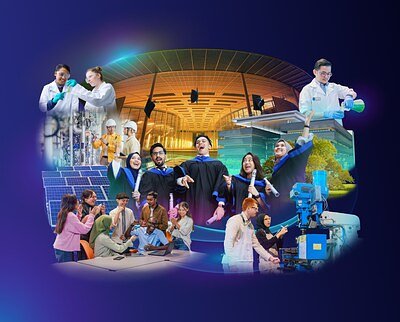
UTP Cracks Global Top 10, Signaling a Shift in Energy Education
SERI ISKANDAR, Malaysia – April 06, 2026 – Universiti Teknologi PETRONAS (UTP) has secured a landmark achievement, breaking into the global top 10 for Petroleum Engineering in the prestigious QS World University Rankings by Subject 2026. The institution's flagship program now ranks 9th globally and 3rd in Asia, a significant leap from 16th the previous year, marking the highest-ever subject ranking achieved by a Malaysian university.
This ascent places UTP not only as the leader in Malaysia and Southeast Asia for the discipline but also highlights a broader trend of comprehensive growth across the university. The institution climbed 38 places to 146th globally in the wider Engineering and Technology category. This performance is benchmarked by QS using a combination of indicators, including academic and employer reputation, research citations, and international collaboration, reflecting both scholarly impact and industry relevance.
Beyond the headline-grabbing top 10 placement, UTP demonstrated widespread advancement. Its Chemical Engineering program entered the world's top 100 at 87th, while Electrical and Electronic Engineering improved to 131st. Significant gains were also recorded in Computer Science and Materials Science, underscoring a strategic push to bolster capabilities across the technological spectrum.
A Model Forged by Industry
UTP's success is deeply rooted in its unique foundation. Established in 1997 by Malaysia's national oil and gas company, PETRONAS, the university operates on a principle of being 'by industry, for industry.' This symbiotic relationship provides more than just a name; it creates a powerful feedback loop that shapes curriculum, funds research, and, most critically, fuels exceptional graduate employability.
This deep corporate integration ensures that academic programs are meticulously aligned with the immediate and future needs of the energy sector. It's a model that has yielded tangible results, with UTP consistently reporting that over 90% of its graduates secure employment within six months of graduation. Many are hired directly by PETRONAS or other multinational energy giants like Schlumberger and ExxonMobil.
A cornerstone of this industry-ready approach is UTP's seven-month internship program, the most extensive in Malaysia. This immersive work experience serves as a crucial bridge between theory and practice, with reports indicating that approximately half of the student interns are subsequently offered full-time positions by their host companies. This pipeline directly addresses the skills shortages and aging workforce challenges prevalent in the global energy industry.
"These results reflect both progress and consistency in the areas that matter most," said UTP President, Ir. Mohamed Firouz Asnan, in a statement. "As we strengthen our global standing, our priority remains clear — to build capabilities that deliver real impact, through quality education, meaningful research, and talent development that serves industry, society, and the nation."
Navigating a Shifting Energy Landscape
Achieving a top-10 ranking in Petroleum Engineering in an era defined by the global energy transition might seem paradoxical. However, a closer look reveals a strategic adaptation to a more complex energy future. The conversation in leading institutions like UTP is no longer solely about extraction, but about a broader concept of 'energy engineering.'
Faculty and industry experts increasingly view the transition as an opportunity for innovation. Core skills honed in petroleum engineering—such as fluid dynamics in porous media, subsurface geological modeling, and large-scale project management—are directly transferable and highly sought after for emerging low-carbon technologies. These include Carbon Capture, Utilization, and Storage (CCUS), geothermal energy development, and underground hydrogen storage.
UTP's research initiatives reflect this pivot. The university is engaged in joint projects to develop advanced monitoring technologies for carbon storage with partners like TotalEnergies. It has also partnered with PETRONAS subsidiary Gentari to install one of Malaysia's largest rooftop solar arrays on its campus, signaling a commitment to its own low-carbon goals.
This evolution is critical, as recent forecasts from bodies like the International Energy Agency (IEA) and OPEC project that global demand for oil and gas will continue to grow toward 2050. The challenge, therefore, is not an immediate replacement of fossil fuels but an expansion of the energy mix, demanding professionals who can manage traditional resources more efficiently and sustainably while simultaneously pioneering new ones. Curricula are evolving to embed data analytics, machine learning, and sustainability principles, preparing graduates to be versatile players in a diversified energy sector.
Malaysia's Ascent in Global Higher Education
UTP's rise is a significant win for Malaysia's broader ambitions in higher education. The government has long identified Science, Technology, Engineering, and Mathematics (STEM) as critical drivers for economic growth and global competitiveness. Strategic initiatives like the National STEM Strategic Action Plan and significant budgetary allocations for research and development underscore a national commitment to building a high-tech, knowledge-based economy.
Within this competitive domestic landscape, which includes well-regarded institutions like Universiti Malaya (UM) and Universiti Teknologi Malaysia (UTM), UTP has carved out a powerful niche. While other universities show broader strength across engineering disciplines, UTP's focused excellence in energy-related fields, backed by its powerful industry linkage, provides a distinct model for success.
The university's debut in the Social Sciences and Management rankings further suggests a growing understanding that technical challenges are intertwined with business and policy. This holistic approach is vital for developing well-rounded leaders who can navigate the complex financial, regulatory, and social dimensions of the global energy system.
As the world continues to grapple with the dual challenge of meeting rising energy demand while mitigating climate change, institutions like UTP are becoming increasingly vital. By producing graduates equipped with both traditional and next-generation skills, they are not just responding to industry demand—they are actively shaping the future of energy for decades to come.