
- $10 billion: Private investment attracted by the commercial fusion industry.
- 17 Tesla: World-record magnetic field strength achieved by Realta's prototype, a critical step in proving the viability of magnetic mirror technology.
Experts would likely conclude that this strategic alliance between Realta Fusion and Kyoto Fusioneering represents a significant step forward in accelerating the commercialization of fusion energy, leveraging complementary strengths in plasma physics and precision engineering to overcome key technical and industrial challenges.
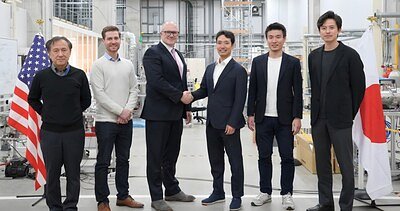
US-Japan Fusion Giants Forge Alliance to Fast-Track Clean Energy
MADISON, Wis. – March 16, 2026 – In a move poised to accelerate the global race for clean energy, U.S.-based Realta Fusion and Japan’s Kyoto Fusioneering (KF) have announced a strategic bilateral partnership. The agreement aims to merge American innovation in plasma physics with Japanese excellence in precision engineering, creating a powerful new axis in the quest to commercialize fusion energy.
This collaboration builds on decades of public-sector cooperation between the two nations, now translating that history into a formidable private-sector force. The alliance will focus on jointly developing critical technologies for Realta's novel magnetic mirror fusion approach, a design that is gaining renewed attention for its potential to offer a simpler, more compact path to harnessing the power of the stars.
A Fusion of Strengths
The partnership is a direct marriage of complementary expertise. Realta Fusion, a spin-out from a U.S. Department of Energy-funded project at the University of Wisconsin-Madison, is a pioneer in the resurgence of magnetic mirror technology. This approach uses a linear arrangement of powerful magnets to confine superheated plasma, a conceptually simpler alternative to the complex doughnut-shaped tokamaks that have long dominated fusion research. Realta's key advantage lies in its use of high-temperature superconducting (HTS) magnets, which enabled its university-based prototype to achieve a world-record magnetic field strength of 17 Tesla for a mirror device, a critical step in proving the concept's viability.
While Realta brings the advanced physics, Kyoto Fusioneering delivers the hard-nosed engineering and industrial know-how required to turn a scientific experiment into a power source. As Japan's largest fusion company, KF is a global leader in designing and building the critical plant systems that surround the plasma core. This includes plasma heating systems, thermal management, and the complex fuel cycle technology needed to handle the hydrogen isotopes that fuel the fusion reaction.
The first tangible outcome of this partnership is already in motion. Realta has purchased advanced gyrotrons—essentially high-powered microwave emitters that heat the plasma to temperatures hotter than the sun's core—from KF. These components are destined for Realta's first commercial-grade fusion machine, which will be the centerpiece of its planned research and development facility, dubbed 'The Realta Forge'.
"Most visibly, this partnership allows Realta to access some of the best fusion engineering expertise in the world at KF and tap directly into the depth of the Japanese supply chain, but it goes much deeper than that," said Realta Fusion CEO and Co-Founder Kieran Furlong. "We're building a bridge between the fusion industrial ecosystems of two of the world's largest economies to get each of us to commercial fusion faster than we ever could on our own."
Forging a Global Supply Chain
Beyond the immediate hardware exchange, the alliance carries significant geopolitical and industrial weight. The commercial fusion industry, which has attracted nearly $10 billion in private investment, faces a monumental challenge: building a global supply chain for components that have never been mass-produced. The collaboration between Realta and KF is a direct attempt to tackle this bottleneck head-on.
The agreement extends to the joint development of mirror-based neutron sources. These devices will be crucial for testing and qualifying the advanced materials needed to withstand the harsh environment inside a fusion reactor—a critical step in de-risking the technology for any fusion concept. Furthermore, the partners will coordinate on building out supply chains for everything from raw materials to complex subsystems, engaging with government stakeholders and standards bodies in both the U.S. and Japan to create a supportive regulatory environment.
This strategic alignment is a powerful example of 'friend-shoring' critical technology, strengthening economic and security ties between the U.S. and Japan in the high-stakes arena of future energy. It positions the two nations to lead in an industry that promises carbon-free, abundant power.
"This alliance represents a powerful convergence of American ingenuity in plasma physics and Japanese excellence in precision manufacturing and integrated fusion systems," said Kiyoshi Seko, KF's President and COO. "By linking our respective industrial bases, we are not just advancing magnetic mirror technology; we are forging the resilient, cross-border supply chains required to make commercial fusion a reality."
A New Blueprint for Commercialization
As the fusion industry pivots from scientific feasibility to commercial viability, this partnership may represent a new blueprint for success. Many companies in the field are targeting the early to mid-2030s for delivering electricity to the grid, a timeline that leaves little room for error. The immense challenges of materials science, fuel cycle management, and systems integration require a level of collaboration that transcends corporate and national borders.
Realta's focus on a compact, modular system designed for industrial heat and power applications already sets it apart from larger, grid-scale projects. By integrating KF's proven engineering and manufacturing capabilities from the outset, Realta is not just developing a reactor; it is co-developing the entire industrial ecosystem required to build and deploy it. This integrated approach, blending cutting-edge R&D with practical supply chain logistics, could prove to be a more efficient and accelerated path in the crowded and competitive field of commercial fusion.
For its part, Kyoto Fusioneering, which chairs the Japan Fusion Energy Council (J-Fusion), is leveraging this partnership to activate Japan's vast manufacturing base for the burgeoning global fusion market. The collaboration is not merely a transaction between two companies but a strategic effort to build a robust, international industrial network capable of delivering on the promise of fusion energy.