
- 880,000 pre-trade setups analyzed: Data from 2025 shows U.S. traders checked liquidation risk twice as often as the global average.
- 63% mobile usage: During peak volatility, 63% of U.S. traders' risk checks occurred on mobile devices, compared to 58% globally.
Experts conclude that U.S. crypto traders are adopting a more proactive and risk-aware approach, driven by regulatory pressures and technological advancements, signaling a maturation of the retail derivatives market.
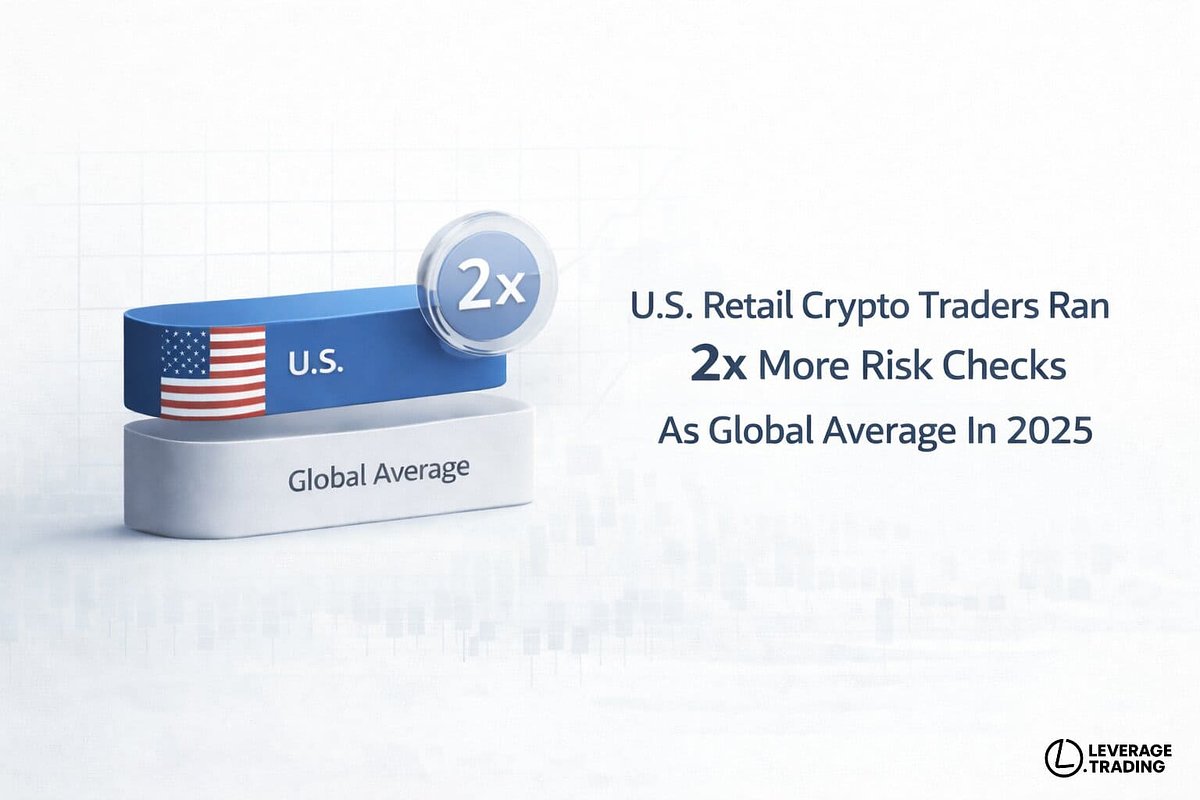
US Crypto Traders Double Down on Risk Checks, New Data Reveals
CÓRDOBA, SPAIN – February 23, 2026 – A significant behavioral shift appears to be underway in the volatile world of crypto derivatives, with U.S.-based retail traders leading a charge toward more defensive and proactive risk management. A new analysis of nearly 880,000 anonymized pre-trade setups from 2025 shows that American traders checked their liquidation risk roughly twice as often as the global average, a pattern that suggests a maturing market where anticipation is replacing pure reaction.
The data, compiled by risk research firm Leverage.Trading between August and December 2025, indicates that this heightened caution wasn't random. Spikes in risk checks often preceded major market liquidations by hours or even days, challenging the stereotype of the reactive retail investor. Instead, it paints a picture of a growing cohort of traders using available tools to get ahead of market stress before it culminates in forced exits.
“Retail traders aren’t just reacting to liquidations anymore — many are checking risk well before volatility fully hits the market,” said Anton Palovaara, founder and lead analyst at Leverage.Trading, in the report. “That shift in behavior is becoming more visible during periods of peak crypto market stress.”
This trend was most pronounced among U.S. users, who consistently demonstrated a more conservative approach during periods of high volatility compared to their international counterparts. The findings point to a multifaceted evolution driven by a complex interplay of regulatory pressures, technological advancements, and a hard-won understanding of market dynamics.
A Proactive Shift in Trader Psychology
The core finding of the analysis is the clear divergence in behavior between U.S. traders and the rest of the world. While traders globally contend with the inherent risks of leveraged crypto products, the data suggests U.S. participants have adopted a more methodical and defensive posture. During the most volatile periods of 2025, American traders ran approximately twice as many liquidation checks per user as the global average.
This wasn't just about checking more often; it was about when they were checking. The report highlights that surges in liquidation and margin checks frequently appeared well in advance of the largest market wipeouts. This anticipatory behavior suggests that traders are becoming more attuned to the early warning signs of market instability—such as shifts in sentiment, order book imbalances, or macroeconomic news—and are stress-testing their positions accordingly.
Furthermore, the study notes a difference in post-volatility activity. While traders in other regions tended to shift their focus back toward opening new positions more quickly after a market swing, U.S. traders remained more heavily concentrated on monitoring their existing risk. This indicates a deeper-seated caution and a greater emphasis on capital preservation in the American segment of the retail derivatives market.
The Regulatory Shadow and Market Maturity
This heightened sense of caution among U.S. traders doesn't exist in a vacuum. The increasingly complex and assertive regulatory environment in the United States likely plays a significant role in shaping this risk-averse behavior. Throughout 2025, agencies like the Securities and Exchange Commission (SEC) and the Commodity Futures Trading Commission (CFTC) continued to signal a more robust approach to oversight of the digital asset space.
Ongoing enforcement actions, debates over the classification of crypto assets as securities, and discussions around stricter rules for derivatives platforms create a landscape of uncertainty. For a retail trader, this regulatory ambiguity translates into an additional layer of non-market risk. The prudent response is to be more diligent, not only about market-driven liquidation risk but also about the potential for platform-related issues or sudden regulatory mandates that could impact their positions.
The proactive risk-checking observed in the data can be interpreted as an adaptation to this environment. By frequently assessing their positions, U.S. traders are not just guarding against price swings but are also maintaining a state of readiness in a market where the rules of engagement are still being written. This behavior, born from a necessity to navigate a stricter regulatory climate, may inadvertently be fostering a more sophisticated and resilient class of retail investor.
Mobile First, Risk First: Technology's Role in the New Prudence
The evolution in trader psychology is being enabled and reflected by technology, particularly the dual use of mobile and desktop platforms. The analysis reveals a clear pattern: traders are turning to their phones for speed and their computers for depth. During market volatility, fast liquidation checks predominantly happened on mobile devices, allowing traders to quickly assess their exposure on the go.
This mobile-first trend was even more pronounced in the United States. Roughly 63% of risk checks from U.S. users during peak volatility occurred on mobile, compared to 58% globally. This suggests a heavier reliance on handheld monitoring for immediate, tactical risk assessment. These quick checks were often followed by more in-depth sessions on desktop platforms, where traders would conduct deeper analysis, review margin levels, and make strategic adjustments to their positions.
This two-tiered workflow highlights a sophisticated approach to risk management. The mobile device acts as an early warning system, a constant companion for monitoring a portfolio's health. The desktop, in turn, serves as the command center for more calculated and thoughtful decision-making. This interplay shows that traders are not just passively consuming data but are actively using a suite of tools to manage their risk exposure in real time across different contexts and devices.
Reshaping the Crypto Trading Ecosystem
This pronounced shift toward proactive risk management has significant implications for the entire crypto trading ecosystem. As traders become more risk-aware, their expectations for trading platforms evolve. The demand is no longer just for low fees and high leverage but for robust, intuitive, and transparent risk management tools.
Crypto derivatives exchanges and trading platforms are likely to face increasing pressure to integrate advanced features like the calculators offered by Leverage.Trading directly into their interfaces. This includes pro-grade tools for modeling liquidation scenarios, visualizing margin requirements, and setting complex, automated risk controls. Platforms that fail to provide this level of functionality may find themselves losing ground, especially in the valuable U.S. market.
Moreover, the emphasis on education and transparency will become a key competitive differentiator. As traders actively seek to understand their risk, platforms that offer clear educational resources, transparent explanations of their liquidation engines, and user-friendly interfaces for risk assessment will build greater trust and loyalty.
Ultimately, the trend identified in the data signals a positive maturation of the retail derivatives space. The behavior of U.S. traders in 2025 suggests a move away from the purely speculative, high-risk gambling that characterized earlier market cycles. In its place, a more calculated, analytical, and risk-aware approach is emerging, driven by a confluence of regulatory pressures and technological empowerment. This evolution is not only changing how individuals trade but is also setting new expectations for the platforms that serve them.