
- $23.4 trillion: UnionPay processed $23.4 trillion in transactions in 2025.
- 183 countries: UnionPay's network covers 183 countries and regions.
- 40 cities: The Nihao China App offers one-code access to public transport in over 40 cities.
Experts would likely conclude that UnionPay's strategic vision represents a significant step toward a more multipolar financial world, leveraging technology and partnerships to enhance payment sovereignty and economic integration across the Global South.
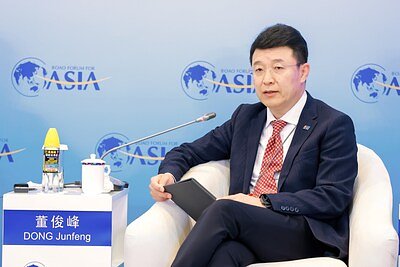
UnionPay Charts a Digital Silk Road for Global Payments
HAIKOU, China – March 27, 2026 – In a significant declaration of intent at the Boao Forum for Asia, China UnionPay has outlined a strategic vision poised to reshape the architecture of global finance. Speaking at a panel on diversifying cross-border payments, Chairman Dong Junfeng detailed a multi-pronged strategy centered on an “ecosystem integration” approach, signaling a concerted push to build a new financial corridor aimed squarely at the Global South.
The move comes as the global payment landscape undergoes a profound transformation, driven by technological innovation, a shift in economic gravity towards emerging markets, and a growing desire among nations for greater “payment sovereignty.” UnionPay, a network that processed a staggering $23.4 trillion in transactions in 2025, is leveraging its immense scale to position itself not just as a participant, but as a key architect of this new era.
A Blueprint for a New Financial Order
UnionPay's strategy, as articulated at the influential forum, represents more than a series of technical upgrades; it is a blueprint for a more multipolar financial world. The core of this vision is the creation of what could be termed a digital Silk Road for payments, designed to enhance connectivity and economic integration across Asia, Africa, and Latin America. This initiative aligns with China's broader foreign policy objectives, including the Belt and Road Initiative, by providing the financial infrastructure necessary to support burgeoning trade and investment.
By championing local-currency settlements and interoperable payment systems, the company is directly addressing the long-standing pain points of cross-border commerce: high transaction costs, currency exchange risks, and dependence on the U.S. dollar. This approach not only offers tangible economic benefits but also resonates with a growing number of countries seeking to reduce their reliance on traditional Western-dominated financial intermediaries. The emphasis on an “open, inclusive, and win-win cooperation” model is a strategic effort to build a coalition of partners, from national payment networks to incumbent financial institutions, who share a common goal of creating a more resilient and diversified global payment network.
This push is further bolstered by UnionPay's role as a key bridge for the internationalization of the Renminbi. By facilitating RMB remittances and its use in cross-border trade, the network is instrumental in expanding the currency's global footprint, offering an alternative for international settlement and reinforcing China's economic influence.
Building the Digital Corridors Brick by Brick
UnionPay’s ambitious vision is being realized through a series of concrete, on-the-ground initiatives. A cornerstone of this effort is the aggressive expansion of QR code interoperability. The company is actively pursuing both government-to-government (G2G) and network-to-network (N2N) partnerships to weave a seamless web of digital payments.
A prime example of the G2G model is the memorandum of cooperation signed with the National Payment Corporation of Vietnam (NAPAS), a deal guided by arrangements between the two countries' central banks. This allows wallets from each nation to be accepted across their respective networks. Under the N2N model, UnionPay has successfully connected its QR payment network with local schemes like PayNet in Malaysia and NETS in Singapore, creating a more unified payment experience for millions of consumers and travelers.
Furthermore, the implementation of bilateral local-currency settlement (LCS) arrangements in key markets like Indonesia and Vietnam is a critical component. These frameworks, which align with broader government-led initiatives, allow businesses to trade directly using their own currencies. Independent analysis confirms that LCS frameworks significantly reduce transaction costs, insulate trade from the volatility of major reserve currencies, and ease pressure on national foreign exchange reserves, providing a powerful lubricant for regional economic activity.
Technology as the Great Connector
Driving this expansion is a deep investment in technology, particularly in artificial intelligence and mobile-first solutions. The most prominent example is the “Nihao China App,” launched in December 2025. This application is a masterclass in addressing user friction, designed specifically to solve the payment challenges that have historically frustrated international visitors to China.
The app functions as a comprehensive digital wallet, allowing users to link their international Visa, Mastercard, and UnionPay cards without needing a Chinese bank account. Its true power lies in its integration capabilities; it allows a foreign visitor to use a single app to scan the ubiquitous QR codes of UnionPay, Alipay, and WeChat Pay, effectively unifying China's fragmented digital payment landscape for outsiders. Beyond retail, it provides “one-code access” to public transport in over 40 cities and offers services like real-time translation, AI-powered travel recommendations, and streamlined tax refunds.
This deep integration of AI, which UnionPay describes as an “AI agent-powered one-stop payment solution,” serves as a potent example of how new technologies can reshape traditional financial infrastructure, making it more intuitive and accessible. The company is also embedding payment solutions directly into regional industrial chains with products like a Virtual Commercial Card, supporting businesses’ global ambitions and further entwining payment services with the real economy.
A Shifting Global Landscape
UnionPay's strategic maneuvers are not happening in a vacuum. The world's largest payment players are all scrambling to adapt to the same global trends. Visa is repositioning itself as a comprehensive “money movement infrastructure,” with its Visa Direct platform processing over 12 billion transactions in 2025 across nearly 200 countries. Mastercard, citing strong international growth, is focusing on real-time cross-border settlements through its Mastercard Move portfolio and aggressively expanding its acceptance network in emerging markets like Africa.
This intense competition underscores the high stakes involved in defining the future of money. As UnionPay builds its digital corridors through the Global South, it is both responding to and accelerating a fundamental shift in global finance. The company's future plans include accelerating the rollout of QR connectivity and local-currency projects while working with partners to establish new, multilaterally interoperable technical standards.
By leveraging its vast existing network, which already covers 183 countries and regions, UnionPay aims to ensure compatibility between traditional card-based systems and the burgeoning world of account-based digital wallets. This hybrid approach recognizes the complex reality of the global payment ecosystem and positions the company to act as a crucial integrator, building a diversified and inclusive retail payment network for a new economic era.
Topics & Related
Payments
Fintech
Software & SaaS
Geopolitics & Trade
API Economy
Related Company Pulse