
- $102.5 million loan in dispute between Uncle Nearest and Farm Credit Mid-America
- $529 million estimated asset valuation by Uncle Nearest vs. $1 million to $10 million in Chapter 11 filing
- $21 million alleged overvaluation of barrel inventory by the lender
Experts would likely conclude that this case represents a complex financial and legal battle with significant implications for the spirits industry, highlighting the risks of high-leverage debt and the challenges of managing rapid growth in a volatile market.
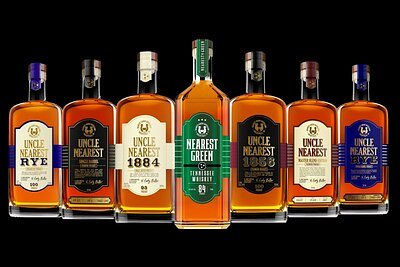
Uncle Nearest Sues Lender, Files for Bankruptcy in High-Stakes Battle
NEW YORK, NY – March 17, 2026 – In a dramatic escalation of a bitter financial dispute, the founders of Uncle Nearest have launched a multi-front legal war against their primary lender, Farm Credit Mid-America. The celebrated whiskey brand filed a lawsuit in New York Supreme Court today, alleging a malicious smear campaign, while its corporate entity, Uncle Nearest, Inc., simultaneously filed for Chapter 11 bankruptcy protection in Tennessee. The moves represent a high-stakes strategy to wrest back control of the company, end a court-appointed receivership, and fight back against a lender it accuses of trying to destroy its reputation.
The dual filings place one of the most successful and culturally significant spirits brands of the last decade at a critical crossroads, pitting its celebrated legacy against a mountain of debt and serious allegations from both sides.
A Legal War Erupts Over a $102M Loan
The lawsuit, filed by CEO Fawn Weaver, her husband Keith Weaver, and their holding company Grant Sidney, Inc., accuses Farm Credit Mid-America of engaging in a deliberate smear campaign. The complaint alleges the lender knowingly circulated false accusations of missing inventory, financial misconduct, negative cash flow, and insolvency. According to Uncle Nearest, these claims were made to protect the lender’s bankers and deflect scrutiny from their own failures in administering a massive $102 million credit facility that fueled the brand's meteoric rise.
"The accusations circulated about us were not only false. The bank knew they were false when they made them, and they knew those accusations would strike directly at the credibility that allowed this brand to grow against all odds in this industry," said CEO Fawn Weaver in a statement.
The company claims that despite possessing documentation that contradicted the damaging allegations, the lender spread the information, which was subsequently reported by media outlets, causing significant harm. "False accusations can travel quickly, especially when they involve the founders of a nationally recognized brand," stated James Williams, the company's chief litigator. "But when accusations are contradicted by the very records already in the accuser's possession, there must be accountability."
The Lender's Side of the Story
Today’s lawsuit from Uncle Nearest did not occur in a vacuum. It is a direct counter-offensive to legal action initiated by Farm Credit Mid-America months earlier. In July 2025, the lender filed its own lawsuit in the U.S. District Court for the Eastern District of Tennessee, alleging that Uncle Nearest had defaulted on more than $100 million in loans and had been in default since January 2024.
Farm Credit’s court filings painted a grim picture, accusing the whiskey company of overstating the value of its barrel inventory—which served as collateral—by as much as $21 million. The lender further alleged that Uncle Nearest sold these collateralized barrels to pay other debts and sold off "discounted future revenue streams" without the lender's knowledge or consent. The allegations also included claims that loan proceeds were improperly used to purchase a $2.3 million home on Martha's Vineyard through a separate LLC, in violation of the loan agreements.
As a result of Farm Credit’s lawsuit, a federal judge placed Uncle Nearest under a court-appointed receivership in August 2025, effectively handing control of the company’s assets over to a neutral third party, Phillip G. Young Jr., to manage the business.
Chapter 11 as a Strategic Shield
While the word "bankruptcy" often signals corporate failure, Uncle Nearest frames its Chapter 11 filing as a calculated offensive maneuver. The company stated the filing's purpose is to immediately terminate the receivership, protect the interests of all creditors and shareholders, and create a proper legal forum to pursue its claims and counterclaims against Farm Credit.
The financial picture presented is complex and contains stark contradictions. A press release from Uncle Nearest's holding company estimated the enterprise's assets at approximately $529 million against the disputed $102.5 million loan. However, the official Chapter 11 petition filed today lists the company’s assets in a range of just $1 million to $10 million, while liabilities are listed between $100 million and $500 million. This vast discrepancy between the public valuation and the legal filing will be a central point of contention in the bankruptcy proceedings.
This follows a warning from the court-appointed receiver in February 2026, who stated that Uncle Nearest was "insolvent" and had only enough cash to sustain operations for a few weeks. To stabilize its finances, the company is reportedly preparing to sell non-core assets, including French vineyards and a Cognac château.
A Legacy and an Industry Under Pressure
At the heart of this corporate battle is a brand built on the powerful, long-hidden story of Nearest Green, the first known African American master distiller. Under Fawn Weaver's leadership, Uncle Nearest skyrocketed from a historical footnote to a global powerhouse, becoming the world's most-awarded bourbon for seven consecutive years and building its Nearest Green Distillery into the seventh most-visited distillery on the planet.
"This brand honors the legacy of my great-great-grandfather, the first known African American master distiller, the teacher and mentor to Jack Daniel," said Victoria Eady Butler, Nearest Green's great-great-granddaughter and the company's four-time Master Blender of the Year. "No obstacle placed in our path will prevent that."
Uncle Nearest's financial struggles are not entirely unique. The spirits industry is facing a broader downturn after a pandemic-era boom. Other distilleries, including Westward Whiskey and Kentucky Owl, have also recently filed for Chapter 11 protection, and industry giants like Brown-Forman have announced cutbacks. Despite the turmoil, Uncle Nearest insists that its distillery remains open and that distribution of its whiskey continues uninterrupted. The company is now fighting not just for its financial future, but for the control of a legacy it brought to light.