
- First AI-powered autonomous drone swarm in the Middle East unveiled by SIRBAI, a new Abu Dhabi-based tech firm.
- 40 engineers specializing in AI, autonomy, and robotics developed the system.
- $200 million in deals announced at UMEX 2026 for UAE’s EDGE Group, highlighting the event's significance.
Experts view this as a pivotal moment in the UAE's defense innovation, positioning it as a global leader in autonomous warfare technology while raising urgent ethical and legal questions about the future of AI in combat.
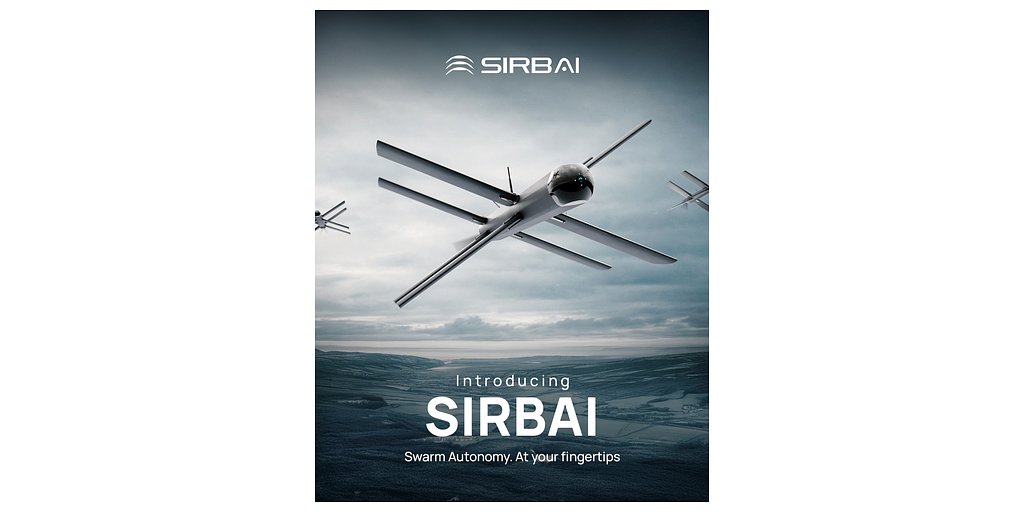
UAE Unveils AI Drone Swarm, Shifting Middle East Defense Landscape
ABU DHABI, UAE – January 20, 2026 – The future of regional warfare took a tangible form today as SIRBAI, a new Abu Dhabi-based technology firm, officially launched the Middle East’s first AI-powered autonomous drone swarm technology. The unveiling, a highlight of the UMEX 2026 exhibition for unmanned systems, marks the company’s dramatic entry into the defense sector and signals a pivotal moment in the United Arab Emirates' ambition to become a global leader in advanced military technology.
The platform, designed for unmanned aerial systems (UAS), enables fleets of drones to operate as a coordinated, intelligent collective. They can collaborate on complex missions with a high degree of autonomy, even in contested environments where GPS signals are jammed and communications are disrupted. This capability, developed indigenously, positions the UAE not just as a consumer of high-end defense systems, but as a formidable innovator at the forefront of autonomous warfare.
The Brains Behind the Swarm
At its core, SIRBAI's system is a software-first marvel, the product of over 40 engineers specializing in AI, autonomy, and robotics. It builds upon foundational research from Abu Dhabi’s prestigious Technology Innovation Institute (TII), the applied research arm of the Advanced Technology Research Council (ATRC). This connection underscores a strategic national effort to translate cutting-edge academic research into practical, high-stakes applications.
"The launch of SIRBAI’s next-generation swarm technology marks an important milestone for the region’s defense technology ecosystem," said Dr. Najwa Aaraj, Chief Executive Officer at TII. "By combining advanced AI with autonomous drone operations, SIRBAI is setting a new benchmark for resilient, operator-centric mission systems. TII is proud to support this achievement, which reflects our shared commitment to delivering advanced technologies that strengthen national security and enhance defense capabilities globally.”
The technology integrates AI-driven mission planning, distributed on-board decision-making, and real-time coordination among the drones. This reduces the cognitive load on human operators, who can shift from manually piloting individual drones to managing the strategic objectives of an entire intelligent swarm. The modular, end-to-end system consolidates mission planning, command, and execution into a single, streamlined interface.
"SIRBAI bridges the gap between human intent and autonomous mission execution, enabling seamless coordination across manned and unmanned systems," explained Dr. Dario Albani, the company's Chief Technology Officer. "Our platform ensures resilient autonomy, continuous information flow, and agile response in rapidly changing and demanding environments. By keeping operators and autonomous assets connected and working together, SIRBAI delivers the reliability and operational advantage needed for modern missions.”
A Strategic Leap in a Crowded Field
The announcement was strategically made at UMEX 2026, a bustling nexus of global innovation in unmanned systems. Amidst a flurry of announcements from established defense giants, including over $200 million in deals for UAE’s own EDGE Group, SIRBAI’s debut stood out. While EDGE showcased impressive new UCAVs and counter-drone systems, SIRBAI's claim as the region's first publicly launched AI-powered autonomous swarm capability carves out a unique and significant niche.
This development places the UAE in an elite club of nations actively developing and deploying swarm intelligence. The United States, for instance, is investing heavily in programs like the Pentagon's "Orchestrator" challenge to create voice-controlled drone swarms. Similarly, military scientists in the United Kingdom have tested AI-driven swarms capable of autonomously identifying targets. Israel has also been widely reported as a pioneer in this field, allegedly deploying swarms in combat situations. SIRBAI's emergence demonstrates that the epicenter of this technological arms race is expanding.
The system's operational applications are vast and transformative. In offensive scenarios, a swarm can overwhelm sophisticated air defenses through sheer numbers and coordinated, multi-directional attacks. For surveillance, it can cover vast areas, creating a comprehensive, real-time intelligence picture that a single drone could never achieve. The drones can also form a protective shield against incoming threats or deliver critical supplies to troops in hazardous locations, all while operating in environments designed to disable conventional systems.
The Unsettling Frontier of Autonomous Warfare
While the strategic and technological achievements are undeniable, the launch of such a powerful autonomous system inevitably brings complex ethical questions to the forefront. The advent of weapons that can independently or collectively seek out and engage targets pushes the boundaries of international humanitarian law and raises profound concerns about human control.
Central to the debate is the concept of "meaningful human control." As AI systems accelerate the speed of conflict far beyond human cognitive ability, ensuring that a human retains ultimate moral and legal responsibility for lethal actions becomes increasingly difficult. The potential for an "accountability gap"—where it's unclear whether the programmer, the commander, or the machine itself is responsible for an unlawful strike—is a significant challenge for military lawyers and policymakers worldwide.
Critics of autonomous weapons systems worry about their ability to reliably adhere to the core principles of warfare, such as distinguishing between combatants and civilians and ensuring the proportionality of an attack. Furthermore, the proliferation of such technology to non-state actors or rogue nations presents a destabilizing threat, potentially lowering the threshold for conflict and leading to unforeseen escalations. As SIRBAI's technology moves from the exhibition floor to potential deployment, it enters a global conversation grappling with the very definition of control, accountability, and humanity in 21st-century conflict. The race for technological supremacy on the battlefield is now inextricably linked to the urgent need for ethical guardrails.